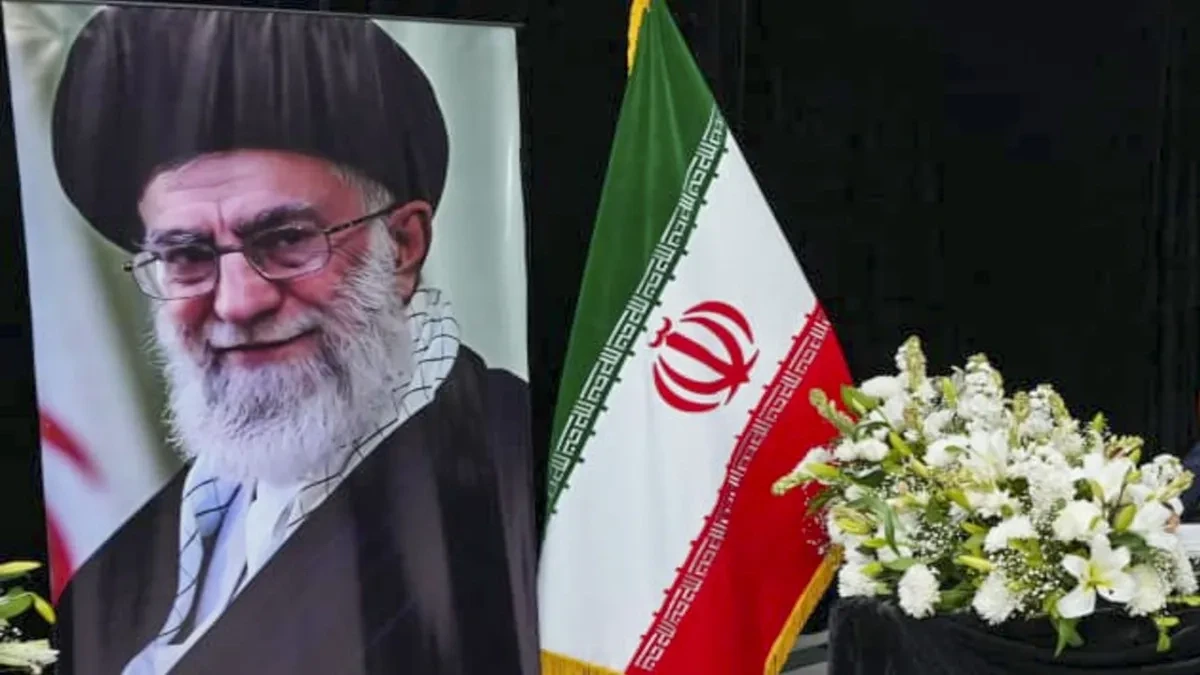
Israeli Defence Minister Israel Katz has announced that the elimination of Iran’s former Supreme Leader Ayatollah Ali Khamenei was a carefully planned operation, conceived as early as November last year, ANI reported citing a report by The Jerusalem Post.
Katz told N12 News that Prime Minister Benjamin Netanyahu had set the strategic objective during a closed-door security meeting, with the original timeline targeting mid-2026.
According to The Jerusalem Post, the plan was accelerated in January after Israel assessed that Iran’s leadership, under mounting domestic pressure, might launch attacks against Israeli and American assets across the Middle East. Katz explained that the decision to advance the mission was taken in consultation with Washington, highlighting the close coordination between the two allies.
The killing was executed during the opening hours of Operations Roaring Lion and Epic Fury, which began last Saturday. The strike is being described as unprecedented, marking the first time a sovereign nation’s top leader has been eliminated through an airstrike. Israel has justified the action as part of its broader campaign to dismantle what it calls Iran’s “existential threat” – specifically its ballistic missile programme and nuclear ambitions – while also pushing for regime change in Tehran.
Since the initial strike, the Israel Defence Forces (IDF) have intensified their aerial campaign. On Thursday, the IDF announced the completion of its 12th wave of strikes in Tehran, targeting critical Iranian military and security infrastructure. Among the high-priority targets was the headquarters of a special unit in Alborz province, which oversees Iran’s internal security forces. Bases belonging to the Basij paramilitary and facilities of the Islamic Revolutionary Guard Corps (IRGC) were also hit.
In a series of posts on X, the Israeli Air Force said it had struck command centres, weapons storage facilities, and production sites, describing the offensive as a sustained effort to “deepen the impact on all mechanisms of the Iranian terror regime.”
The escalation has triggered a fierce response from Tehran. In retaliation for Khamenei’s death, Iran launched waves of drone and missile attacks across several Arab countries, striking American military bases and Israeli assets. The exchanges have raised fears of a wider regional conflict, with energy markets and global shipping already feeling the strain.
For Indian readers, the developments carry significant implications. India sources nearly 40 percent of its crude oil from the Gulf, much of it passing through the Strait of Hormuz – now a potential flashpoint. As the conflict intensifies, New Delhi is closely monitoring the situation, aware that any disruption could impact energy security and regional stability.
The coming weeks will reveal whether Israel’s bold gamble reshapes the Middle East or plunges it deeper into turmoil. For now, the region stands on edge, with the fallout of Khamenei’s killing reverberating far beyond Tehran.