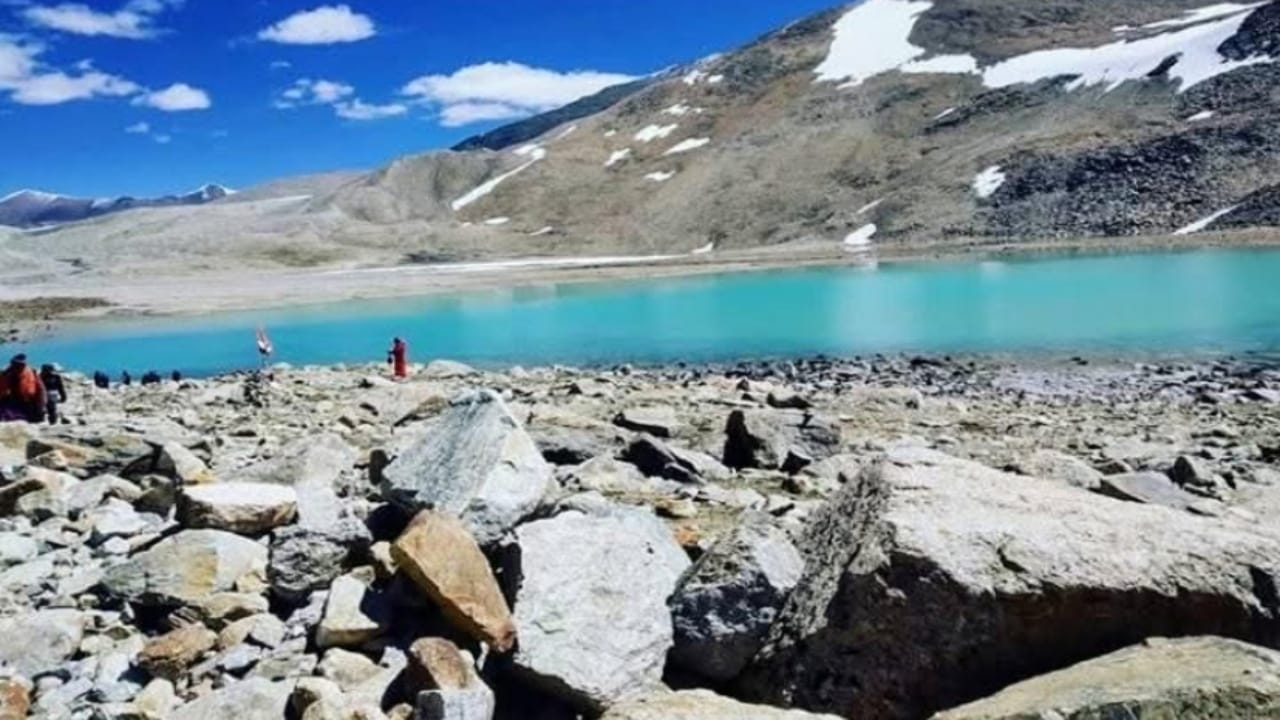
Uttarkashi: The sensitive Kedartal Lake in Uttarakhand has caught the attention of scientists and disaster management authorities after satellite data revealed that the lake is growing rapidly.
This expansion has raised fears of possible natural hazards, including glacial lake outburst floods (GLOFs), which can cause massive destruction downstream.
Satellite warning
According to national monitoring agencies, Kedartal Lake has been identified as vulnerable. Sanjay Chauhan, Director of the National Remote Sensing Centre (NRSC), confirmed that the lake’s size is increasing and stressed the importance of regular monitoring. The data has put the state government on alert, triggering immediate action.
Expert team to visit
The Disaster Management Department is preparing to send a team of experts to Kedartal for an on-site inspection. The team will assess the actual condition of the lake, measure its expansion, and evaluate the risks. The Wadia Institute of Himalayan Geology, which specializes in glaciers and climate studies, has been designated as the nodal agency for this crucial research.
Potential dangers
Experts warn that the rapid rise of glacial lakes can lead to outburst floods, which occur when the natural dam holding the lake water bursts. Such floods can cause widespread damage to villages, infrastructure, and pilgrimage routes in lower regions.
Along with Kedartal, several other glacial lakes in Uttarakhand are being closely monitored. Plans are underway to develop an early warning system for Kedartal, which would allow timely alerts and evacuation in case of danger.
Government response
Vinod Kumar Suman, Secretary of Disaster Management and Rehabilitation, stated that satellite information has already been received and the expert team will soon visit the site. Based on their findings, further strategies and safety measures will be decided.
The administration is focusing on preventive steps, including awareness campaigns in vulnerable areas and coordination with local authorities to ensure readiness in case of emergencies.
Climate change impact
The situation at Kedartal highlights the growing impact of climate change in the Himalayan region. Rising temperatures are causing glaciers to melt faster, leading to the formation and expansion of glacial lakes. Scientists say this trend increases the risk of natural disasters, making timely monitoring and action essential.
With satellite data confirming its vulnerability, the upcoming expert inspection will play a key role in shaping safety measures. For Uttarakhand, protecting lives and infrastructure from potential glacial floods has become a priority.