New Delhi: Among Kashmir’s many celebrated textiles, the Kani Shawl occupies a rarefied place for its refinement and historic depth. Originating in the Kanihama village, this handwoven masterpiece dates back to the Mughal era and continues to represent the height of artisanal excellence. Recognised with a Geographical Indication (GI) tag, only shawls woven in this specific region using traditional methods can be called Kani, protecting the craft from imitation. Woven from fine Pashmina yarn sourced from the Changthangi goat of Ladakh, the shawl combines natural luxury with extraordinary labour.
Each piece is created thread by thread using a coded Talim guide, a process that can take months or even years to complete. Once favoured by Mughal emperors and European royalty, the Kani shawl remains a symbol of cultural pride and timeless elegance. Today, it continues to be embraced by political leaders, film icons, and international celebrities who value both its heritage and artistic detail.
Kani Shawl: From ancient weave to global symbol of elegance
Ancient origins and meaning of ‘Kani’
The art of Kani weaving is believed to date back as far as 3000 BC. The term “Kani” comes from the Kashmiri word for a small, oblong wooden stick or spool (tuji or kani) used by artisans to weave intricate patterns directly into the fabric.
Mughal patronage and royal legacy
Kani shawls flourished during the Mughal Empire (16th-19th century). Emperor Akbar was known to collect them avidly, and their craftsmanship is recorded in the Ain-i-Akbari. The shawls later gained admiration from Sikh Maharajas and British aristocrats.
Global popularity and museum preservation
By the 19th century, Kani shawls were highly prized among European elites, including Empress Josephine, wife of Napoleon. Today, they are preserved in prestigious institutions such as the Victoria and Albert Museum in London and the Metropolitan Museum of Art in New York.
Talim Weaving System
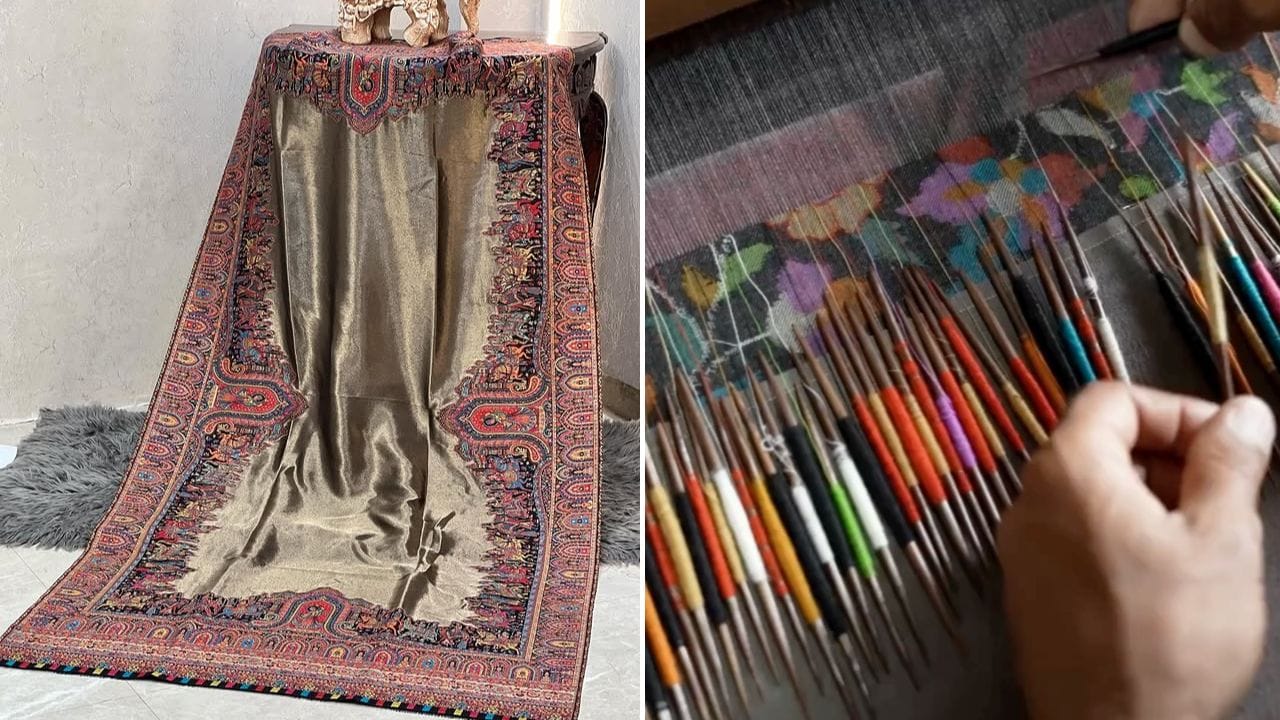
Unlike printed or embroidered textiles, Kani designs are woven into the shawl using a coded pattern known as Talim. This guide instructs weavers on colour placement, much like reading a musical score, ensuring precision and complexity.
Labour-intensive craftsmanship
Each shawl is woven thread by thread using dozens of coloured wooden sticks. Depending on the complexity, completion may take anywhere from 6 to 18 months and sometimes up to 3 years for a single high-quality piece.
Pashmina and Changthangi goat
Authentic Kani shawls are crafted from fine Pashmina yarn obtained from the undercoat of the Changthangi goat of Ladakh. These goats naturally shed their delicate fibres in spring and endure harsh winter temperatures as low as -40°C in the cold desert region.
Celebrity and contemporary appeal
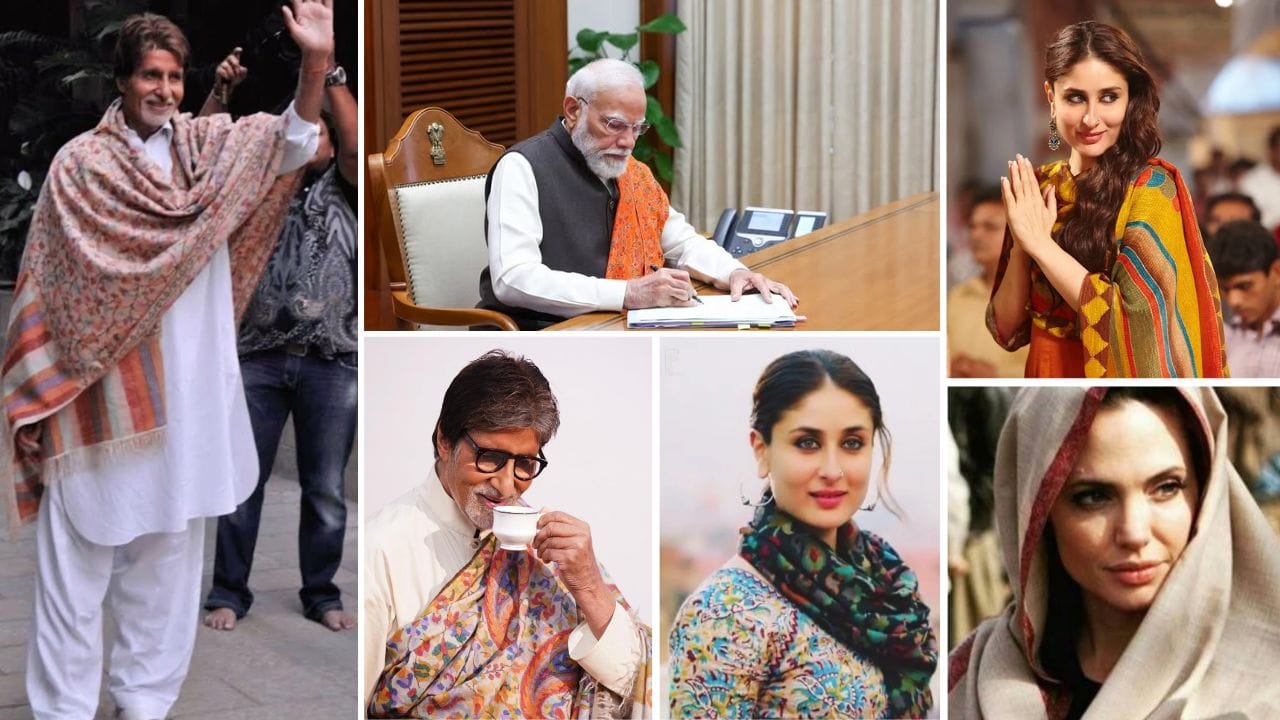
The Kani Pashmina shawl remains a favourite among style icons. Amitabh Bachchan is often seen wearing white-based designs with intricate floral patterns. Prime Minister Narendra Modi has showcased yellow and red Kani shawls at major occasions. Kareena Kapoor, Shilpa Shetty, and Sonam Kapoor have brought it into modern fashion, while international figures such as Angelina Jolie, Kate Middleton, and Julia Roberts have also embraced Pashmina styles, including Kani.
How to identify authentic Kani shawls
Genuine Kani shawls carry a GI tag confirming they are handwoven in Kanihama. Due to the weaving technique, the pattern is nearly identical on both sides, and the texture is exceptionally soft and lightweight, without the roughness associated with embroidery.
The Kani shawl is a living legacy of Kashmir’s artistic brilliance. From ancient looms to global red carpets, its story continues to unfold with grace and distinction.