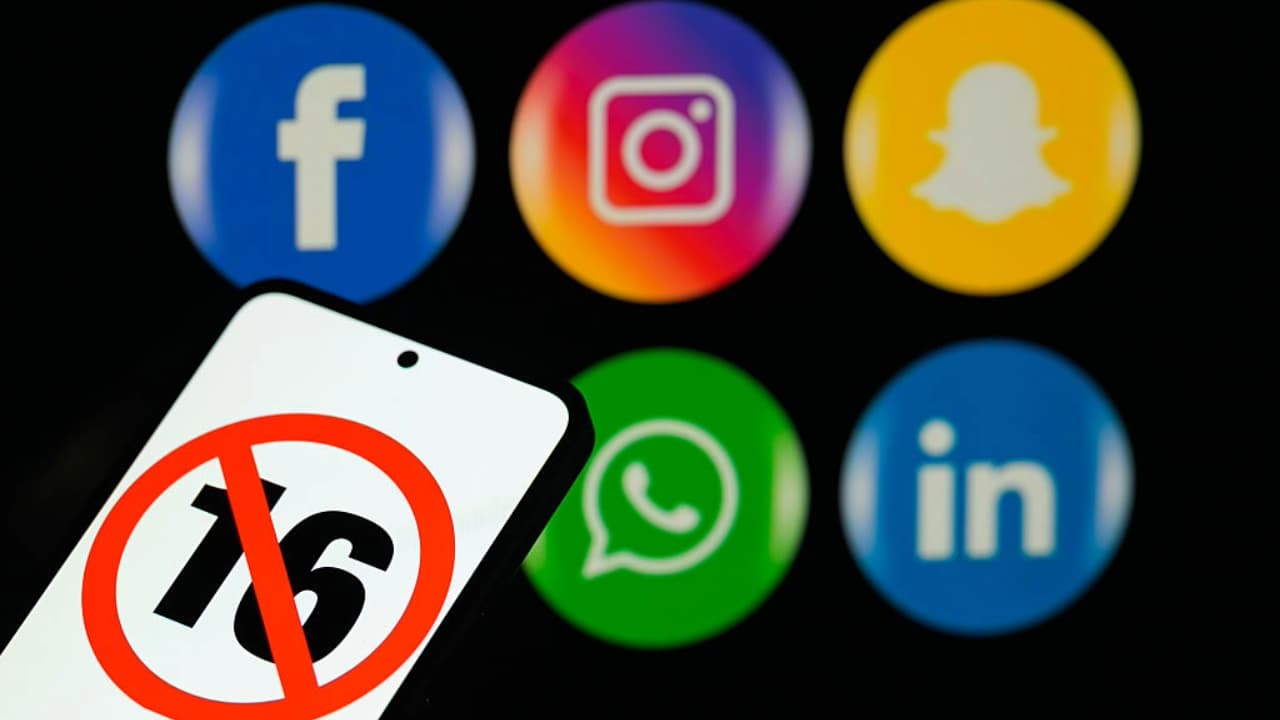
The Karnataka government plans to ban social media for children under 16 to protect their mental and physical health. Experts highlight enforcement challenges and age verification issues, while parents’ guidance is seen as crucial. Similar bans exist in Australia, France, and Andhra Pradesh.
In a big move, the Karnataka government announced in its budget that it plans to ban social media for children under the age of 16. This news has brought a lot of cheer, especially from parents who are tired of telling their kids to get off social media. The decision is being seen as a necessary step to protect the mental and physical well-being of children in today’s digital age.
Bans in Other Countries
This isn’t a new idea. Countries like France and Australia have already brought in similar rules. In fact, Australia recently became the first country in the world to ban most social media platforms for kids under 16. The law there makes it compulsory for platforms to verify a user’s age and shut down accounts of minors. In India, Andhra Pradesh has already implemented such a rule, but we are yet to see its full impact.
Also read: Karnataka’s Landmark Ban on Social Media for Minors Sparks Massive Online Praise and Concerns; See Reactions
The Situation in Andhra Pradesh
However, it’s not enough for states to just pass a law. Andhra Pradesh is facing this exact problem. The state government has set up a Group of Ministers to study global regulations and has invited major tech companies like Meta, X, Google, and ShareChat for discussions. But the companies have not yet responded to the invitation. After all, a ban like this affects their business interests, doesn’t it? Following this, Goa is also reportedly thinking about a similar ban.
What Do the Experts Say?
Whenever a new law is introduced, there are always people who will find a way to get around it. The same concern is being raised about this important and well-intentioned decision to ban social media for kids. Digital rights activist Nikhil Pahwa told the BBC that enforcing state-level bans is complicated. “While companies can guess a user’s location through IP addresses, these systems are often wrong. When state borders are so close, you could face conflicts if one state bans social media and the neighbouring one doesn’t. Kids will just find other ways to access it,” he says.
The Age-Proofing Problem
Moreover, “age verification is not simple,” says Prateek Waghre, a public policy expert and Head of Programs at the Tech Global Institute. “To follow such bans, companies would have to effectively verify every single person using every single service on the internet.” He points out that in Australia, it has come to light that many children are simply using fake birth dates to create new accounts. “Many accounts are created with the help of family members or friends and are not linked to personal email addresses, which complicates the assumption of individual ownership that age verification systems rely on,” he adds.
Parents’ Role is Key
Because of these issues, experts believe that more than a government law, what’s really needed is for parents to spend quality time with their children. At the same time, many people feel that such a blanket ban will negatively affect talented kids who are using social media for good things, like showcasing their skills in various fields. The fear is that everyone will just end up wasting more time trying to find loopholes.
Whatever the case may be, the comforting thought for now is that this law might at least be useful for some people.
Also read: Karnataka Budget 2026: Major Overhaul with 15,000 Teaching Jobs and 800 New Schools