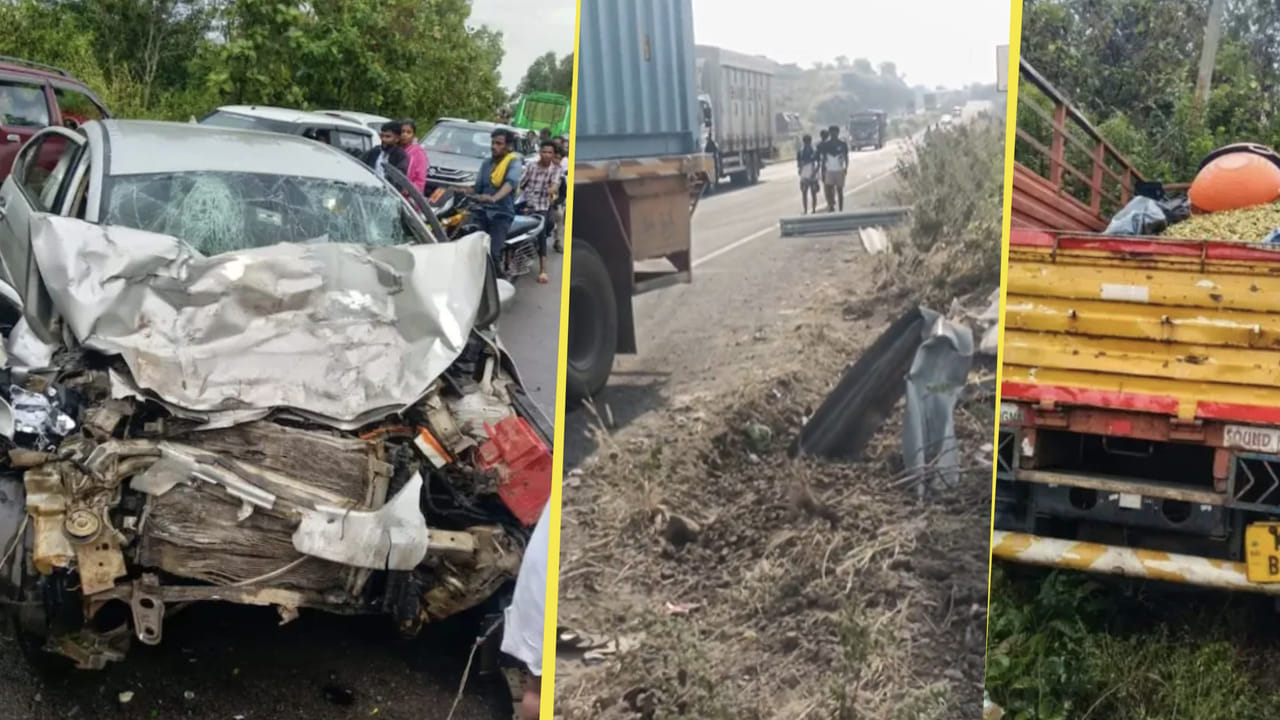
Karnataka records over 11,000 road accident deaths annually, with accidents rising 20% between 2021 and 2025. The NHAI has identified around 900 black spots on National Highways across the state.
Karnataka continues to face a serious road safety challenge, with more than 11,000 people losing their lives in road accidents across the state every year. Despite efforts to improve highway infrastructure, identify accident-prone locations and strengthen traffic enforcement, the number of crashes and casualties remains a major concern. Recent figures point to a rise in road accidents and injuries, highlighting the urgent need for stronger preventive measures, safer roads and greater awareness among motorists. The police and road authorities are focusing on high-risk stretches, traffic violations and infrastructure improvements to bring down fatalities.
According to data from the Traffic and Road Safety Unit, road accidents in Karnataka, excluding Bengaluru city, increased from 31,434 in 2021 to 37,682 in 2025, marking a rise of around 20%. The number of fatalities also increased from 9,384 to 11,344 during the same period, representing a rise of approximately 21%.
The state recorded 38,466 road accidents and 11,406 deaths in 2023. In 2024, the number of accidents stood at 38,293, while fatalities rose to 11,496, the highest figure recorded during the five-year period. Although the death toll declined slightly to 11,344 in 2025, the number of injured people continued to rise, reaching 49,305 compared with 37,934 in 2021.
Provisional figures for the first nine months of 2026 show that Karnataka reported 28,809 road accidents, resulting in 8,048 deaths and 37,289 injuries. Meanwhile, Bengaluru recorded an average of 4,447 accidents and 847 deaths annually between 2021 and 2025.
Karnataka Police Focus On Accident-Prone Highway Stretches
With road accidents continuing to claim thousands of lives, the police are working with various government departments to improve safety on state highways. The measures include identifying black spots, upgrading road infrastructure, strengthening traffic monitoring and taking stricter action against dangerous driving practices.
“State highways have their own challenges: they pass through towns and villages, carry mixed traffic such as two-wheelers, tractors, buses and pedestrians and often have junctions, curves and roadside activity that raise risk,” state police chief, DG & IGP M A Saleem, told DH.
Saleem said the police were coordinating with the Public Works Department (PWD), the Transport Department, the National Highways Authority of India (NHAI) and local bodies to address road safety concerns.
“We have mapped accident-prone stretches and black spots on state highways district by district and share this data with road-owning agencies so that engineering corrections, such as signage, lighting, rumble strips, road markings and junction improvements are taken up quickly. District road safety committees under the deputy commissioners review progress regularly,” he said.
ITMS, AI Cameras To Strengthen Traffic Enforcement
The police are also expanding the use of technology to monitor traffic violations and strengthen enforcement on highways. Saleem said Intelligent Traffic Management Systems (ITMS) and AI-based camera surveillance were being extended beyond urban areas.
Equipment such as laser speed guns, alcometers and variable message signs is also being deployed to improve monitoring and discourage dangerous driving. Enforcement efforts are particularly focused on violations associated with fatal accidents, including speeding, drunk driving, wrong-side driving and failure to wear helmets and seat belts.
Highway patrolling is also being strengthened along key state highway corridors. The aim is to ensure quicker emergency responses and help accident victims reach hospitals within the crucial golden hour.
NHAI Identifies Around 900 Black Spots On Karnataka Highways
Road safety concerns are not limited to state highways. The NHAI has identified approximately 900 accident-prone black spots on National Highways across Karnataka. Short-term corrective measures have been completed at almost all these locations.
An NHAI official said around 200 black spots did not require long-term interventions, while 400 locations had already been addressed through permanent measures. Work is under way at another 170 locations, involving improvements such as grade-separated structures, service roads and foot overbridges.
Short-term safety measures include fresh road markings, signboards, crash barriers, road studs and delineators. Authorities are also closing unauthorised median openings and introducing traffic-calming measures wherever necessary.
At locations requiring more extensive improvements, long-term interventions are being carried out based on recommendations from road safety audits. These include correcting road geometry, improving junctions, widening carriageways at specific stretches and constructing underpasses and overpasses.
Speeding And Driver Fatigue Among Major Causes Of Highway Crashes
Apart from infrastructure-related issues, speeding, poor vehicle maintenance and driver fatigue remain major contributors to highway accidents. A senior traffic police officer highlighted how excessive speed, worn-out tyres and inadequate rest can increase the risk of serious crashes.
“Most highway crashes come down to a mix of speeding, poor vehicle maintenance and driver fatigue. At 120 km/h, a driver won’t even notice standing water until aquaplaning sets in especially when motorists cut corners by reusing worn tyres or ignoring tyre pressure.
Maintaining a steady 60 km/h takes care of almost every risk, yet very few follow it. Between 11 pm and 4 am, which is our peak window for fatal crashes, people push themselves beyond exhaustion.
Combined with high-beam glare from missing median view-cutters and ‘highway hypnosis’ a dangerous trance-like state on long straight stretches that the public barely knows about, a single wrong assumption about oncoming traffic turns fatal.”
The officer’s observations underline the risks associated with driving at excessive speeds, particularly during late-night hours when fatigue can affect concentration and reaction times. Poor vehicle maintenance and inadequate road safety features can further increase the likelihood of serious accidents.
With Karnataka continuing to report thousands of road accident deaths every year, coordinated action by the police, road-owning agencies and motorists remains crucial. Better road engineering, stricter enforcement, timely emergency assistance and responsible driving will be essential to reducing the state’s road accident toll.