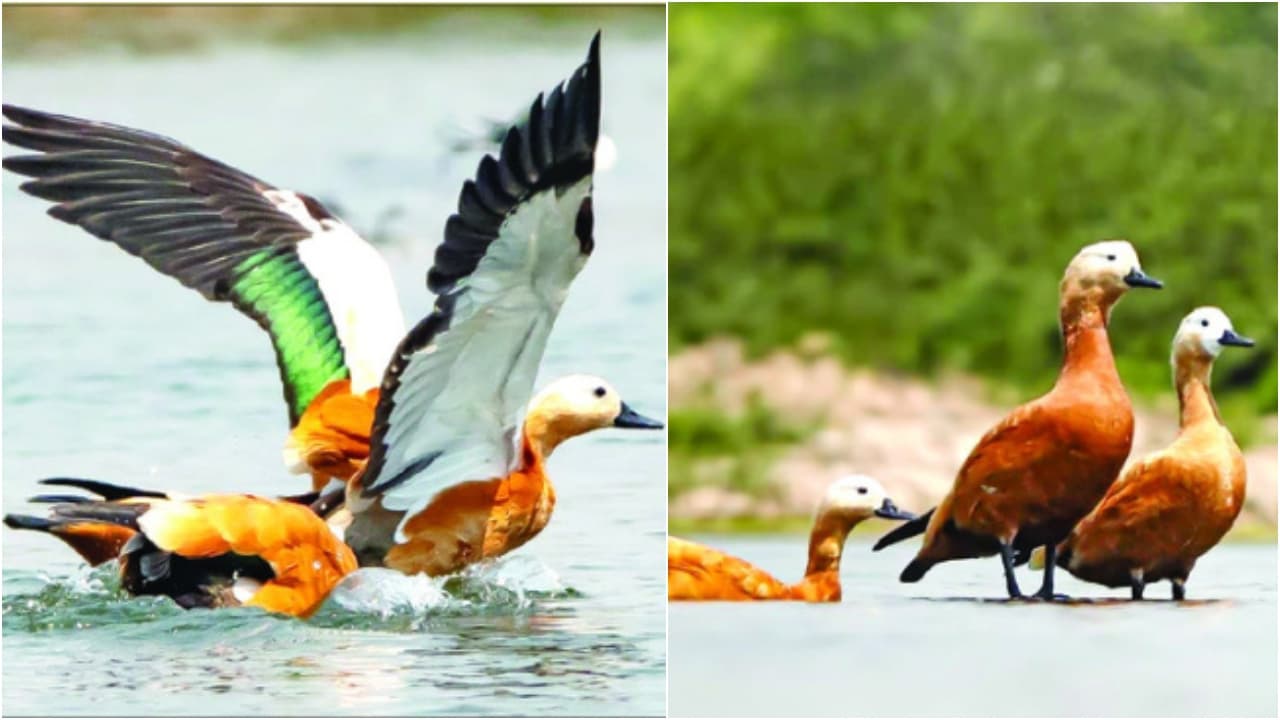
Migratory Ruddy Shelducks have arrived at the Singatalur backwaters in Karnataka, turning the area into a seasonal haven for birdwatchers and nature lovers as winter migration peaks along the Central Asian Flyway.
Nestled amid calm waters and open skies, the Singatalur Lift Irrigation backwaters in Hoovinahadagali have quietly transformed into one of the region’s most vibrant natural ecosystems. The gentle sound of birdsong, coupled with shimmering waters, has created an inviting refuge where wildlife flourishes and visitors find a rare sense of tranquillity.
The Singatalur backwaters now serve as a thriving habitat for hundreds of bird species. Visitors are drawn not only by the arrival of migratory birds from distant regions but also by occasional sightings of otters foraging along the water’s edge, adding to the area’s rich ecological appeal.
Birds Migrating From Central Asia And Southeast Europe
Among the most striking winter visitors are the Brahminy ducks, popularly known as Ruddy Shelducks. These migratory birds travel from Central Asia and Southeast Europe to several parts of India, including Karnataka, during the colder months. They usually arrive between October and November and return to their native regions by March or April after completing their breeding cycle.
The birds follow a major migratory route known as the Central Asian Flyway. Remarkably, they are capable of flying over the Himalayan mountain ranges at altitudes of up to 6,800 metres. As winter approaches, large numbers of migratory birds find refuge in the favourable conditions of the Singatalur backwaters. Nature lovers gather here to watch the saffron-coloured Ruddy Shelducks gliding gracefully through the water against a backdrop of distant rocky formations.
Crossing The Himalayas Against All Odds
During their migration to India, Ruddy Shelducks traverse the formidable Himalayan ranges, where oxygen levels are extremely low. The ability of these birds to sustain long-distance flight under such challenging conditions continues to intrigue scientists and birdwatchers alike, making their annual journey a remarkable natural phenomenon.
Life Near Water During The Breeding Season
Ruddy Shelducks breed in the high-altitude regions of Central Asia, including Mongolia, Tibet and parts of Russia. During the breeding season, they inhabit wetlands near lakes and rivers. In winter, they migrate south to warmer regions, including the Indian subcontinent and parts of Southeast Asia, in search of food and suitable habitats.
According to the International Union for Conservation of Nature (IUCN), the Ruddy Shelduck is categorised as a species experiencing population decline. Habitat loss, hunting and pollution are among the key factors contributing to the reduction in their numbers.
A Seasonal Treat For Tourists And Birdwatchers
Birdwatcher and amateur photographer Someshappa C.N. Allipur says tourists can spot these migratory birds during the winter months at the Singatalur Dam near Allipur in Hoovinahadagali taluk of Vijayanagara district. The seasonal influx of migratory birds has increasingly turned the area into a favoured destination for wildlife enthusiasts and photographers eager to experience nature at close quarters.