
If one doesn’t pay attention to the nameplate while entering one of the apartments in a posh Central Delhi residential complex, there may be no way of ascertaining – at first glance – that the owner is one of the biggest names in world cricket.
In the rooms accessible to visitors, there are no pictures, trophies or mementoes to suggest that Kapil Dev is a former India captain, who led the country to become world champions for the first time, was at one time among the holy quartet of great all-rounders – alongside Imran Khan, Ian Botham and Richard Hadlee – and has played a big role in making cricket the national obsession that it became in subsequent years.
That was several decades ago, but Kapil remains relevant in present times as well – not just as a former cricketer, but as a businessman, a golf administrator, media personality and social worker. And he has no intention of stopping anytime soon.
“I’m not going to retire as long as I can work. For me, retirement comes when the Almighty calls you,” he says.
When one mentions the absence of any visual evidence on display of Kapil’s great and indelible association with the bat-and-ball game, one is shown a big photograph conveniently hidden behind the open door of the apartment – showing the protagonist receiving the World Cup on that heady evening of June 25, 1983.
But if one asks what his primary passion is these days, Kapil wouldn’t waste a moment before replying – golf. Interestingly, this is a sport he hardly knew during his cricket-playing days, and had to be cajoled into trying by friends. “I played a lot of games in my younger days apart from cricket – football, basketball, squash – but had never tried golf. It was only at the insistence of a few of my friends in Chandigarh that I went to a golf course and tried the sport,” Kapil recalls.
Once he did, he was hooked immediately, even though he doesn’t see many similarities between golf and cricket. “The only common feature is the importance of hand-eye coordination,” he says.
“It’s a beautiful game, played in beautiful surroundings and a way to meet friends. The greenery you see makes you happy. It’s also a game without an age limit; with the handicap system, you can play with your grandchildren as well as a professional or a person of high social and political stature.”
Golf is still a niche sport in India. But as Kapil’s interest in the game grew, the administrators couldn’t have hoped for a better brand ambassador for the sport to broaden its appeal. Here was a son of the soil, born and raised outside the major metropolitan centres, who had made it big in a colonial sport with sheer talent and hard work.
Another facet that may have attracted Kapil to golf could be its individual nature, where wins and losses can be attributed to the one player, in contrast to cricket. He is now the president of the Professional Golf Tour of India (PGTI) and his profile and contacts are useful in opening many doors for the sport that’s still trying to spread to the nooks and corners of the country.
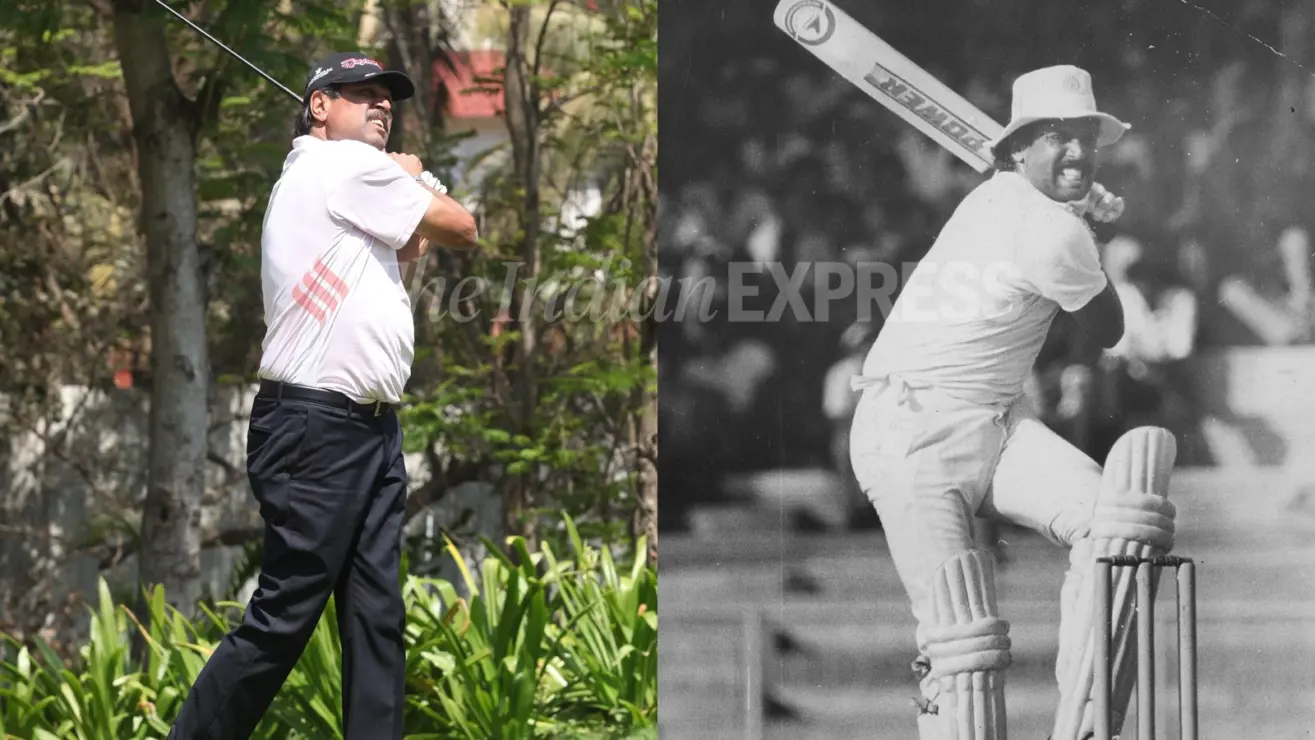 Considered one of the greatest all-rounders of all time, Kapil Dev has turned to golf after ending his illustrious cricketing career. (Express Photo by Kevin D’Souza/Express Archive photo)
“When we started playing cricket, it was also largely restricted to metros. There were hardly any players coming outside of Delhi, Bombay, Bangalore, Hyderabad or Chennai. The game was popularised and patronized in India by royal families. If cricket can become a game of the people, there’s no reason why golf can’t become more popular,” he says.
Access, identification of talent and entry-level expenditure are other barriers, and that’s where his role at the head of PGTI comes in.
“It’s my responsibility to provide a fair chance to the youngsters coming up, you never know who has the talent. We need to promote the game and have more golf courses. Why should only cricketers have all the name, fame and money?
“As far as expenditure is concerned, Virat Kohli’s bat may cost upwards of a lakh, and you never know when it will break. A tennis racquet doesn’t come cheap, balls don’t last long, and a shuttlecock in badminton has to be discarded after a few points. In golf, if you get a full set of clubs and a bag – it may cost Rs 75,000 – they can last 20 years. So, which one is more expensive? One should look at it as an opportunity and a choice. If one only looks at the expenditure, no one will become a doctor in our country,” he says.
Young at heart
There are other former cricketers who have made their other sporting passions known, but none of them has taken them as seriously as Kapil, mostly staying within the cricketing ecosystem as selectors, commentators or administrators. Yuvraj Singh, the co-founder, co-owner and brand ambassador of the Indian Golf Premier League – which organizes tournaments not recognised by Kapil’s PGTI – is an exception.
“Sunil Gavaskar played badminton. Yuvraj plays golf, as do Murali Kartik, Sachin Tendulkar and Ajit Agarkar. I think if top names play the game, that’s good enough. You don’t have to get into administration, as long as you’re playing the game. I feel it’s our moral duty to try and promote other sports also,” he says earnestly.
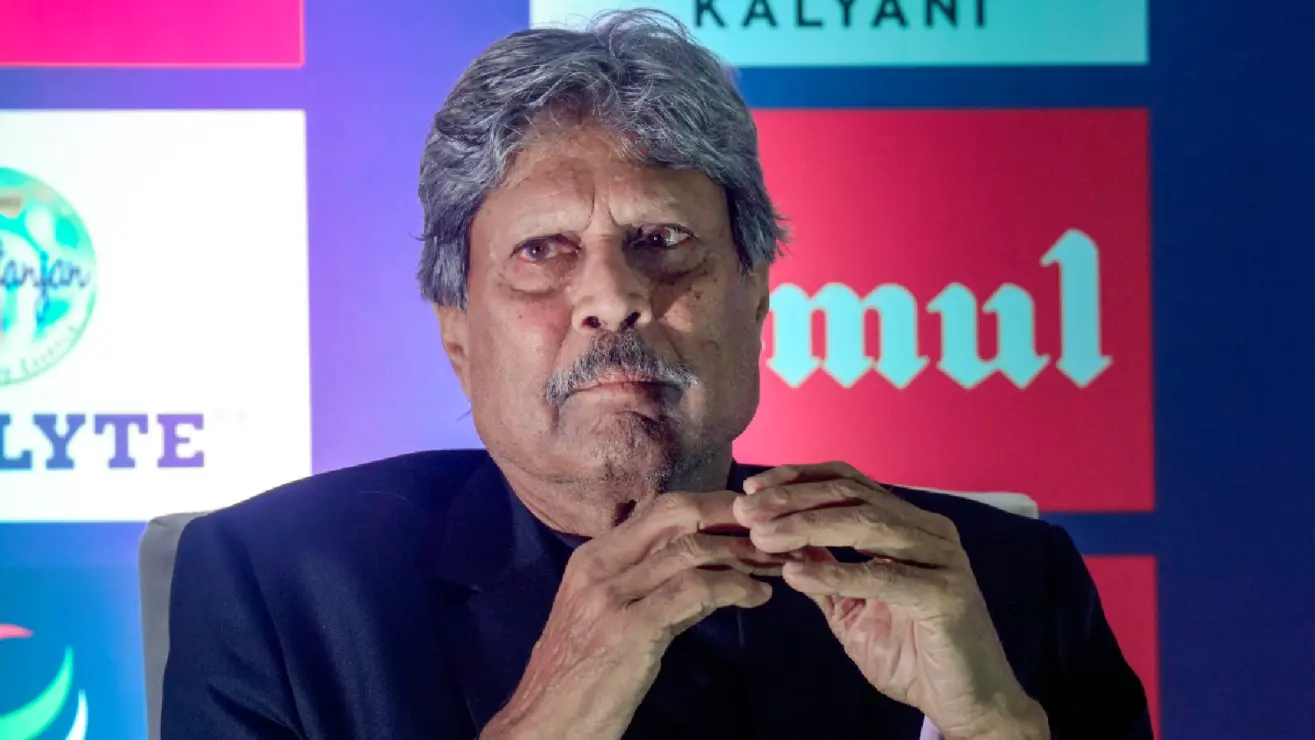 DP World Professional Golf Tour of India (PGTI) President Kapil Dev during a press conference regarding the DP World India Championship (DPWIC), in New Delhi. (PTI Photo)
At 67, Kapil is no spring chicken and had a health scare in 2020 when a heart attack needed an emergency coronary angioplasty. That didn’t keep him out of action for long and he was soon back to his normal schedule, and is not keen to dwell on his medical issues.”I don’t remember,” is his succinct response when the matter is brought up.
If anything, the medical scare has intensified Kapil’s zeal to give back. Apart from being involved in his own NGO, he has set up a 300-bed super-specialty hospital in Greater Noida West and takes personal interest in its running. “I don’t want to talk about it too much. I’m happy to just be able to do some work and be of some use. I got the opportunity during the COVID pandemic to build a hospital. I wanted to give something back to society, that has given me so much love and affection, which I had never imagined in my life. So, it’s my duty to do something in my own way,” he says.
He hasn’t left it entirely up to others to run it either. “I’m not a doctor. I don’t know anything about medicine. Me and my partner own the hospital and the day-to-day running is the responsibility of Mumbai’s DY Patil Group. I got the opportunity to build the hospital from scratch. It’s your hospital, so you can’t leave it totally for other people to manage. You have to take time out to look into its affairs. It’s also a business. I go twice or thrice a week, and my partner also goes to make sure everything is ok. It’s going through teething problems at the moment, so a lot of things are required,” Kapil says, like the experienced businessman that he has become over the last couple of decades and more.
Keeping busy
There would have been a time during his long cricketing career – in which he never missed a Test due to injury – when he wouldn’t have been able to give as much time to his family as he would have liked. The situation is unlikely to have changed much after he hung up his boots.
Kapil doesn’t seem to have any intention of taking it easy anytime soon.
“This is the life I’ve chosen. Even at this age, there’re so many things that keep me busy – golf, the hospital, other business ventures, NGO work, and media commitments. All these things keep me active and fresh. It’s just that you want to do that, and it’s also important to take care of yourself. You’re not 20 years old when you could probably work 16 hours a day. The family will always want more time from me, but we have to make adjustments, so that I can carry on as long as I can,” he says.
Thus, cricket – and everything else – is just a part of the long Kapil story. There are several facets to his personality, and his identity isn’t linked solely to his achievements on the cricket field. For Kapil, retirement from the cricket field was not retirement from public life. It was an opportunity to seek new pastures and make contributions in many other fields.