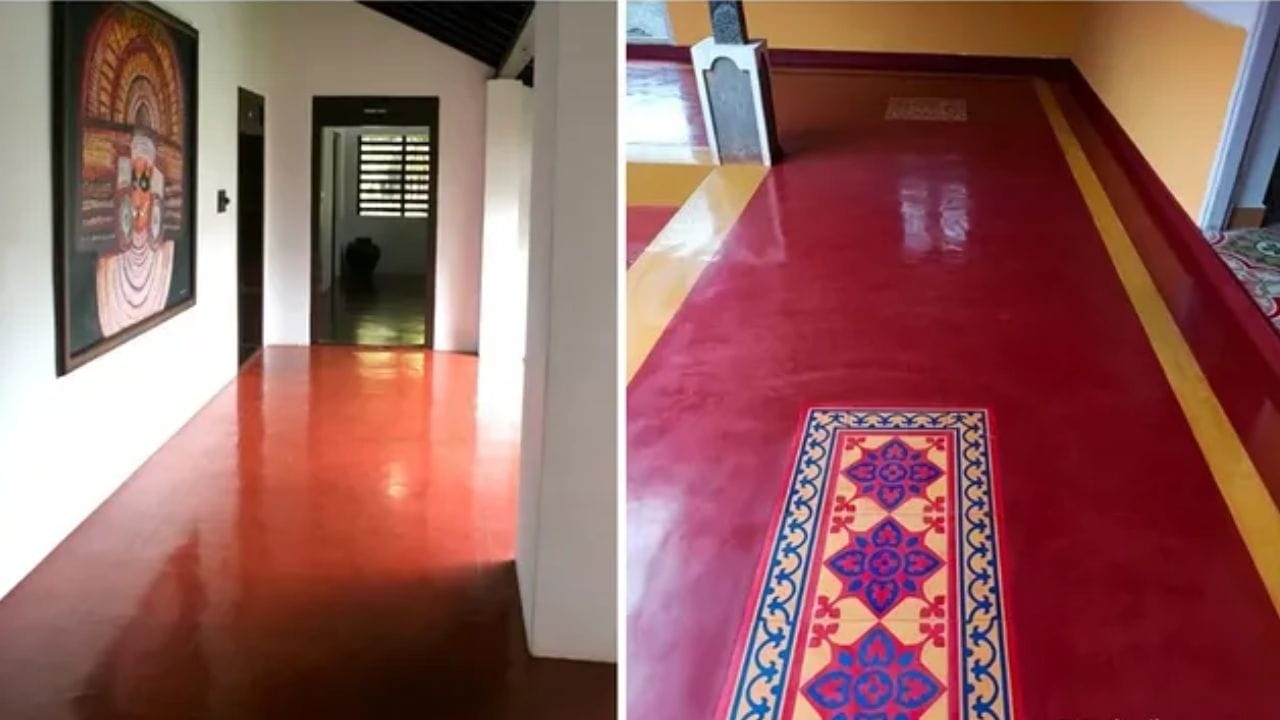
New Delhi: India’s architectural past holds answers that feel strikingly relevant today. Long before air conditioners, polished marble, and imported tiles became symbols of comfort, homes across regions relied on simple, thoughtful techniques to stay cool. One such example is Kaavi flooring, a 300-year-old craft from Kerala that once defined both beauty and practicality. Made using a natural mixture of lime, iron oxide, and water, then hand-polished with coconut oil, this deep red surface remains noticeably cool even during peak summer.
Besides controlling the temperature, it reflects a lifestyle rooted in balance with climate and nature. Over time, however, this craft has quietly faded as modern materials took over. What remains is a powerful reminder that sustainable living was once instinctive, not a trend. As heat rises and energy costs climb, revisiting such methods may not be nostalgia, but a necessity for modern homes seeking practical, low-cost cooling solutions today.
Kaavi flooring key features
Natural materials that regulate temperature
Kaavi flooring is created using lime and iron oxide, materials known for their heat-resistant properties. When combined and polished with coconut oil, the surface forms a dense, smooth layer that does not trap heat. Instead, it stays cool underfoot, offering relief during harsh summers without relying on electricity.
Coconut oil finish enhances cooling effect
The use of coconut oil is essential, not decorative. It seals the surface, adds a subtle shine, and improves the cooling quality. Unlike synthetic coatings, this natural finish allows the floor to breathe, keeping interiors comfortable even in humid conditions.
Durability that improves with time
Unlike modern flooring that shows wear quickly, Kaavi surfaces grow stronger and shinier with use. Regular footfall acts as a natural polish, helping the floor maintain its smooth texture. Properly maintained, it can last for decades without visible damage.
Low maintenance and dust resistance
Kaavi flooring requires minimal upkeep. Occasional polishing with coconut oil is enough to maintain its finish. The surface does not attract dust easily, making it practical for daily living, especially in regions prone to heat and dryness.
Vanishing craft with few skilled artisans
Despite its advantages, Kaavi flooring is now rare. Only a limited number of artisans continue to practise this labour-intensive craft. As demand for faster, factory-made options grows, this traditional knowledge risks disappearing altogether.
Kaavi flooring stands as a quiet example of how Indian homes once combined comfort and cost, and remained in sync with the climate easily. Rediscovering it today is not just about design, but about bringing back a thoughtful way of living.