If the name is mentioned, it’s a no-brainer that you will smile broadly, if not chuckle or guffaw. And that’s the effect Johnny Walker—still—has on us. His trademark expressions, grins, that peculiar voice and his unique jaunty gait have made Indore-born Badruddin Jamaluddin Khan Kazi, born a century ago on November 11, 1926, a household name.
After a bit role in Hulchul (1951), his career skyrocketed with Guru Dutt’s Baazi in the same year. The saga of his working as a bus conductor and hopping off at film studios, entertaining all with his funny antics is well-documented. On the sets of Hulchul, his drunkard act was noticed by Balraj Sahni, who took him to Guru Dutt and made him re-enact it.
The effect? A lasting bond with Guru Dutt, who then ensured a role (and a song) for Badruddin in every film and christened him after the world-famous whisky. Johnny Walker never looked back for over a decade, when he voluntarily curtailed his work.
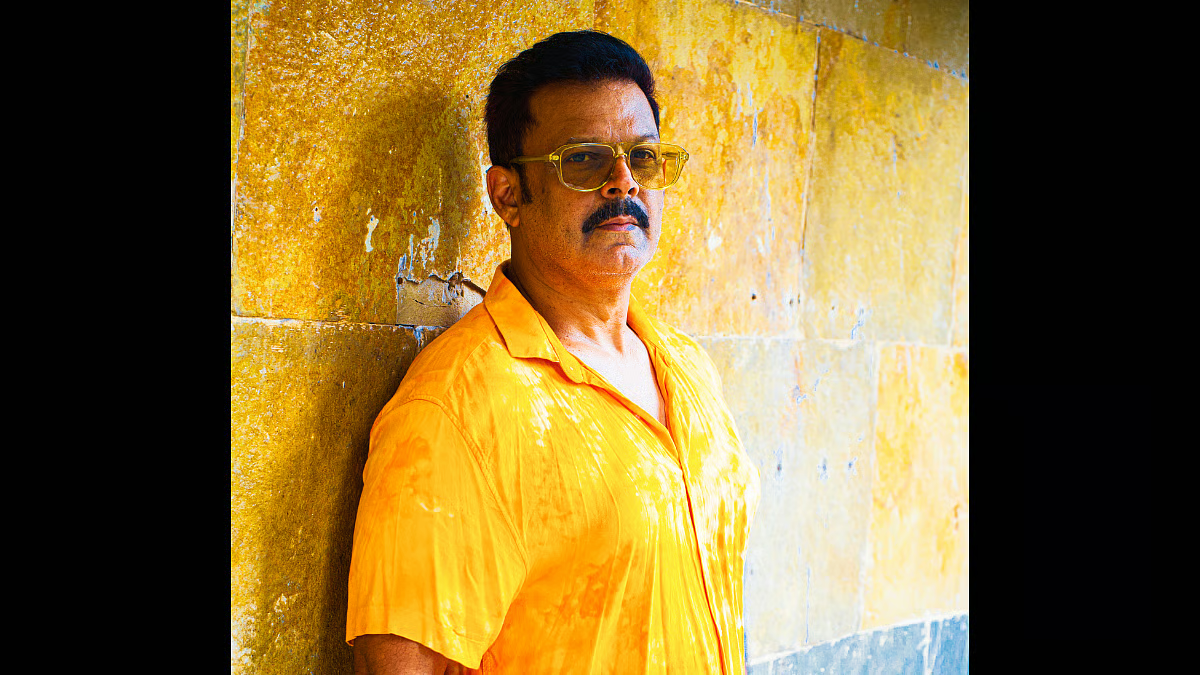
We stroll down Memory Lane with his youngest son, Nasir Khan.
Excerpts from the interview:
Your father stated that he reduced work because he had earned enough.
Yes. He would always say, “Zindagi mein sukoon nahin hai, phir paisa, naam aur shohrat kamaane ka kya faayda (If you don’t have peace of mind, what’s the use of earning money, name and fame)?” He considered himself extremely lucky, because many never acquired this sukoon!
How does the family plan to celebrate his centenary?
We are planning something next month for some close friends. But we had organized a big event last year with family and friends even coming from abroad.
How was your personal bond with your father?
I am the youngest of three sisters and three brothers. Our equation was like any other parent-son, but the difference was that it was only later that I came to know what a big star he was. At home, there was never any mention of stardom or of his work per se. You will be surprised that he never even displayed his awards or trophies but kept them locked in his cupboard.
Later, whenever I asked him about his innings—for I was born in 1969, when his peak phase had ended —he asked me why I wanted to know about a past that was over. The same applied to my queries about Guru Dutt-saab. He told me, “We were friends. Why do you want to know about my memories? You should create your own! I don’t want to discuss them.”

How would you describe him then as a person and as a parent?
As a man of principles, a thespian with strong willpower and a man of his word. He kept his personal and professional life in totally distinct compartments. He never did or say anything only for effect. He was a quiet but solid man. As he would say, “Main Johnny Walker banne ke paise leta hoon (I take money to become Johnny Walker)!” His walk, talk, face, voice, clothes and style—everything changed at work.
I believe he was also the first actor in India to avoid working on Sundays.
Yes. My father also did a record 125 films between 1954 and 1965. He summed up his life very uniquely. For the first 25 years, he told me that he begged God for work and money. God gave him everything in the next 25 years. “And after that, for the next 25 years, I just want to thank Him!” he said. Incidentally, he is the only actor in the world to have a film named after him—Johnny Walker!
And having seen so much struggle, he said, “When I was poor, I would work day and night to provide daal-roti for my family. But I had no time for them or for friends. And now that I have everything, I am still working gadhe ki tarah (like a donkey)! What have I achieved when it hasn’t made an iota of difference to my lifestyle?”
But his films kept coming through the 1970s and 1980s.
Around 1966, he effectively reduced work, but completed films he had signed, as in those days, movies would take anything from 2 to 5 years to make. Guru Dutt’s death in 1964 had been a major professional and personal setback. Comedy was moving towards slapstick and double meaning and he thought that since he could not change the trend, it was better he quit.
The films he did later were mostly for the sake of his old relationships. G.P. Sippy’s Shaan, films of Guru Dutt’s children Tarun and Arun, Devendra Goel’s sons and others.

So how did he accept Chachi 420 in 1996?
That’s an interesting story. Kamal Haasan must have visited him five times or more but my father kept refusing him, stating that he had quit acting. Then one day, Gulzar uncle called him and said that he had written the role for dad just like he had written Anand. I asked my father why he agreed after just a call from Gulzar when he had repeatedly refused Kamal Haasan. His reply was, “My legacy will be incomplete without Anand!”
Which are your favourite performances of his?
I would place Anand at the top! To have just three scenes, and not as a comedian, and to make them so memorable that people remember him still after the film’s release in 1971 is very, very commendable. His other roles were longer and he even played the lead in movies like Chhoo Mantar and Mr Qartoon M.A., and was very good in Pratiggya, Mr & Mrs 55 and others. In Kaagaz Ke Phool, his bond with Guru Dutt was transparent. They never seemed to be acting but just two friends talking.
Who were his other best friends in the industry?
He was very close to Dilip Kumar, Naushad, Mohammed Rafi, Shammi Kapoor and even Rishi Kapoor. He was also close to Mehmood uncle and Kishore Kumar and later with Johnny Lever.

Which brings us to his directorial, Pahunchey Huwey Log, in which Rishi Kapoor had enacted a qawwali. What made him direct at such a late stage?
I don’t know! He shouldn’t have done it at all.
But he distributed many films and ghost-produced them as well.
Yes. Kaun Apna Kaun Paraya, Baazi (1968) and Night in London among them. But none made money.

Your father’s songs are legion.
True! And while Mahendra Kapoor, Manna Dey and Kishore Kumar sang less than 10 songs together for him, about 150 were sung by Rafi-saab. And people thought my father was singing himself in the way they were sung. I challenge any singer who performs Rafi-saab’s normal songs to sing Jungal mein mor naacha (Madhumati) with similar God-given taalmel (synergy). Incidentally, the first song they collaborated on was Na na na na tauba tauba in Aar Paar, which was filmed on dad and my mother, Noor.

What were his hobbies?
Billiards later, badminton, fishing and hunting. My father and Shammi Kapoor would go for a hunting trip for a month or more with a forest booked, permits taken and a full camping set. But my father believed in killing only for food. If he decided that the animal to be hunted and eaten on that day was a nilgai (antelope), he would not shoot any other animal but eat sabzi on that day if they did not find one! Even fishing needs different kinds of reels for different species and he would decide on which one was to be caught for food.
In later years, he did gardening, went on walks, travelled and spent time with his grandchildren and friends and would attend mushairas,
What were his views on your work?
He liked my work before he passed away in 2003. He advised me to work hard and that I would get whatever was in my qismat.