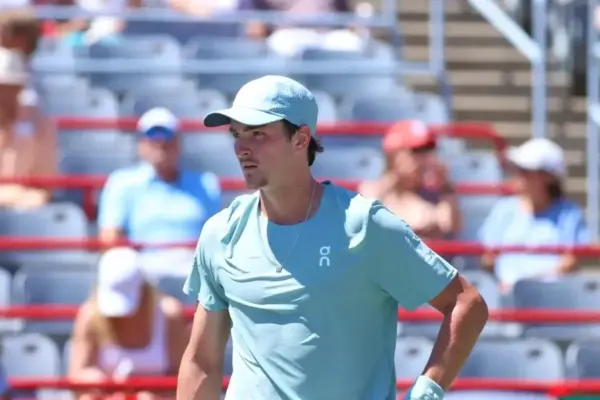
Joao Fonseca Confronts the Crushing Mental Demands of the ATP Tour’s Grueling Schedule
Joao Fonseca delivered a candid assessment of the punishing mental and physical grind imposed by the ATP calendar after securing a hard-fought victory at the Canadian Open.
The young Brazilian revealed the psychological strain players endure amid an unforgiving season packed with mandatory events and intense scrutiny over their participation choices.
Fonseca opened up in an exclusive interview with ESPN Brazil, emphasizing the overwhelming mental toll: “Obviously the tour is very tiring, mentally, and physically as well, but more mentally. So, I try to be as healthy as possible mentally during the year, so I think this was a bit of our choice,” he explained. “A lot of people criticize, but only we know what we go through, so we try to be as well-armed as possible, as well-prepared as possible, more mentally, because technically we can adapt, because this thing is long.”
The Brazilian’s comments highlight a growing chorus of top players voicing frustration over the ATP’s relentless schedule. With four Grand Slams, eight mandatory Masters 1000 events, and a minimum of four ATP 500 tournaments, elite competitors face a demanding calendar that can stretch to 16 or more high-stakes tournaments annually. Notable figures like Carlos Alcaraz and Jannik Sinner have publicly criticized the physical and mental burdens, sparking fierce debate around player welfare.
Fonseca’s remarks come amid heated controversy surrounding players skipping marquee events to preserve their health. The Canadian Open witnessed withdrawals from stars including Alcaraz, sidelined by injury, and Sinner, who faced backlash from Italian media and fans for strategically managing his schedule. The tournament director and Tennis Canada even pushed ATP to enforce stricter withdrawal policies, threatening sanctions to compel top-ranked players to compete at key events.
Despite returning from a month-long break, Fonseca showcased resilience with a gritty win over Stefanos Tsitsipas. The match was a tense battle featuring early breaks of serve and clutch moments, culminating in a 7-6(3), 7-5 triumph. The Brazilian will now face Casper Ruud in the third round, a familiar foe he recently defeated in a controversial French Open clash marred by the absence of Electronic Line Calling, which influenced a decisive point in a tiebreak.
The looming rematch in Montreal promises high drama, with both players hoping to avoid further line-calling disputes in what could be a thrilling three-set showdown. Joao Fonseca’s forthright admission about the mental rigors of the tour adds a revealing perspective to ongoing discussions about player burnout and the sustainability of one of sport’s toughest schedules.