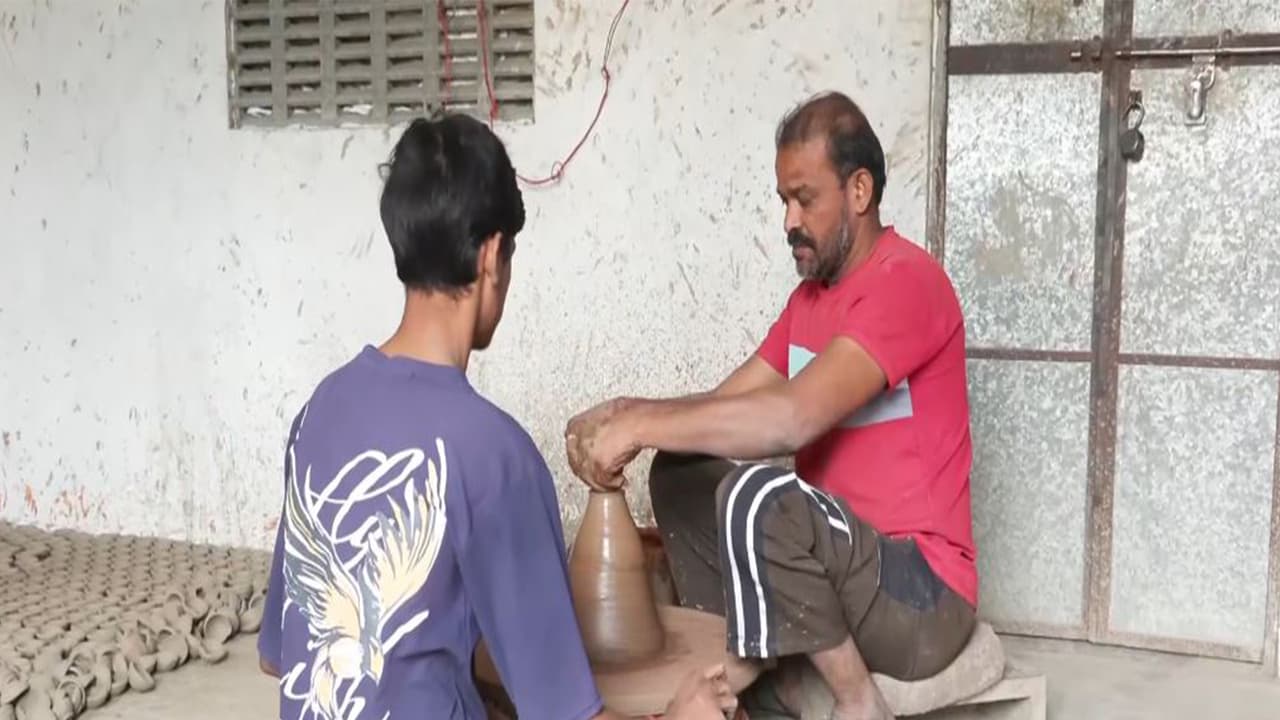
Artisans in Jaipur’s Jaysinghpura village are busy crafting traditional earthen lamps for Diwali. Despite rising inflation, these families continue a generations-old craft to meet festive demand and support their annual livelihoods.
Jaysinghpura Artisans Prepare for Diwali
With Diwali approaching, artisan families in Jaipur’s Jaysinghpura village are busy preparing traditional earthen lamps (diyas) and other clay-based decorative items, as demand for the traditional festive products picks up across markets. Located in the Dhabas area of Jaipur, Jaysinghpura is known for its traditional pottery, with several families engaged in the craft for generations. Weeks ahead of the festival, artisans are working to meet the growing demand, following the traditional process of preparing clay, shaping diyas on potter’s wheels, drying them, and firing them in kilns.
Tradition and Challenges in Pottery
The Crafting Process
Shankarlal Prajapat, a potter who makes earthen lamps, said preparations for Diwali begin two to three months in advance, as the festival holds special significance for families involved in pottery. “We started preparing for Diwali about two or three months ago. Diwali is an important festival where mitti diyas are lit. When Lord Ram returned home, Diwali was celebrated with mitti diyas back then too,” he told ANI. Explaining the process of preparing the clay, Prajapat said artisans collect soil from local ponds and mix two varieties of clay to make the earthen lamps. “We get this mitti from the local ponds. There are big ponds around here, and we bring it from there. That’s the mitti we use. We use two types of mitti. One is yellow mitti, and the other is black mitti. We mix them together,” he said.
Economic Factors
However, rising inflation has also affected the traditional pottery business, with artisans facing higher costs of production. “Inflation affects everything slowly, right? So when the cost of these things goes up, it’s just like electricity, water, vehicles, and everything else. Inflation hits us too, then,” Prajapat said. When asked about the different sizes of earthen lamps being produced this year and their demand compared to Chinese alternatives, the artisan responded positively, emphasising the importance of traditional clay diyas during Diwali. “Look, instead of Chinese, it’s Chinese, but what really matters are the mitti diyas we use for Diwali,” he said.
Sustaining Local Craft
The production process involves considerable effort, with members of artisan families, including women and children, contributing to the work. From kneading the clay to shaping, drying and firing the lamps, each stage requires time and coordinated effort to ensure adequate supplies ahead of the festival. For these families, Diwali is one of the most important periods of the year, as their annual livelihood largely depends on the sales of earthen lamps and other pottery items during the festive season. The traditional craft has also received encouragement under the ‘Vocal for Local’ initiative, which promotes indigenous products and supports local artisans. The increased preference for earthen diyas and clay-based decorative items during the festival provides an important source of income for pottery-making communities. With the festive season approaching, artisans in Jaysinghpura are hoping for strong demand for their products, as they continue the generations-old tradition of making earthen lamps that remain an integral part of Diwali celebrations. In 2026, the festival of lights (Deepotsav) will commence on November 6, 2026, with Dhanteras, while the festival of Diwali will be celebrated on November 8, 2026. (ANI)
(Except for the headline, this story has not been edited by Asianetnews Editorial staff and is published from a syndicated feed.)