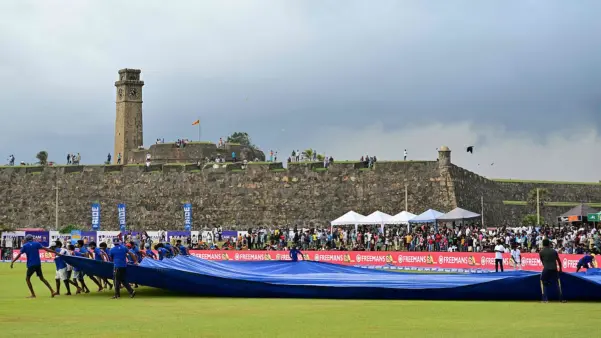
Galle: As Sunday, the second day of the first Test between India and Sri Lanka, meandered towards afternoon, Galle remained firmly under wraps.
Rain came in spells, sometimes light, sometimes heavy, forcing the players indoors and keeping the ground staff on constant alert. Nearly 100 groundsmen had meticulously laid out water-resistant tarpaulins across the ground, leaving not a blade of grass exposed to the rain.
In a place where rain is an ever-present threat, this elaborate exercise owes much to Jayananda Warnaweera, the former Sri Lanka all-rounder and long-time curator of the Galle International Stadium. Warnaweera pioneered the cumbersome but remarkably effective method, which has since been adopted at several other venues, including Eden Gardens in Kolkata, to prevent matches from being washed out.
Warnaweera, who once wielded enormous power in Sri Lankan cricket, died in near penury in Kandy last year, in his sleep. Reports claimed a bottle containing a poisonous substance was found beside his bed, while the Judicial Medical Officer of Kandy National Hospital returned an open verdict.
It was a tragic end to a life that is spoken about with admiration in private but remains almost taboo in Lankan cricket circles. Speak to anyone who knew Warnaweera and there will invariably be stories to tell, anecdotes to recall and memories of his contribution to building, and later rebuilding, the Galle stadium after it was devastated by the December 2004 tsunami. Yet few are willing to put those memories on record.
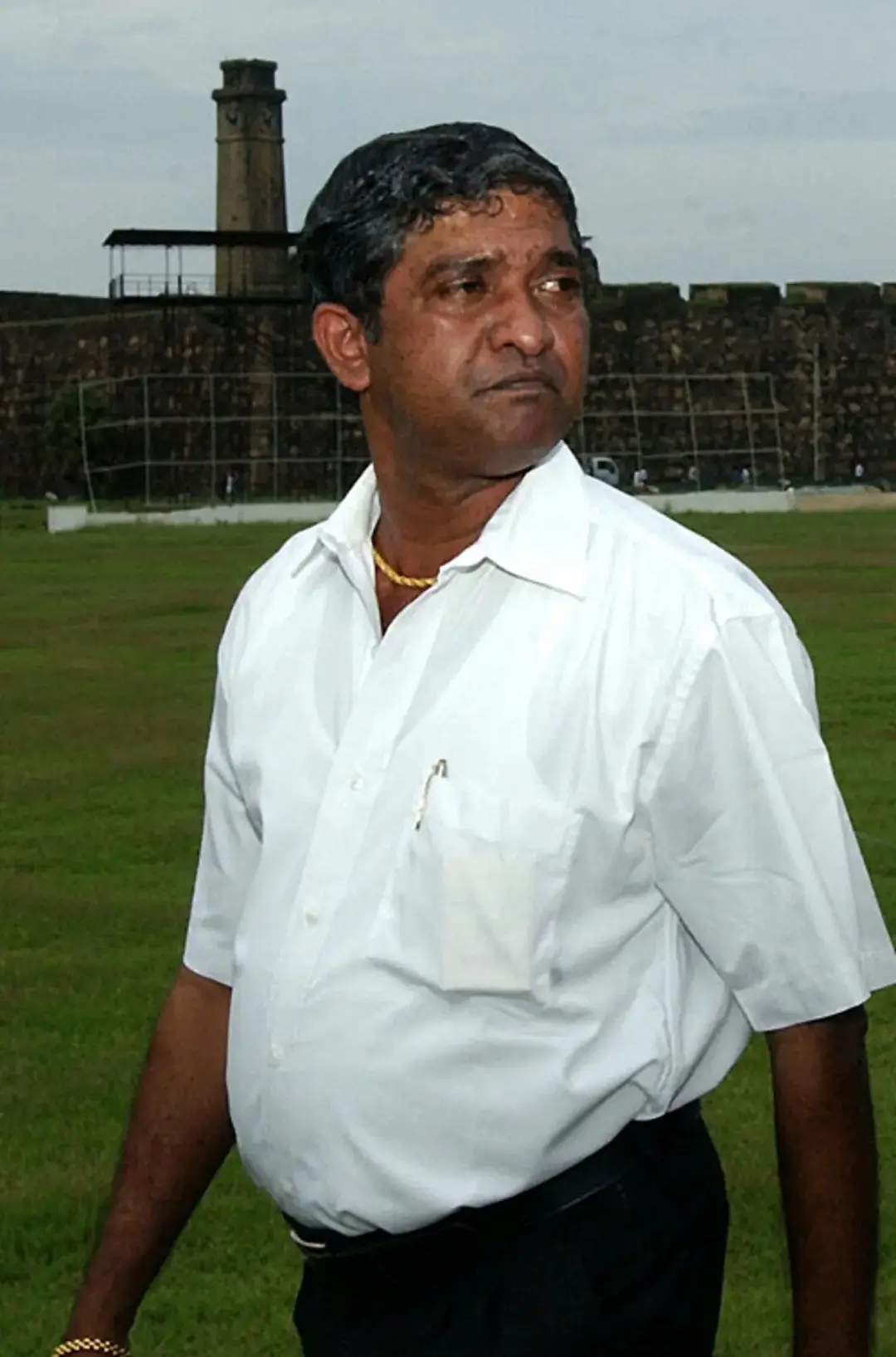
Jayananda Warnaweera
For all his extraordinary dedication to Galle, which became the only venue in Asia to host 50 Tests, Warnaweera was never an uncomplicated figure. His proximity to the high and mighty and his “my way or the highway” style earned him more than a few adversaries. But he had no shortage of admirers either.
Players valued his organisational skills and often wanted their farewell matches to be played at Galle. The people of Galle remained indebted to him for breathing life back into the stadium. The ground staff and employees, meanwhile, stayed fiercely loyal to a man who was known to look after them.
The Galle-born cricketer, who played 10 Tests and as many ODIs for Sri Lanka between 1986 and 1993, is remembered above all for resurrecting the stadium. When the tsunami struck, Warnaweera was at the stadium. Before he could fully comprehend what was happening, the stadium was under water, with enormous waves surging past natural and concrete barriers along the southern coast.
In a 2007 interview with Cricinfo, Warnaweera spoke about the devastation he witnessed and the personal anguish of seeing the stadium reduced to ruins.
“We were speechless for some time. Cricket and the stadium suddenly became a thing of the past as we tried desperately to save people from being drowned and being washed away by the tidal wave. The entire town was full of floating bodies and broken wreckage…. For the next three months after the tsunami we couldn’t think of anything else but be involved in relief work to those affected.
“When I saw the state of the stadium there was only sadness. I thought to myself why God had been kind to spare me. Shouldn’t I too have gone with the tsunami? With great difficulty we had to make up our minds and come to terms with reality. I had great belief that one day I would get a chance to put the stadium back to where it was.”
There were attempts to move the venue away from the Galle Fort area. Warnaweera would not let that happen. With the help of philanthropists, including a certain Shane Warne, he rebuilt the stadium, restored its pride and helped turn Galle into one of cricket’s most distinctive venues.
So, as Galle staged its 50th Test, did the locals miss Warnaweera’s ubiquitous presence, or had they simply grown accustomed to his absence?
For years, whenever a match was approaching, Warnaweera was rarely at home. He was at the ground, overseeing preparations, checking the pitch and making sure every detail of the match-day operation was in place. His responsibilities extended far beyond the square. Much of the logistics of staging a match passed through his hands.
Yet by then, the man who regarded Galle as his second home had already been cast out of it.
In November 2015, Sri Lanka Cricket suspended Warnaweera as caretaker of the Galle ground after he failed to attend an interview with the ICC’s Anti-Corruption and Security Unit (ACSU). A few months later, the ICC suspended him for three years from all cricket-related activities for his continued non-cooperation with the ACSU.
And just like that, Warnaweera, whose determination to rebuild Galle had been matched only by the strength of the fort across the road, became persona non grata in Lankan cricket.
The man was no longer welcome at the ground he had helped bring back to life.