And the issue ceases to be about content: it is about control.
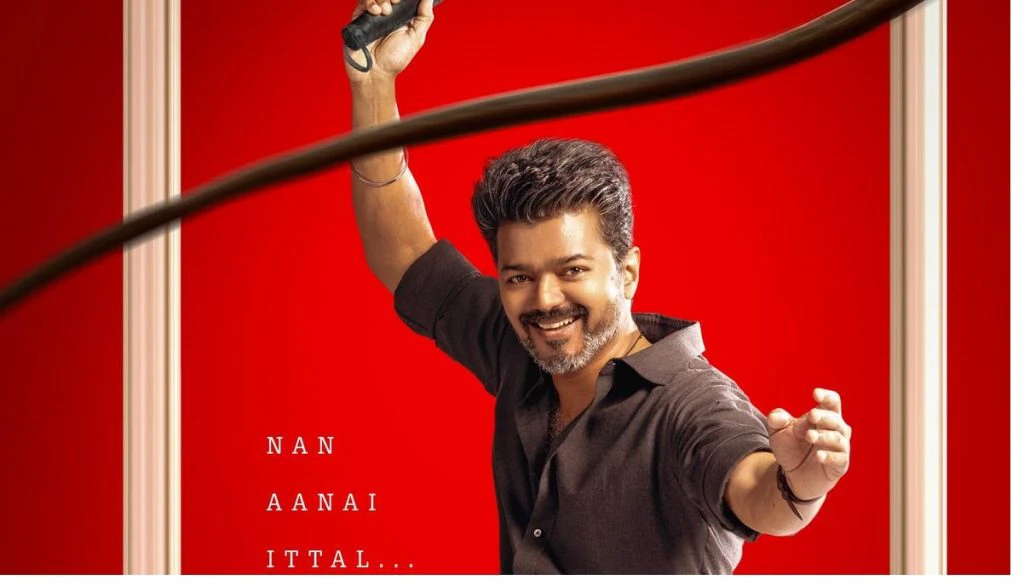
In Tamil Nadu, cinema and politics are intricately interwoven. The censor board’s unexplained delay in granting a screening certificate to Vijay-starrer Jana Nayagan seems to be the latest episode in the politicised world of Tamil cinema.
The much-anticipated movie has been touted as Vijay’s last in his acting career, since he wanted to focus on building his political organisation, the Tamilaga Vettri Kazhagam (TVK).
Initially slated for a global release on Friday, 9 January, the screenings of Jana Nayagan – or People’s Leader – have to be withheld after the censor board, which viewed the movie on 18 December, did not certify it fit for public viewing.
The certification delay revived a long-simmering anxiety in Tamil Nadu-the unresolved, volatile overlap between cinema and political power.
Many read the silence surrounding the delay as anything but routine. In a state where films often double as political statements, delays are rarely dismissed as a procedural coincidence.
That ambiguity partially ended on Friday when a single-bench judge of the Madras High Court directed the Central Board of Film Certification to immediately grant a U/A certificate to the film. Within minutes, the CBFC challenged the order.
The movie had been held up following a complaint alleging that certain scenes hurt religious sentiments. Single Bench judge Justice PT Asha, after examining the materials, observed that the grievance appeared to be an afterthought.
Yet, even with judicial intervention, the episode underscores a deeper reality: In Tamil Nadu, a star’s last film is never just a movie – it is a test of visibility, authority, and control.
Cinema as a parallel political institution
Unlike in neighbouring Kerala, where cinema is largely seen as an art form and a space for creative expression, Tamil Nadu’s political history cannot be separated from its cinema.
From CN Annadurai and M Karunanidhi embedding Dravidian ideology into screenplays to MG Ramachandran (MGR), J Jayalalithaa and Vijayakanth transforming charisma and mass heroism into electoral legitimacy, cinema in Tamil Nadu has functioned as a parallel political institution.
Films shaped language, identity, and even voting behaviour in Tamil Nadu. Subsequently, censorship, release delays and ”law and order” explanations have long functioned as tools through which the state negotiates cultural power.
The MGR parallel and Ulagam Sutrum Valiban
It is this context that has prompted comparisons between Jana Nayagan and MGR’s 1973 movie, Ulagam Sutrum Valiban (Globetrotting youngster). MGR was already drifting away from the DMK leadership under Karunanidhi during the film’s troubled production and delayed release.
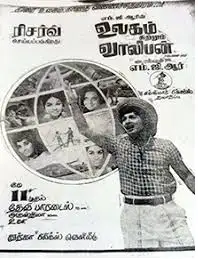 A poster of ‘Ulagam Sutrum Valiban’.
Officially, the setbacks were attributed to logistical difficulties and a devastating studio fire. Unofficially, the delay was widely read as a reflection of political hostility towards a rising rival. Soon, the DMK expelled MGR from the party.
Within four years, he became the chief minister. In Tamil Nadu’s political memory, Ulagam Sutrum Valiban is a reminder of cinema resembling political ambition.
Decade of resistance: Vijay’s troubled releases
Vijay’s experience over the past decade fits uncomfortably into that historical pattern. From 2010 onwards, his films have repeatedly encountered obstacles that go far beyond routine industry disputes.
Sura, released in 2010, was originally titled Sura – The Leader. Objections were raised to the tagline ”The Leader”, forcing its removal before release.
The discomfort was subtle but telling. A year later, Kaavalan faced an extraordinary delay in Tamil Nadu due to distributor pressure and financial disputes linked to Kalanithi Maran’s Sun Pictures.
The film reached theatres only after court intervention, an unusual step for a mainstream commercial release.
Thalaivaa: When the state stopped a film
The turning point came with Thalaivaa in 2013. Scheduled for release on 9 August, the film was abruptly stopped in Tamil Nadu hours before its premiere.
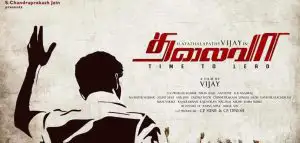 A poster of Vijay-starrer Thalaivaa. (Thalaiva/Facebook)
The AIADMK government led by Jayalalithaa cited ”law and order issues” following alleged threats.
Yet the film was released without incident overseas and in neighbouring states, including Kerala. Only Tamil Nadu, Vijay’s primary market, was blocked.
The film carried the tagline ”Time to Lead” and in the then political climate, the phrase was interpreted not as marketing, but as a message to the masses.
Although no official ban was issued, the denial of police protection and the climate of intimidation ensured that theatres stayed shut.
Thalaivaa eventually released after a prolonged delay, but the message had already been delivered: political power could decide access to entertainment.
Mersal: National politics and the ‘Joseph Vijay’ attack
If Thalaivaa reflected state-level intolerance, Mersal in 2017 marked the entry of national politics into Vijay’s cinema journey. The film contained dialogues critical of the BJP-led Union government’s policies, particularly GST and demonetisation and questioned corporate profiteering in healthcare.
The reaction was swift. Tamil Nadu BJP leaders demanded cuts and apologies. Senior party figures repeatedly referred to the actor as ”Joseph Vijay”, foregrounding his Christian identity in a manner widely criticised as communal dog-whistling. The attempt was not merely to challenge the film’s content but to delegitimise the speaker.
Theatre owners reported pressure, protests were organised outside cinemas, and demands continued even after the CBFC had cleared the film. Vijay had moved from being a regional star to a national political irritant.
Sarkar: Electoral politics on screen
The confrontation escalated further with Sarkar in 2018. The film dealt with voting rights, electoral manipulation and freebie politics, themes that cut close to the heart of Tamil Nadu’s political culture. DMK-affiliated groups accused the film of targeting government welfare schemes.
Protests broke out, theatres were vandalised, FIR threats were issued against the makers and dialogue changes were enforced after release.
Once again, censorship shifted from formal institutions to the street, with political mobilisation determining how a film could be seen.
Cinema politics: Soft censorship without orders
These episodes unfolded against the backdrop of Tamil Nadu’s theatre politics, an often invisible but decisive layer of control. A significant number of theatres in the state are owned or influenced by individuals aligned with the ruling party.
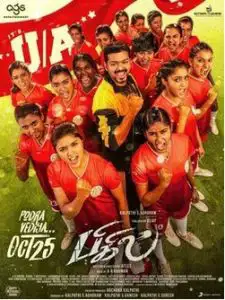 A poster of ‘Bigil’.
Licensing, taxation, local administrative permissions and police protection function as levers through which exhibition can be shaped.
Films perceived as politically inconvenient are often allotted fewer screens, denied prime time shows or quietly edged out by competing releases.
This form of soft censorship leaves no paper trail but can cripple a film commercially.
Over the years, Vijay’s films have repeatedly faced such exhibition-level resistance. Whether it was police-protected screenings for Kaththi in 2014, financial and distribution pressure during Puli in 2015, income-tax raids ahead of Bigil in 2019, legal uncertainty around tax exemptions for Master in 2021, boycott calls during Beast in 2022, or theatre allotment imbalances during Varisu and regional pressures around Leo in 2023, the pattern remained consistent.
Intersection of politics, film distribution
The contrast becomes sharper when viewed alongside Parasakthi, produced by Aakash Bhaskaran of Dawn Pictures, a close aide of DMK’s first family. The movie is being distributed by Red Giant, owned by Udhayanidhi Stalin, now Tamil Nadu’s Deputy Chief Minister.
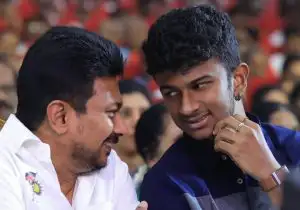 Udhayanidhi Stalin and Inban Udhayanidhi
The company is currently headed by his son Inban Udhayanidhi, aged 20, marking the continuation of a political-cinema lineage within the DMK’s first family.
Red Giant is not merely a production house. It is one of the most powerful distribution entities in Tamil Nadu, with significant influence over theatre chains and release logistics.
Control over distribution translates into control over screen counts, show timings and regional saturation, effectively shaping which films dominate the theatrical landscape.
Unlike Tamil Nadu, Kerala has no major politicians owning film production houses. Some filmmakers and actors with political leanings, like Aashiq Abu and Unni Mukundan, do run production companies, but their films rarely serve political agendas. Malayalam cinema may deal with political events, but not for anyone’s political gain.
Even Mammootty’s role as Chairman of Malayalam Communications, which runs CPI(M)-backed channels like Kairali TV and Kairali News, is different from Tamil Nadu’s Sun TV or Jaya TV. Kairali doesn’t use cinema to influence elections.
In Kerala, an actor’s popularity doesn’t necessarily help them in politics; for example, actors like Suresh Gopi, Jagadish, Murali, Ganesh Kumar, and Mukesh have seen little or even negative political returns.
Parasakthi: Ideology then and now
The symbolism of Parasakthi is impossible to ignore.
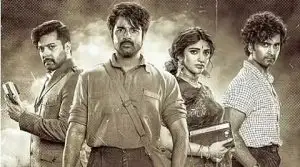 ‘Parasakthi;
The original 1952 film, scripted by M Karunanidhi, was not just cinema but ideology. It challenged religious orthodoxy, articulated rationalist thought and became a cornerstone of Dravidian political mobilisation. It reshaped Tamil Nadu’s cultural and political vocabulary.
The new Parasakthi, centred on the anti-Hindi agitations and a significant student-led protest in the 1960s that resulted in political change, has been criticised by opponents as an ideological reinforcement of the DMK’s foundational narrative.
Yet it got clearance for public screening. Many see Parasakthi as a counterweight to Jana Nayagan. The DMK appears keen to reclaim the election narrative by reviving the Hindi agitation, an emotive issue that once propelled the party to power in 1967.
By returning to this familiar mobilisation strategy at a critical electoral moment, the party seems to be betting on history to blunt a new political challenge emerging from the screen.
Selective politics on screen
These selective releases raise an unavoidable question. Cinema in Tamil Nadu has always been political, but not all politics are treated equally. When films aligned with the ruling-party ideology move unhindered, a politically unaffiliated star’s films face repeated friction, the issue ceases to be about content: it is about control.
Such uneven scrutiny exposes how censorship can be weaponised not to protect public order, but to manage political narratives. The screen becomes a gatekept space where only ”safe” politics is allowed to circulate freely, while uncomfortable voices are slowed, softened or stalled.
In a state where cinema has historically shaped elections and mass movements, this selectivity is not accidental. It is strategic.
What is being regulated is not a film, but influence. And when the state decides which politics may play uninterrupted on screen and which must struggle for clearance, censorship stops being a neutral process. It becomes a political filter deciding not just what audiences can watch, but what ideas they are permitted to engage with.
GoI won’t clear for IFFK 2025 screening
Jana Nayagan: A political theatrics
It is in this context that Jana Nayagan must be read. Vijay is no longer just a mass hero. He is a political force. A film released at this juncture is automatically perceived as political speech, regardless of its narrative framing.
In a state where cinema has historically produced chief ministers, a film that resembles leadership rehearsal inevitably unsettles the establishment.
The unease is only amplified by the film’s trailer, which openly carries sharp political punch dialogues/lines widely read as aimed at the ruling DMK government. The expectation that the film will contain many more such moments has heightened scrutiny, especially with Tamil Nadu heading into Assembly elections.
From Parasakthi to Ulagam Sutrum Valiban, from Thalaivaa to Jana Nayagan, the state’s history suggests a recurring truth. When cinema challenges power, resistance follows. And when resistance follows, the screen often becomes the first site of political transformation.