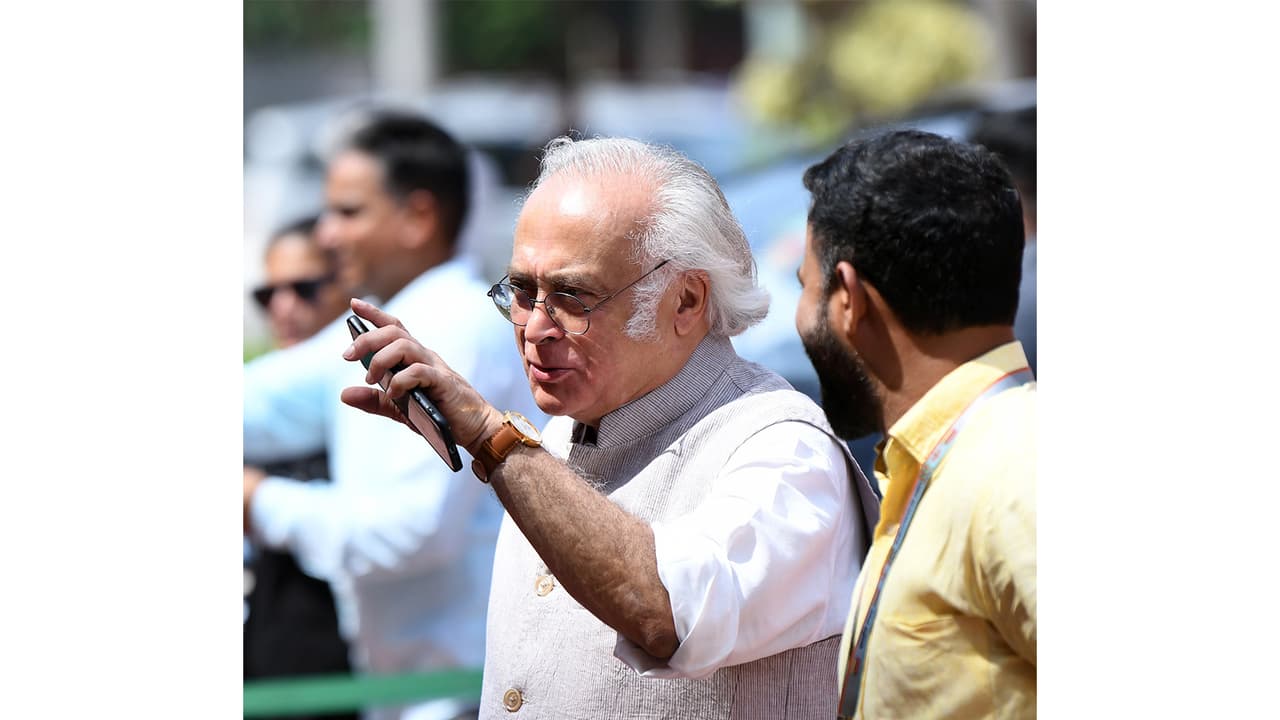
Congress’s Jairam Ramesh lambasted the BJP govt for its ‘shocking insensitivity’ in denying data on air pollution deaths. Citing multiple studies, he urged for urgent reforms to air quality standards, laws, and a proactive year-round approach.
Congress General Secretary Jairam Ramesh criticised the Bharatiya Janata Party (BJ)-led government for its handling of air pollution-related deaths, calling it “shocking insensitivity” and urging urgent reforms in air quality management. In a statement, Jairam Ramesh highlighted that the government, in the Rajya Sabha on December 9, had claimed that “there is no conclusive data available in the country to establish direct correlation of death/disease exclusively due to air pollution.” He pointed out that a similar claim had also been made by the government previously on July 29, 2024.
Scientific Evidence Contradicts Government Claims
Jairam Ramesh highlighted the latest scientific evidence, which shows a worrying situation. “In early July 2024, a study published in the prestigious Lancet journal showed that 7.2% of all deaths in India are associated with air pollution – about 34,000 deaths each year in just 10 cities. In August 2024, a study by the Mumbai-based International Institute of Population Sciences used government data from the National Family and Health Survey (NFHS V) to show that in districts where air pollution exceeds National Ambient Air Quality Standards (NAAQS), there is a 13% increase in premature mortality for adults and around 100% increase in mortality for children,” he said.
He further cited studies showing the long-term impact of polluted air. “In December 2024, a study published in The Lancet Planetary Health estimated that long-term exposure to polluted air contributes to roughly 15 lakh additional deaths in India each year compared with a scenario in which the country met the World Health Organisation’s (WHO) recommended safe-exposure limits. In November 2025, a report prepared by the Institute of Health Metrics and Evaluation at the University of Washington, USA, found that about 2 million deaths in India were linked to air pollution, a 43 per cent jump since the year 2000. About 70% of chronic obstructive pulmonary disease deaths were on account of air pollution.”
Existing Air Quality Measures Criticised
Ramesh stressed that the National Ambient Air Quality Standards, last updated in November 2009, require urgent revision and strict enforcement. He criticised the reactive approach of the National Clean Air Programme (NCAP) and Graded Response Action Plans (GRAPs), calling for proactive, year-round measures. “The current PM2.5 standard is 8 times the WHO guideline for annual exposure and 4 times the guideline for 24-hour exposure. Despite the launch of the National Clean Air Programme (NCAP) in 2017, PM2.5 levels have continued to rise and every single Indian lives in areas where these levels far exceed the WHO guidelines. NCAP itself needs an overhaul. Graded Response Action Plans (GRAPs) cannot remain the dominant focus of clean-air action. These plans are essentially reactive, with the emphasis being on crisis management and not crisis avoidance,” he said.
Urgent Reforms and Actions Demanded
He called for robust, multi-sectoral action with scale and speed throughout the year, not limited to the winter months of October to December. “We need tough multi-sectoral actions with scale and speed around the year and not just in the winter October-December months. The Air Pollution (Control and Prevention) Act, 1981, which has been more than adequate for four decades, may itself need to be revisited, as a public health emergency was not the background to its enactment. The National Green Tribunal, established in October 2010 by an Act of Parliament with the support of all political parties, has, sadly, been emasculated over the past decade and needs a fresh and renewed lease of life. Emission norms relaxed for power plants, along with other changes to laws and regulations, need to be rolled back,” Jairam Ramesh said in a statement.
“India simply cannot afford to pollute its way to prosperity,” he said. Increased pollution need not and must not be the price the people of the country are compelled to pay for faster growth. (ANI)
(Except for the headline, this story has not been edited by Asianet Newsable English staff and is published from a syndicated feed.)