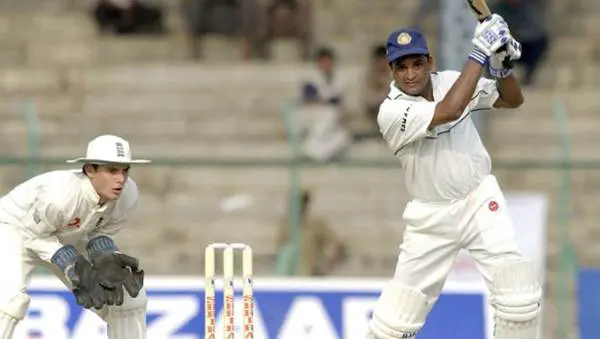
Patiala House Court has acquitted former India cricketer Jacob Martin of all charges in a criminal case that had been running for 22 years.
The case originated from a First Information Report filed in 2004 and had continued to affect the Vadodara resident long after his playing career came to an end.
The charges framed against Martin covered Sections 420, 468, 471 and 120B of the Indian Penal Code, along with Section 12 of the Passport Act. The allegations centred on a forged United Kingdom immigration stamp, travel arrangements and financial transactions, none of which could be established before the court.
The court determined that no credible evidence existed to connect Martin to the financial transactions attributed to him. It also found that his association with the Ajwa Sports Club, including any claimed role in its management, was not proven. The testimony of multiple witnesses did not support the prosecution’s case, and the charges were accordingly dismissed.
How did the case against Jacob Martin originate?
The matter traces back to a cricket tour that Martin organised to the United Kingdom in 2004. One member of the touring party overstayed his UK visa, which carried a validity of six months, and subsequently arranged a fake immigration stamp before attempting to return to India. Upon arrival, that individual was deported and detained at Indira Gandhi International Airport for questioning.
“In 2004 a team of mine had gone, which had gone to the UK to play. That team which went to play in England in 2004, everyone came back except one boy who stayed back in the UK. Because the visa had a validity of 6 months, he could stay for 6 months, but he overstayed for more than 6 months, so what happened was that he got fake stamping done there through someone. After getting fake stamping done, when he came back to India, he was deported from the UK, so he was caught at the IGI airport, and then he was questioned,” Martin said, as quoted by NDTV Sports.
Martin’s name did not feature in the original FIR. He was drawn into the case during the investigation, a development he attributed directly to his profile as an international cricketer. Martin had represented India in 10 ODIs at the turn of the 21st century, scoring 158 runs at an average of 22.57 as a right-handed batter.
What does the acquittal mean for Jacob Martin?
The two-decade legal process carried significant personal and professional consequences for Martin. He lost his employment with the railways while the case was ongoing and described the period as one of sustained stress. He also noted that the BCCI offered him no clarity or support throughout those years.
“My name was not even in the FIR, but when the investigation took place, I was involved in this case because the name was big and I was an international cricketer, because of that. And after the case ended, this… now, after 22 years… during these 22 years, I was not getting any answers from the BCCI either; I lost my job in the railways. So I had a lot of stress because of this, but this judgment that has come now- I have got a clean chit; it will be a big settlement for my life and very… after 22 years, this… appeal I have received is a very big U-turn for my life,” Martin said.
The Patiala House Court ruling formally clears Martin of every charge brought under the IPC and the Passport Act.