ISRO reports the successful placement of its latest navigation satellite in orbit, with further raising operations underway. The agency also highlighted progress on the Gaganyaan human spaceflight mission and upcoming Chandrayaan projects.
ISRO Navigation Satellite Mission Progress
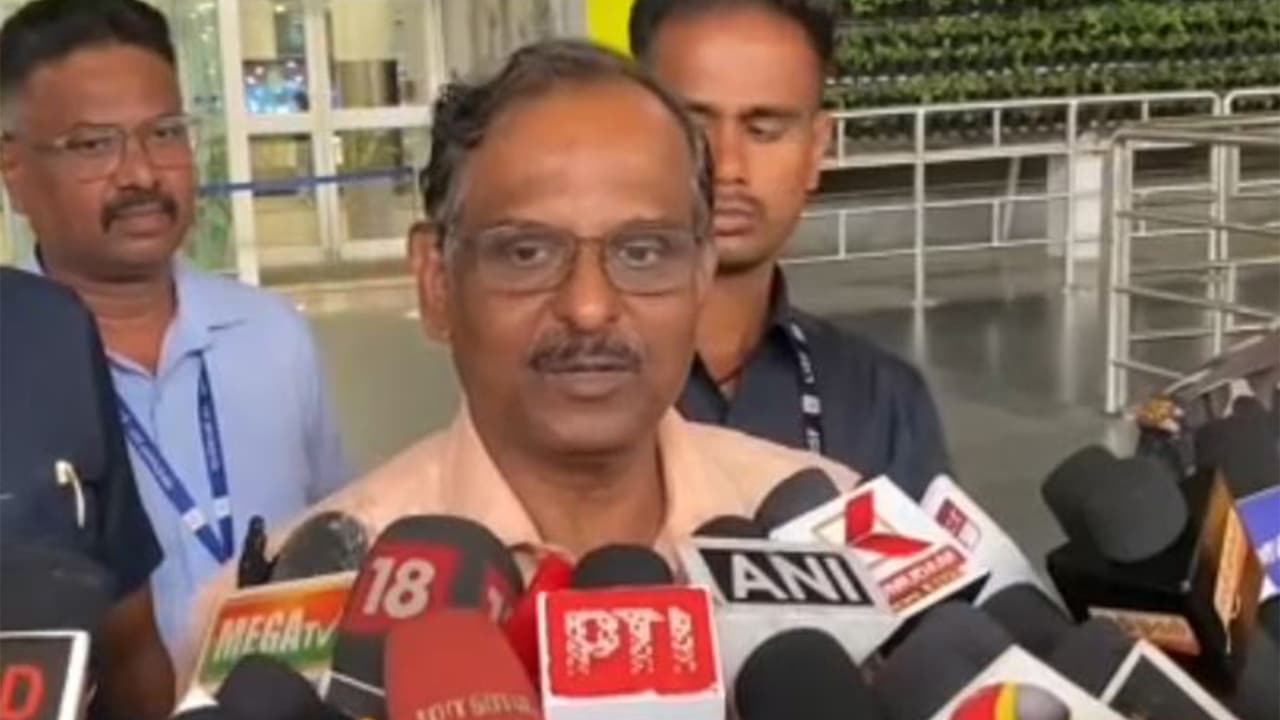
India’s navigation satellite mission has achieved a major milestone, with the recently launched satellite successfully placed in an elliptical orbit and further orbit-raising operations underway, ISRO Chairman V Narayanan said on Sunday. Speaking to reporters after arriving in Chennai, Narayanan said the satellite launched on October 30 was initially placed in an elliptical orbit at an altitude of around 38,000 km. Using its onboard propulsion system, the satellite was raised by another 5,500 km on Saturday, while further operations continued on Sunday to take it to a higher orbit.
Strategic Importance and Future Missions
Describing the mission as a grand success, he said satellite-based navigation technology was essential for determining location, time and direction. At least four satellites were required to provide comprehensive navigation services. “The technology would have applications in public safety, aircraft landing and take-off operations at airports, maritime navigation and several other sectors,” he said.
India currently has 56 satellites in orbit, but thousands of satellites would be required to meet all future requirements and support various applications, Narayanan said. Responding to a question on whether satellites could help track child trafficking and identify abducted children, he said thousands of satellites would be needed for such extensive monitoring.
Human Spaceflight and Research Updates
On the Gaganyaan human spaceflight programme, Narayanan said the project was progressing well, with around 8,000 tests conducted so far. ISRO plans to send uncrewed missions before sending astronauts into space, and preparations for the first phase of the launch were progressing successfully. “Work on the Chandrayaan-4 and Chandrayaan-5 missions was also progressing. Chandrayaan-4 is scheduled to be undertaken in 2028,” he said. He further said, “Scientific research missions have generated around 37 terabytes of data so far, which has been made available on the internet for public access.”
Regarding the new rocket launch facility at Kulasekarapattinam in Thoothukudi district, Narayanan said construction work was progressing, and the first rocket launch from the facility was expected in March or April 2027. (ANI)
(Except for the headline, this story has not been edited by Asianetnews Editorial staff and is published from a syndicated feed.)