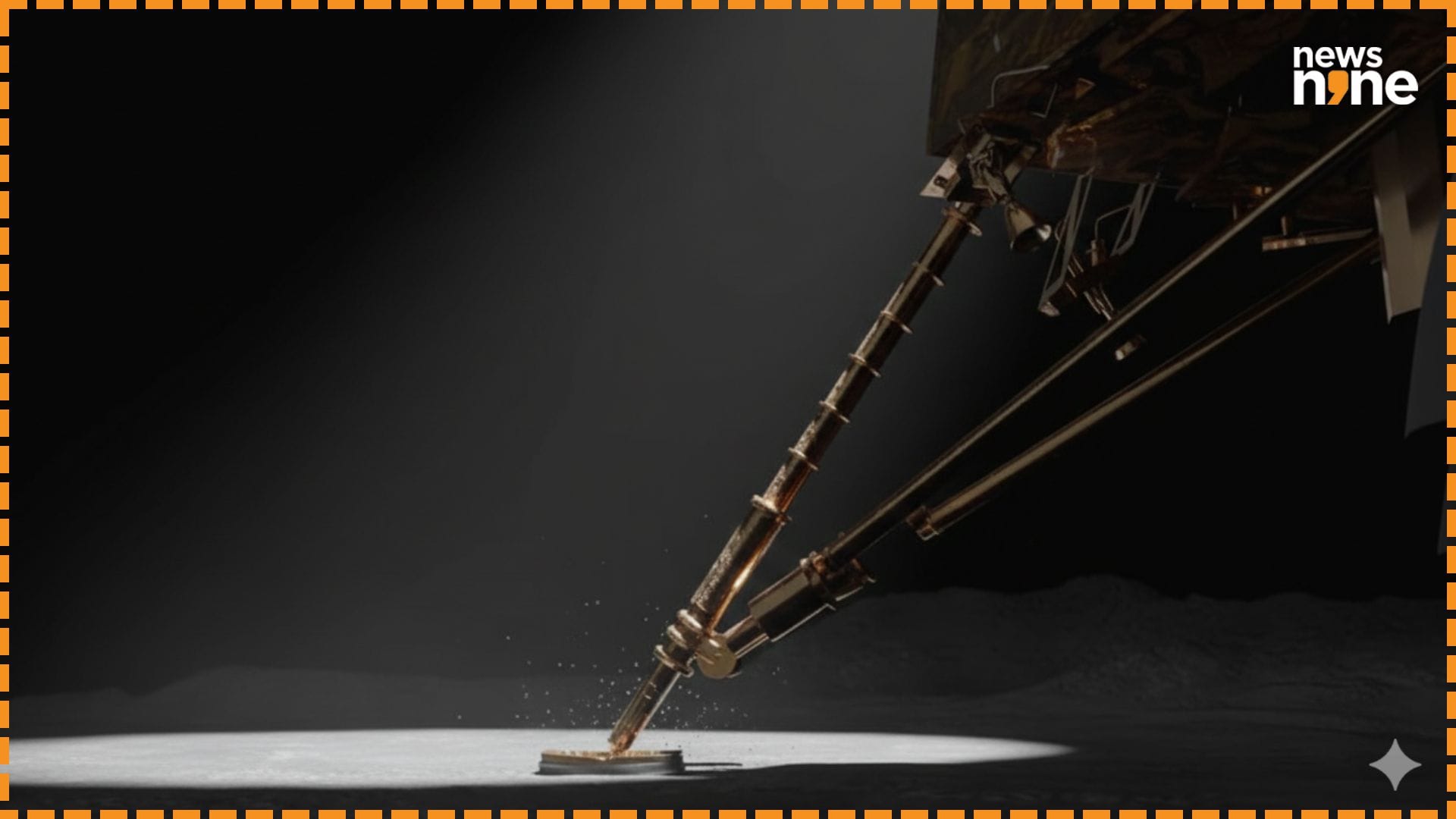
New Delhi: ISRO has made available the legs used for its Vikram lander for technology transfer to Indian industries. The lander leg mechanism was initially developed by ISRO for the Chandrayaan 2 mission, and then was fortified for the Chandrayaan 3 mission to handle more extreme forces. The Chandrayaan 3 mission was a phenomenal success, heralding India as among the few countries with active operations on the lunar surface. A number of New Space startups across India have lunar ambitions, and ISRO is now making the lander leg mechanism available to private industry partners to accelerate their plans. The legs are designed to accommodate landers up to 800 kg in mass.
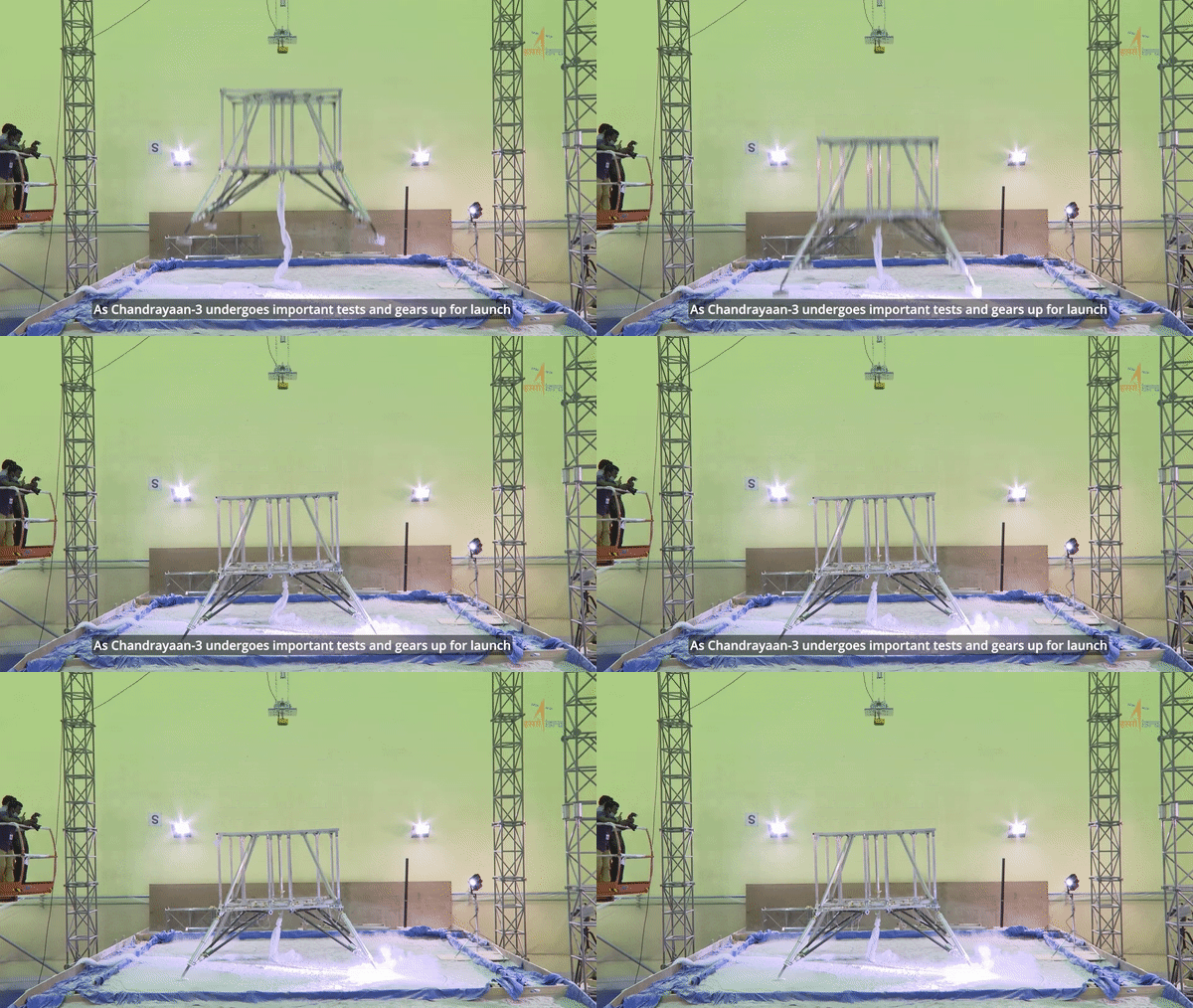
The fortified legs being tested. (Image Credit: ISRO).
The Lander Leg Mechanism is being offered by the UR Rao Satellite Centre (URSC) in Bengaluru, that realises most of the spacecraft launched by ISRO. The overall design is that four Lander Leg assembles are attached to the lower deck of Moon Landers. The primary objective of the legs is ensure a safe, soft touchdown on the lunar surface. The legs are designed for spacecraft approaching the lunar surface with a vertical velocity less than two metres per second, and a horizontal velocity less than 0.5 metres per second. The legs are designed for a maximum slope of 12 degrees.
Absorbing the shock of landing
ISRO has actually tested the lander legs beyond the stated capacities. The leg itself has a telescopic damper assembly that absorbs some of a shock, with a telescoping piston attached to the footpads. The footpads are of an advanced design, using crushable honeycomb dampers that absorb the shock of the landing. There is also a Knee Damper Assembly that also absorbs energy. These three cushioning assemblies together ensure that the lander can reach the lunar surface safely, and start operating the payloads. The subassemblies can be tested individually. Each of the legs have the same design, so the same legs can be used in all the four positions. ISRO has as a provision for sensing elements to indicate the crushing. If you are an Indian New Space Startup making a lunar lander, the tried-and-tested ISRO landing leg is available for use.