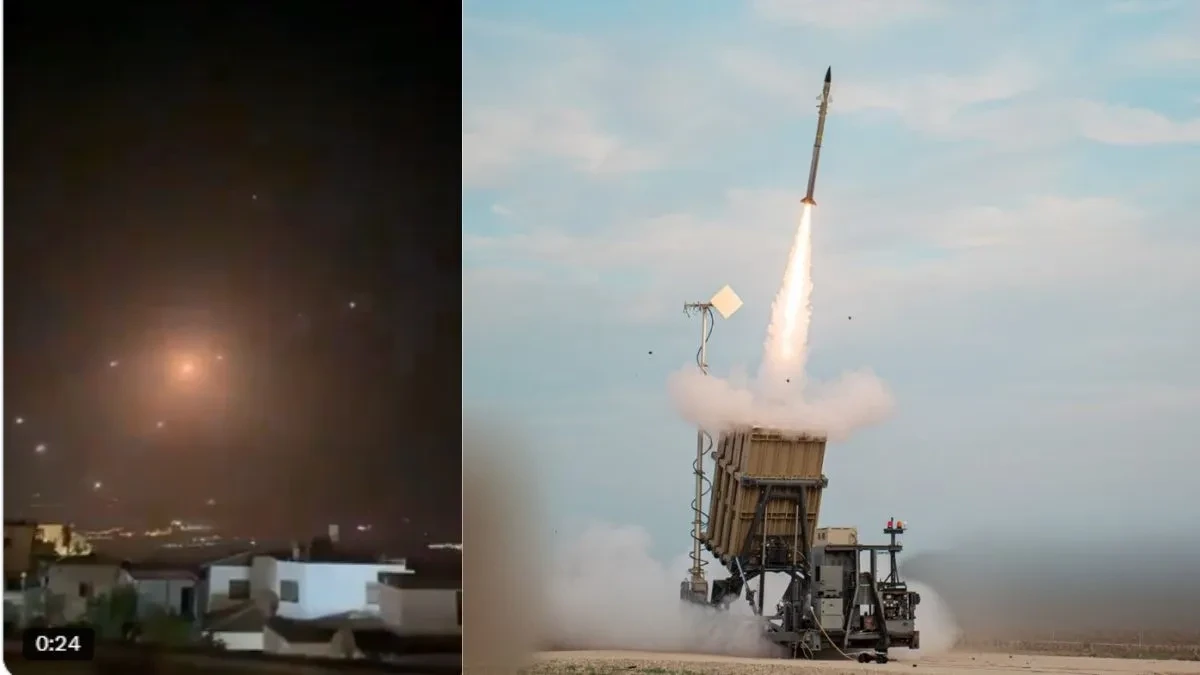
When large numbers of rockets, drones, and missiles are fired in a short period of time, one serious question comes up: does Israel have enough interceptor batteries and missiles to keep the Iron Dome fully effective?
The concern is not about whether the system works – it clearly does. The real issue is whether it can sustain performance during long and intense wars.
Israel is geographically very small. It is located close to multiple hostile fronts – Iran to the east, Lebanon to the north, and Yemen, where the Houthis operate, to the south. In military terms, this means there is very little warning time between a launch and impact.
Because of this, Israel depends heavily on fast, layered air defense systems. But those systems rely on interceptor supplies that are expensive and not unlimited.
So here it is, how Iron Dome works, how it performed in recent conflicts, and why the question of replenishment and U.S. support remains critical.
What Is Iron Dome and How Does It Work?
Iron Dome is a short-range air defense system developed by Rafael Advanced Defense Systems and Israel Aerospace Industries, with major financial and technical support from the United States. It is designed to intercept rockets, short-range missiles, and certain types of drones.
The system has three key components:
- A radar that detects incoming projectiles.
- A command-and-control unit that calculates the trajectory and predicts where the projectile will land.
- A launcher that fires interceptor missiles only if the incoming threat is expected to hit a populated area or important infrastructure.
This selective interception is important. Iron Dome does not fire at every rocket. If a projectile is heading toward an open field, the system conserves its interceptor. This makes the system efficient and cost-conscious.
It is also important to note that Iron Dome is purely defensive. It cannot be used to strike ground targets or attack other countries. Its only purpose is to stop incoming threats from reaching civilians.
Performance During the October 7, 2023 Attacks
On October 7, 2023, Hamas launched thousands of rockets toward Israeli cities in a short span of time. Iron Dome intercepted nearly 90 percent of the rockets it engaged. Without it, civilian casualties would likely have been far higher.
However, that attack revealed something important: when rockets are launched in massive waves, even a highly effective defense system faces pressure. Interceptors are used rapidly. Batteries must stay active around the clock. Resupply becomes urgent.
Still, the system proved essential in preventing large-scale loss of life.
The 2025 Iran-Israel Conflict: A More Complex Challenge
The situation became even more serious in mid-2025, when Iran directly attacked Israel during a 12-day escalation. Unlike rocket fire from Gaza, this assault included ballistic missiles, cruise missiles, and drones.
More than 150 ballistic missiles and around 100 drones were launched. This forced Israel to activate its full multi-layered air defense network, including:
Iron Dome for short-range threats
- David’s Sling for medium-range missiles
- Arrow 3 for long-range ballistic missiles
- Barak systems
- The newly introduced Iron Beam laser system
- U.S.-supplied THAAD and Patriot systems
Reports suggested interception rates between 86 and 90 percent across the different systems combined. Iron Dome focused mainly on short-range attacks from Hezbollah and Iranian-backed forces, while longer-range ballistic missiles were intercepted by Arrow and David’s Sling.
Iran reportedly used advanced missiles designed to overwhelm defenses by releasing multiple warheads. Although many were intercepted, such tactics increased pressure on interceptor inventories.
Military experts described this period as one of the most intense tests of Israel’s air defense architecture.
The Key Concern: Interceptor Supply and Cost
Each Iron Dome interceptor costs roughly $80,000. During heavy conflict, hundreds can be used within days. When multiple fronts are active at once – Gaza, Lebanon, Syria, and potentially Yemen – the demand increases dramatically.
The effectiveness of Iron Dome depends not only on technology but also on logistics. Batteries must be stocked. Interceptors must be produced quickly. Supply chains must remain stable.
If stockpiles fall too low, even temporarily, the system’s performance could weaken. Not because the radar or software fails – but because there may not be enough interceptors to respond to every threat.
This is especially serious for Israel because of its size. Unlike larger countries, it does not have geographic depth. Major cities are close to borders. Rockets from Lebanon can reach urban centers in minutes. That short distance reduces reaction time and increases reliance on interception.
Why U.S. Support Is Crucial
The United States plays a central role in sustaining Iron Dome. Since 2011, Washington has provided funding for development and replenishment. Over half of Iron Dome components are now manufactured in the U.S., supporting American industry as well.
After the October 2023 attacks, the U.S. Congress approved a large emergency aid package that included funds to restock Iron Dome interceptors. This followed a long-term defense agreement signed in 2016, committing billions of dollars to Israel’s missile defense programs.
Without U.S. financial support and industrial production capacity, replenishing interceptors during prolonged wars would be far more difficult. The partnership ensures that Israel can quickly replace used interceptors and maintain readiness.
Iron Beam: A Possible Long-Term Solution
In September 2025, Israel announced the operational readiness of Iron Beam, a laser-based air defense system. Unlike Iron Dome, which uses interceptor missiles, Iron Beam fires concentrated laser energy to destroy short-range threats.
The advantage is cost. Laser shots are far cheaper than missile interceptors. If fully deployed and scaled, Iron Beam could reduce the burden on Iron Dome during heavy rocket barrages.
However, laser systems have limitations. Weather conditions like heavy clouds or dust storms can reduce effectiveness. High-speed ballistic missiles still require traditional interceptors.
Therefore, Iron Beam is not a replacement – it is an addition to a layered system.
Can Iron Dome Stay 100% Effective?
No air defense system can guarantee 100 percent protection forever under unlimited attack. Iron Dome has proven extremely successful, often intercepting close to 90 percent of the threats it engages. But sustainability depends on several factors:
The scale of incoming attacks
- Duration of conflict
- Speed of interceptor production
- Continued U.S. funding and industrial support
- Enemy tactics designed to overwhelm defenses
If Israel were to face simultaneous large-scale attacks from Iran, Hezbollah, Hamas, and Houthi forces, the strain on interceptor supplies would be enormous.
Still, past conflicts show that Israel’s layered system is adaptable and resilient. Improvements in technology, coordination with U.S. systems, and the introduction of laser defense offer additional strength.
Iron Dome remains one of the most advanced and effective defensive systems in the world. It has saved countless lives by intercepting rockets, drones, and missiles aimed at civilian areas.
However, the recent intensity of regional conflicts has raised an important strategic question: can Israel maintain enough batteries and interceptors to keep the system operating at high efficiency during prolonged and multi-front wars?