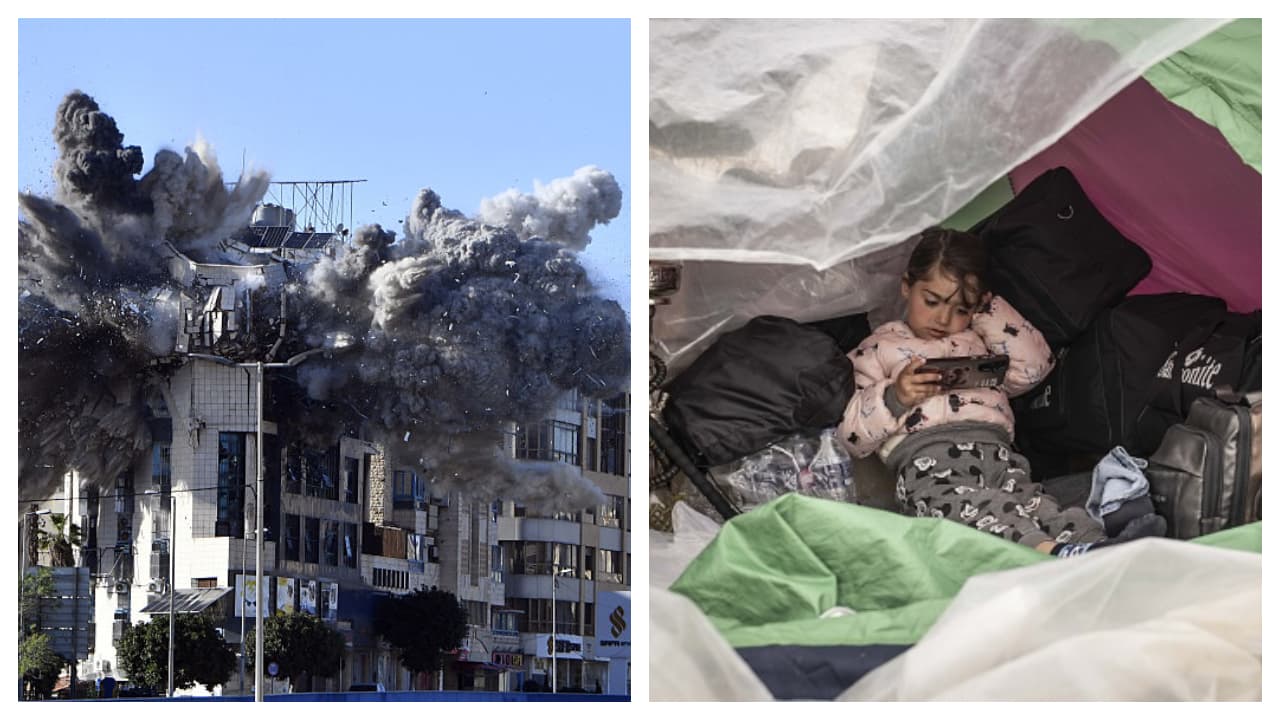
In the name of fighting Hezbollah, Israel wants to expand its territory by occupying southern Lebanon. There is a plan to capture one tenth of Lebanon by forcibly evicting the local people there and demolishing buildings.
“Will we ever be able to return home? And even if we do, will there be anything left there?” – This is Huda’s question.
Israel is carrying out a major military incursion into Lebanon under the cover of its ongoing war with Iran. It is said that this action is against Hezbollah, an organization close to Iran, but the real objective is to expand our country by occupying Southern Lebanon. Israel’s plan is the same as in the Palestinian territories – expel the local people, destroy buildings and occupy one-tenth of Lebanon. The surprising thing is that Israel’s Defense Minister himself has openly announced this plan.
Israel has its sights set on southern Lebanon, which has been a Hezbollah stronghold for decades and is largely populated by Shia Muslims. After Israeli warnings, the villages here lie empty and deserted. Houses and buildings have been turned into debris in the air strikes. Bridges have also been destroyed, increasing the danger to the surrounding areas. Many cities in southern Lebanon have been almost completely destroyed. Meanwhile, Israeli ground forces are moving into the interior of southern Lebanon and fighting Hezbollah in the mountainous areas.
Israel’s plan and the world’s silence
This week Israel revealed its plan. According to the plan, after the end of the ground war, a large part of southern Lebanon from the border to the Litani River would be captured. Israel claims its aim is to create a ‘security zone’ to prevent attacks against it. On Tuesday, Israeli Defense Minister Israel Katz said, “The millions of people who have fled southern Lebanon will not be allowed to return until the safety of residents of northern Israel is ensured.”
Lebanon has strongly condemned this military action by Israel and appealed to the international community to intervene. Last week, Lebanese Prime Minister Nawaf Salam warned UN Secretary-General Antonio Guterres about the possibility of Israeli occupation south of the Litani River. But, neither the United Nations nor the international community has taken any concrete steps. The world is just watching silently as Israel tries to occupy Lebanon by breaking international laws.
Air attacks on villages, buildings razed to the ground
Israel is completely destroying the Lebanese villages located on the border. Defense Minister Israel Katz reiterated on Tuesday that it was part of a plan to capture southern Lebanon. He compared it to the crackdown in Gaza’s Rafah and Beit Hanoun, where entire neighborhoods were destroyed using bulldozers and explosions.
Even in the 2024 war, Israel destroyed many border villages of Lebanon. At least six villages were destroyed. Israeli airstrikes continued even after the ceasefire, preventing villagers from rebuilding their destroyed homes. Israel did not even allow these villagers to build temporary houses.
Bombing on bridges, people trapped in net
Not only buildings, bridges are also being targeted on a large scale. The Israeli army has destroyed most of the main bridges over the Litani River, saying it wants to prevent Hezbollah from bringing its forces into southern Lebanon. The river is about 20 miles from the Israeli border and separates southern Lebanon from the rest of the country.
Most of the river passes through deep gorges, so these bridges are very important. Only through these bridges could the common people trapped in the south come out and medicines, food and other essential items could be delivered to them. Now that Israel has destroyed the main bridges connecting northern and southern Lebanon, people are using smaller mountain roads. If Israel closed them down too, southern Lebanon would be completely isolated.
Israeli forces surround cities
A ceasefire agreement was reached between Hezbollah and Israel in late 2024. But even then Israel held five military posts near the border. Now Israel has sent at least 5,000 ground troops there. Israel has not clarified whether its forces will go to the river or take control from a distance, nor has it said how long they will remain there.
The New York Times, analyzing satellite photos, reports that Israeli military vehicles are deployed in four Lebanese towns near the border. In the border town of Khiyam, Israeli strikes have leveled several neighborhoods and collapsed buildings. Tanks and armored vehicles are clearly visible in the pictures. Israeli military vehicles were also seen surrounding a hospital complex in the nearby town of Mays al-Jabal.
As soon as the war started, the residents left everything and ran away. Ali Akkar, 78, who was displaced from Khiyam, told The New York Times, “We had recently rebuilt the houses destroyed in the last war. Now everything is being destroyed again. Last time there was some hope of returning, this time there is not even that.”
Petrol pumps are also becoming targets
Israel is carrying out airstrikes on homes, petrol pumps, money exchange offices and other civilian targets it alleges are used by Hezbollah. In this war, Israel destroyed four petrol pumps of ‘Al Amana Petroleum Company’. It is a major fuel supplier previously sanctioned by the US due to its ties to Hezbollah. Israel claims that these pumps are a major source of income for Hezbollah. News agency AFP had released pictures of a damaged petrol pump between Nakhaura and Tyre.
The New York Times says that these petrol pumps were a great relief for the common Lebanese people, as fuel was available at subsidized rates amid rising fuel prices due to the Iran war.
Huda Rajab, a displaced 28-year-old from a village near the city of Khiyam, told The New York Times, “This time the devastation and fighting is greater than last time. The danger of this war is very great. Will we ever be able to return to our homes? And even if we do return, will there be anything left there?”