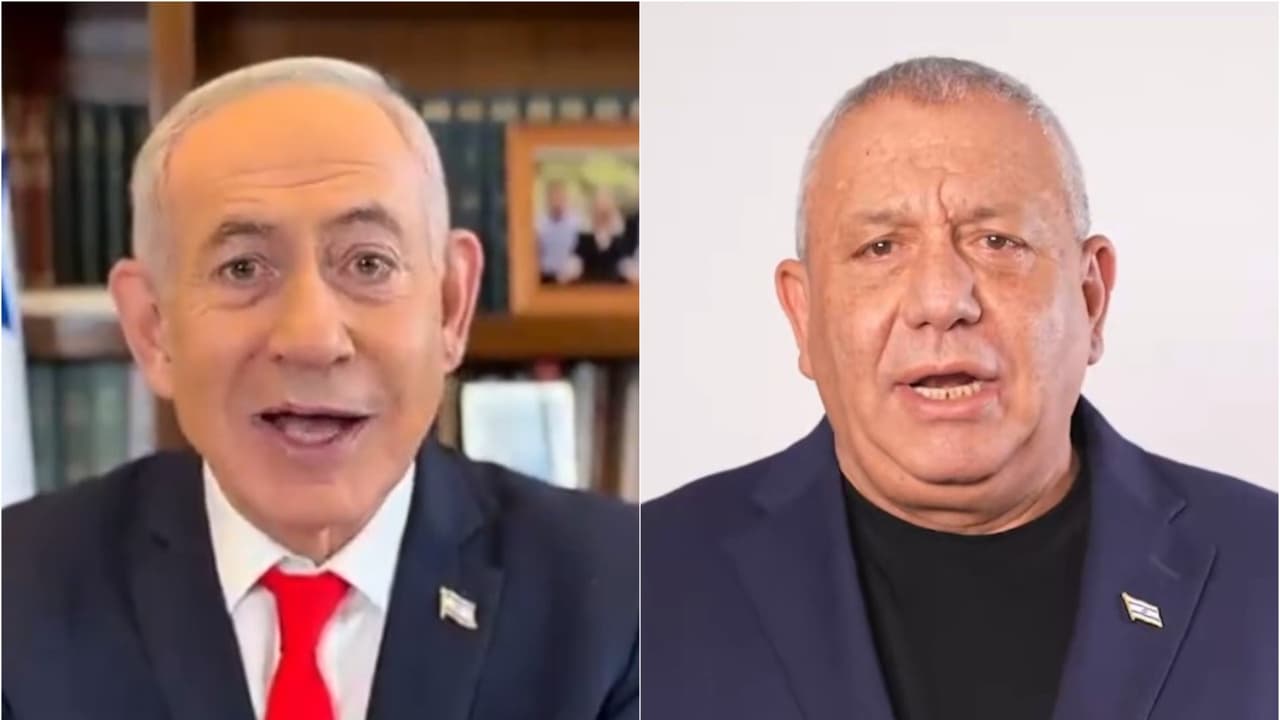
Israel’s general election results in a stalemate as neither Netanyahu’s alliance nor the opposition secured a majority. Voter turnout hit a historic high of 74.3% in a deeply divided political landscape following the October 7 massacre.
Election Stalemate in Israel
No definitive winner has emerged from Israel’s general election, according to exit polls published by Channels 11, 12 and 13 on Tuesday night, which indicated that both Prime Minister Benjamin Netanyahu’s bloc and the opposing faction failed to secure the requisite 61-seat majority in the Knesset, The Jerusalem Post reported. The opposition bloc, encompassing Yashar, B’Yachad, Yisrael Beytenu and the Democrats, was forecast to secure between 50 and 53 seats, whereas Netanyahu’s alliance was projected to win approximately 50 seats. Consequently, neither political camp demonstrated an immediate, unobstructed path towards establishing a governing coalition.
Meanwhile, the Joint List and Ra’am were anticipated to collectively capture 17 to 18 parliamentary seats, positioning Arab factions as potential kingmakers in upcoming coalition discussions. Despite this numerical weight, opposition figures have largely dismissed the prospect of partnering with Arab parties, with the exception of the Democrats’ Yair Golan. Netanyahu’s Likud party was projected to claim 24 to 25 seats, retaining its status as the single largest party in the incoming legislature, while Gadi Eisenkot’s Yashar party was expected to secure 21 to 23 seats, based on the network projections. Pre-election surveys conducted prior to Tuesday’s ballot had already signalled that neither Netanyahu’s bloc nor his adversaries would comfortably clear the 61-seat threshold.
Record Voter Turnout and Challenges
Historical Engagement
Concurrently, data compiled by the Central Elections Committee, which has systematically measured voter participation at designated intervals since 1973, showed that overall turnout climbed to its highest point in over half a century. Further complicating efforts by Netanyahu’s bloc to consolidate a governing majority, minor right-wing factions hovering near the electoral threshold, namely Ofer Winter’s People of Israel and Yoaz Hendel’s The Reservists-Economic party, were both projected to miss the mandatory 3.25 per cent cutoff required to enter parliament, The Jerusalem Post added. Reflecting this historic electoral engagement, national voter participation surged to 74.3 per cent by 8 pm, according to official data released by the Central Elections Committee, representing a notable increase from the 70.63 per cent recorded during the 2022 polls. Building on that momentum, turnout had earlier reached 66.7 per cent by 6 pm, marking a nine-percentage-point leap compared to the 57.7 per cent recorded at the same hour in the previous general election and establishing the highest participation ever recorded at that hour in the nation’s history, according to The Times of Israel. As the high-stakes election drew towards its closing hours, millions of citizens visited polling stations throughout the day, creating long queues that pushed midday turnout to 31.5 per cent by 12 pm and climbed to 55.7 per cent by 4 pm, significantly surpassing previous electoral benchmarks.
Campaign Rhetoric
With the late-day figures underscoring an unprecedented mobilisation, political leaders across the spectrum launched final appeals to sway remaining voters. Prime Minister Benjamin Netanyahu issued an urgent video address urging Likud supporters to head immediately to the polls, warning that surging turnout among Arab parties and political rivals threatened to bring a “leftist government” to power. Characterising the vote as a critical turning point, Netanyahu called on his supporters to rally family and neighbours while cautioning conservative voters against supporting right-wing alternatives or splinter parties. “Only this way do we win, and it is possible to win, but you must go out!” he said, urging voters to cast their ballots for Likud using its ballot letters (Mahal).
In sharp contrast, Netanyahu’s principal challenger and Yashar Party chairman Gadi Eisenkot accused the incumbent of resorting to “tricks, lies and intimidation” to mobilise the electorate. In a social media post, Eisenkot warned that the Prime Minister’s campaign tactics put the prospects of a change in government at risk, while calling on supporters to remain active until polling closed at 10 pm. The general election, the first to be held since the Hamas-led massacre of October 7, 2023, unfolds amid deep national divisions over security accountability, state leadership and the independence of Israel’s democratic institutions. Prime Minister Netanyahu, who has remained at the centre of power for 19 years, faces a formidable challenge from former IDF Chief of Staff Gadi Eisenkot and his Yashar Party, which led in various opinion surveys ahead of the vote. (ANI)
(Except for the headline, this story has not been edited by Asianetnews Editorial staff and is published from a syndicated feed.)