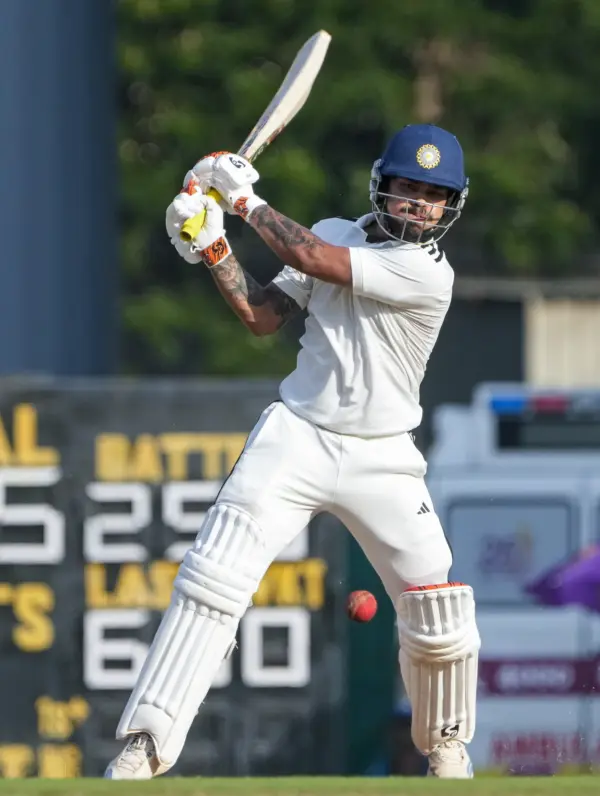
Chennai, Sep 7 (PTI) After producing an epic knock of 270, Ishan Kishan on Monday said he has freed his mind from “overthinking” and “expectations” to focus solely on batting after a turbulent phase in his career, and he is pleased with the ensuing result.
East Zone skipper Kishan saw his monumental effort in the Duleep Trophy final against South Zone here as the most visible manifestation of that inner change.
“I didn’t actively try to change myself. It just happened naturally. When I was out of the (India) squad, I realised that we ultimately only have one job to do: simply to score runs. That is the only thing that helps you in your career,” Kishan said in the post-day press meet.
“Any other thoughts will only manipulate your mindset, push you into overthinking, and pile on unnecessary pressure. I realised that those extraneous thoughts aren’t necessary. Our job is to step in and win matches for the team.
“That’s all you should care about. You evolve with time, and I feel it is much easier to play this way when you keep your mind clear,” he added.
Back in 2023, Kishan was an all-format player for India but a trail of unforeseen events culminated in him even losing BCCI’s central contracts.
But he put in the hard yards in domestic cricket, scoring hundreds in the Ranji Trophy (2025-26) and helping Jharkhand to win that season’s Syed Mushtaq Ali Trophy scoring 517 runs with two hundreds.
The BCCI contract and a place in the white ball formats came calling very soon.
Now, Kishan has distanced himself from those dark days.
“The best thing I’m doing nowadays is not thinking about anything. My job as a batsman is just to go there, watch the ball, and react to it and not keep any expectations from myself.
“At times, you will, obviously, lose patience. But that is the time when you have to talk to yourself; you have to control that, calm your thoughts about whether you are taking the right decision or not, and after that, you execute your plans,” he said.
So, what were his plans while facing South Zone bowlers, particularly after coming into the tournament after a few white ball matches?
“I was here at the BCCI CoE before coming here. We were practicing there, specifically with the red ball. When you play T20s regularly, you start playing a lot of shots – which is what happened in my first innings against the North East Zone (in Duleep Trophy).
“In the middle, I went to play a cut and then got double-minded about whether to hit it or not and got out.”
Coming into the final, Kishan said he realigned his focus, spending more time with batting partners to gradually build stands.
“When you’re playing a final and you are already a multi-format player, who has played for India for quite some time, the team members expect you to score runs. So, it’s very important for me to be in the middle and get as many runs for your team.
“The plan remained simple: keep adding 50-run partnerships as much as possible. A lot of things factor in picking up when their bowlers are tiring, when they are opening up the field-so you keep batting around these things without worrying about the result,” he explained.
But was it tough for him to go through the grind in the more simple backdrop of domestic cricket, away from the familiar roaring of crowds and flashing cameras?
Kishan said he enjoyed the whole experience as it gave him time to reflect on his game.
“I genuinely enjoyed it because I went back, had to grind and work hard for about two years (when he was out of the team). But sometimes, what happens is, when we play regularly for the Indian team, you just keep playing in a flow.
“You might be a very good player which is why you’re playing for India, but your growth stagnates at a certain point. So when you take one step back and go back to domestic cricket, you start from zero again.
“You start thinking, ‘I need to get even better,’ because today, there are so many players scoring runs. So, to get back into the team, your only option is to perform much better than them.
“Nothing against anyone, but I’m saying you’ll only benefit if you do better. So, you have to start again. You get time to reflect on what you missed earlier, why you couldn’t convert your starts into big scores. The batting doesn’t change that much; it’s just the mindset that changes over time,” he detailed.