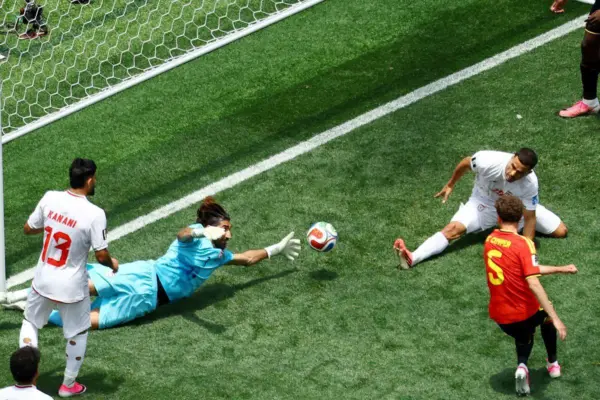
Alireza Beiranvand produced seven saves, including a stunning contender for save of the tournament, as Iran held Belgium to a 0-0 draw at the FIFA World Cup.
The performance capped an extraordinary journey from poverty and homelessness to national hero.
IMAGE: Iran’s Alireza Beiranvand makes a save as Belgium’s Maxim De Cuyper takes a shot at goal. Photograph: Lisi Niesner/Reuters
Iran Goalkeeper Alireza Beiranvand delivered a masterclass between the posts as Iran held Belgium to a hard-fought 0-0 draw in their Group G clash at the FIFA World Cup 2026, earning widespread praise and inspiring a patriotic social media tribute from Iran’s State news agency.
Ten-man Belgium dominated possession but could not break down a disciplined Iranian defence, with Goalkeeper Beiranvand producing a string of saves to preserve the result. Iran also threatened on the counter and came close to snatching victory.
Beiranvand brought out what many consider the ‘save of the tournament’ when he made an extraordinary stop to keep out a point-blank-range effort from Maxim De Cuyper in the second half.
The 33-year-old goalkeeper put out an outstanding performance at the Los Angeles stadium on Sunday, effecting seven saves in total, including four diving stops and three high claims, while also preventing an estimated 1.70 goals.
His heroics ensured Iran secured a valuable point and earned him the ‘Superior Player of the Match’ award.
Iran Coach Amir Ghalenoei reserved special praise for Beiranvand, calling him ‘one of the greatest goalkeepers in the history of Iranian football’ after the seven-save performance earned Iran a valuable point.
‘These players are giving everything and playing with their heart,’ Ghalenoei said. ‘The history and future generations will remember them.’
Belgium Coach Rudi Garcia singled out Beiranvand as the key reason Belgium failed to take all three points, calling the Iranian goalkeeper the game’s standout performer.
Beiranvand Beat Hardship To Become World Beater
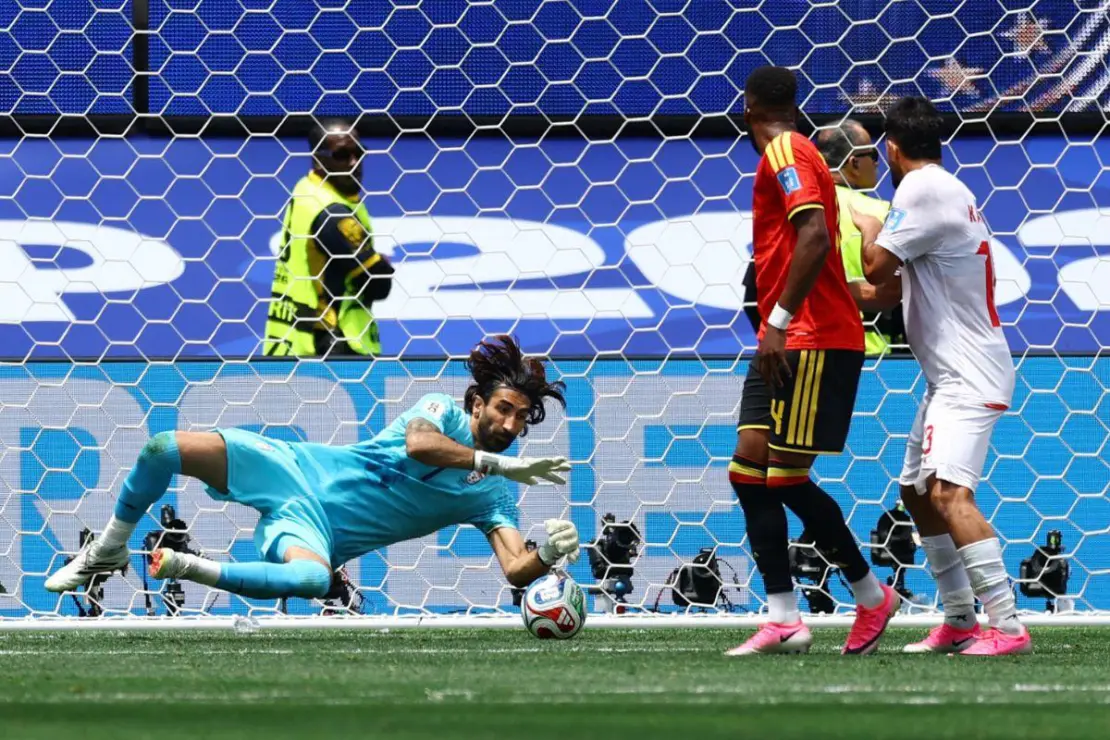
IMAGE: Iran Goalkeeper Alireza Beiranvand effected seven saves against Belgium during the FIFA World Cup Group G match at the Los Angeles Stadium in Inglewood, California, June 21, 2026. Photograph: Matthew Childs/Reuters
Born into a nomadic Kurdish Lak family in the rugged hills of Lorestan, he grew up in extreme poverty. His father fiercely opposed his dream of playing football as it was an unaffordable luxury.
To prove himself, Beiranvand took a gamble as a teenager. He borrowed pocket money, ran away and boarded a bus to Tehran.
For months, Beiranvand slept on the streets outside local football clubs in the Iranian capital.
He then went work at a clothes factory where he also ate and slept, making a small living.
While on trial with Naft Tehran FC, he did menial jobs — sweeping streets, scrub down tyres at a car wash, work assembly lines in a dressmaking factory, and even prepare dough in a late-night pizza shop to afford a meal.
Double Guinness World Record
It was during those punishing early years that coaches noticed something bizarre about Beiranvand’s physiology. Growing up in the hills, he had spent his childhood playing a local game called Dalparan, which involved throwing heavy rocks over massive distances to protect sheep.
That repetitive chore had forged an upper body unlike anything ever seen in modern football. Today, he is an official double Guinness World Record holder for two different achievements:
The longest throw ever recorded in football: Achieved during a match against South Korea in October 2016, when he launched the ball an astonishing 200.14 feet (61.002 metres) and the longest drop kick in football history — 255.95 feet (78.014 metres).
He finally got a call-up to the Iran football team in 2014 at age 21 and today has etched his name in the minds of football lovers across the globe.