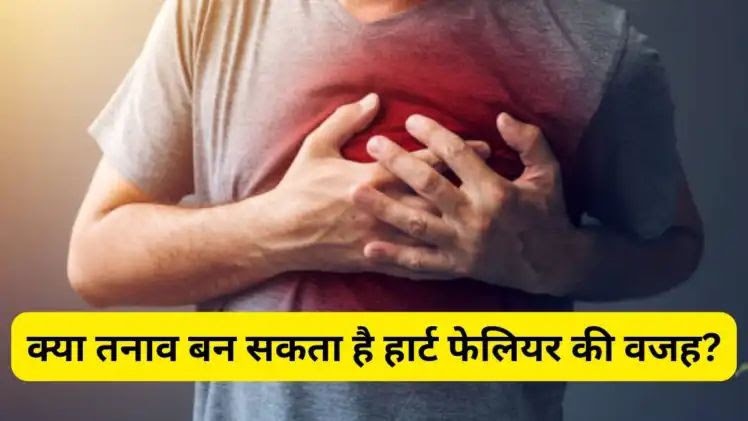
In today’s fast-paced life, stress has become a part of our everyday life. From the sound of the alarm in the morning till the eyes are closed on the mobile screen at night, the mind remains entangled in some worry or the other.
Work pressure, rising inflation, relationship complications, children’s future and the competition to look better on social media make a person mentally tired. Many people believe that stress is limited to the mind only, but the reality is that it has a direct impact on the health of the heart as well. This is the reason why nowadays the cases of heart attack and heart failure are increasing rapidly at a young age.
What is the relationship between stress and heart?
According to Dr. Vikas Goyal, Associate Director (Cardiology), Paras Health, Gurugram, when a person remains under stress for a long time, stress hormones like cortisol and adrenaline increase in the body. These hormones speed up the heartbeat and increase blood pressure. If this situation lasts for some time then the body can handle it, but when the stress continues continuously then there is additional pressure on the heart muscles. Gradually this pressure can become the cause of heart disease and heart failure.
Sudden stress can also become fatal
Not only long-term stress, but sudden deep shock can also damage the heart. Death of a loved one, accident, job loss or any major mental shock can cause sudden heart failure in some people. In medical language it is called Stress-Induced Cardiomyopathy or Broken Heart Syndrome. In this condition, the pumping capacity of the heart suddenly becomes weak and the patient starts feeling symptoms like heart failure.
Which people are at greater risk?
The effect of stress is different on every person, but some people are more sensitive to it. Dr. Vikas Goyal explains that the effect of stress can be more dangerous in people who already have high blood pressure, diabetes, high cholesterol, obesity or any heart related disease. Apart from this, smoking, alcohol consumption, lack of sleep and lack of physical activity also increases the risk of heart diseases.
early symptoms
Ignoring the symptoms that appear during or after stress can be costly. If you feel chest pain, shortness of breath, rapid heartbeat, dizziness, excessive sweating or sudden extreme tiredness, then you should be immediately alert. According to Dr. Goyal, contact a doctor as soon as such symptoms appear, because timely treatment can save life.
ways to reduce stress
It is very important to control stress to keep the heart healthy. For this, include yoga, meditation and pranayam in your daily routine. Regular walks or light exercise, adequate sleep and balanced diet also help in reducing stress. It is also beneficial to talk openly with family and friends, maintain some distance from mobile and social media and seek advice from a mental health expert if needed.
conclusion
Taking stress lightly can prove dangerous for heart health. Not every stress causes heart failure, but prolonged or excessive stress definitely increases the risk of serious heart diseases. Therefore, it is important that we take full care of our physical health as well as our mental health.
Disclaimer
This story has been prepared for general information purposes. Before making any health-related changes or changes in diet, please consult your doctor or a qualified health expert.