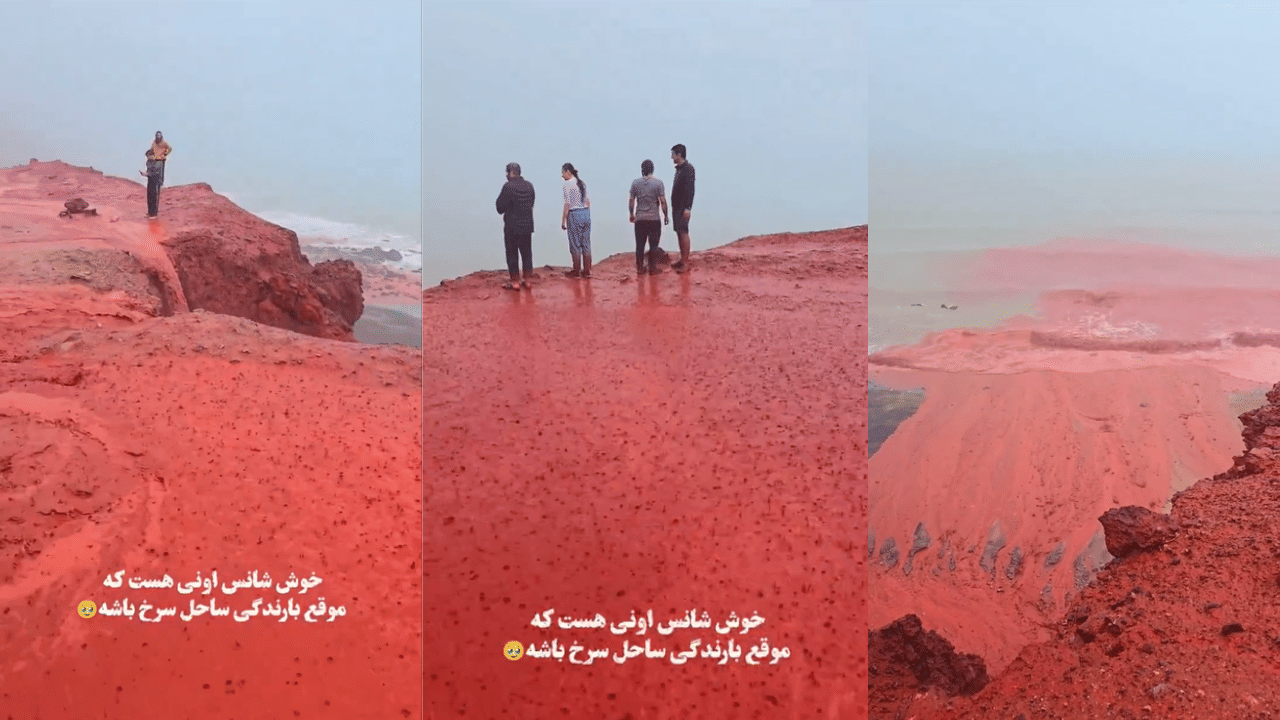
Iran’s Hormuz Island has transformed into a surreal, blood-red landscape following recent heavy rainfall, leaving residents, tourists and scientists in awe of the dramatic natural phenomenon.
Located in the Persian Gulf near the strategic Strait of Hormuz, the small island is already known for its striking terrain and vivid geological formations. After rain, however, Hormuz undergoes a remarkable change as its beaches and shallow coastal waters take on intense crimson and rust-coloured hues, creating scenes that appear almost otherworldly.
Scientists explain that the phenomenon is driven by the island’s exceptionally high concentration of iron oxide, particularly hematite, found in its hills and soil. When rainfall washes over these iron-rich deposits, fine mineral particles dissolve and flow downhill through erosion channels. The runoff then spills into the sea, staining the sand and nearshore waters deep red.
Hematite, a naturally occurring form of iron oxide, is also responsible for the reddish appearance of Mars, which is why Hormuz is often referred to as the “rainbow island of the Persian Gulf.” When exposed to moisture, hematite-rich soils oxidise more rapidly, intensifying their colour and creating the dramatic post-rain visuals.
Hormuz Island sits atop ancient salt domes and volcanic deposits, forming a complex geological mosaic rich in minerals such as ochre, gypsum and iron ore. Locals have mined these iron oxide deposits for use as natural pigments in traditional art and cooking, giving the island both cultural and economic significance.
The blood-red beaches have become a popular subject for photographers, geologists and curious travellers, with videos and images frequently going viral on social media. Environmental experts stress that the phenomenon is entirely natural and harmless to humans. However, they caution that continued surface erosion over time could gradually reshape parts of the island’s topography.