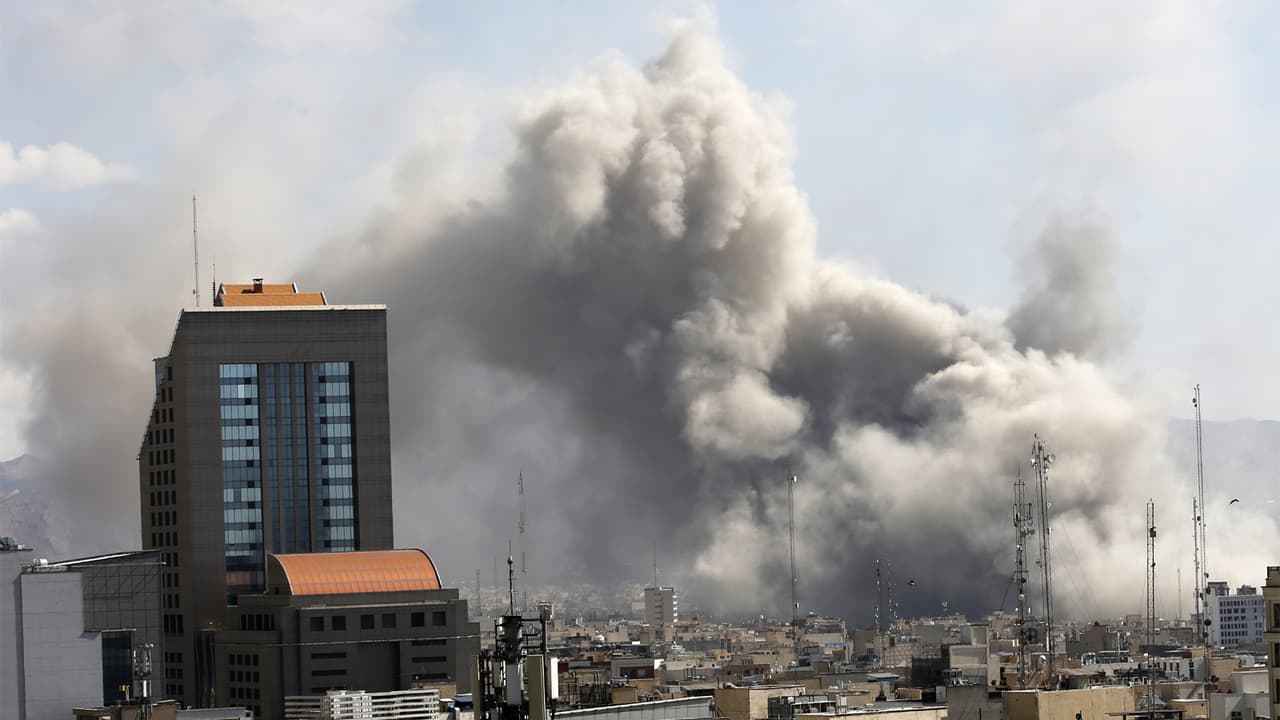
US-Israeli attacks on Iran caused 5 million tons of greenhouse gas emissions in two weeks. The destruction of buildings, oil strikes and military activities increased pollution levels significantly, equivalent to the annual emissions of many countries.
Iran-Israel-US War Climate Impact: A recent climate analysis has revealed that the attacks on Iran by the US and Israel in the last two weeks have resulted in emissions of about 5 million tonnes of greenhouse gases. According to the report, the emissions from this war are increasing so fast that it is having an impact equal to the total emissions of 84 countries of the world. Along with this, it is rapidly depleting the global carbon budget.
Destruction of buildings became the biggest reason
The study states that destruction of buildings owned by common citizens is the biggest source of emissions. According to the Iranian Red Crescent, approximately 20,000 buildings have been destroyed by the attacks in Iran. The collapse of these buildings has resulted in emissions equivalent to an estimated 2.4 million tonnes of CO2 (tCO2e), a large proportion of the total emissions.
Pollution increased due to military activities
Experts say that continuously keeping stealth bombers, fighter aircraft and naval fleet active increases the emissions of greenhouse gases significantly. Benjamin Neimark, an expert at Queen Mary University of London, previously explained that the US Navy’s large fleet remains active for long periods of time, requiring constant energy, food and resources. He described it as a ‘floating city’, which requires huge amounts of energy to run.
Attacks on oil facilities and threat of acid rain
Attacks on oil facilities in Tehran and other areas of Iran caused toxic acid rain and millions of people were affected by pollution. These attacks destroyed 2.5 to 5.9 million barrels of oil, emitting about 1.88 million tCO2e.
Fuel consumption: huge emissions from planes and ships
The analysis also found that the fuel used in American heavy bombers flying from bases west of England is the second largest cause of emissions. In the first 14 days, planes, ships and military vehicles consumed 150 million to 270 million liters of fuel, emitting about 529,000 tCO2e.
Carbon emissions also increased due to destruction of military equipment
The report also includes the carbon impact of destroyed military equipment. During this period, 4 American aircraft, while 28 Iranian aircraft, 21 naval ships and about 300 missile launchers were destroyed. This resulted in emissions of about 1,72,000 tCO2e. Additionally, the use of missiles and drones resulted in additional emissions of approximately 55,000 tCO2e.
Total emissions: equivalent to the annual level of smaller countries
A total of 50,55,016 tCO2e were emitted in the first two weeks of the war. This amount is equivalent to the annual emissions of countries like Kuwait or Iceland, or the combined emissions of the world’s 84 lowest-emitting countries.
Experts warn: Every attack is increasing climate threat
Patrick Bigger, research director at the Climate and Community Institute, said each missile attack is making the Earth hotter and more unstable. “Every refinery fire and every tanker attack shows that fossil fuel-based politics and a secure future cannot go together,” he said.
Other wars also have a big impact: 33 million tons of emissions
According to a study published in One Earth, the ongoing conflict in Palestine has also emitted about 33 million tonnes of CO2e. This includes emissions from bombings, military activities, construction of defense infrastructure and post-war reconstruction.