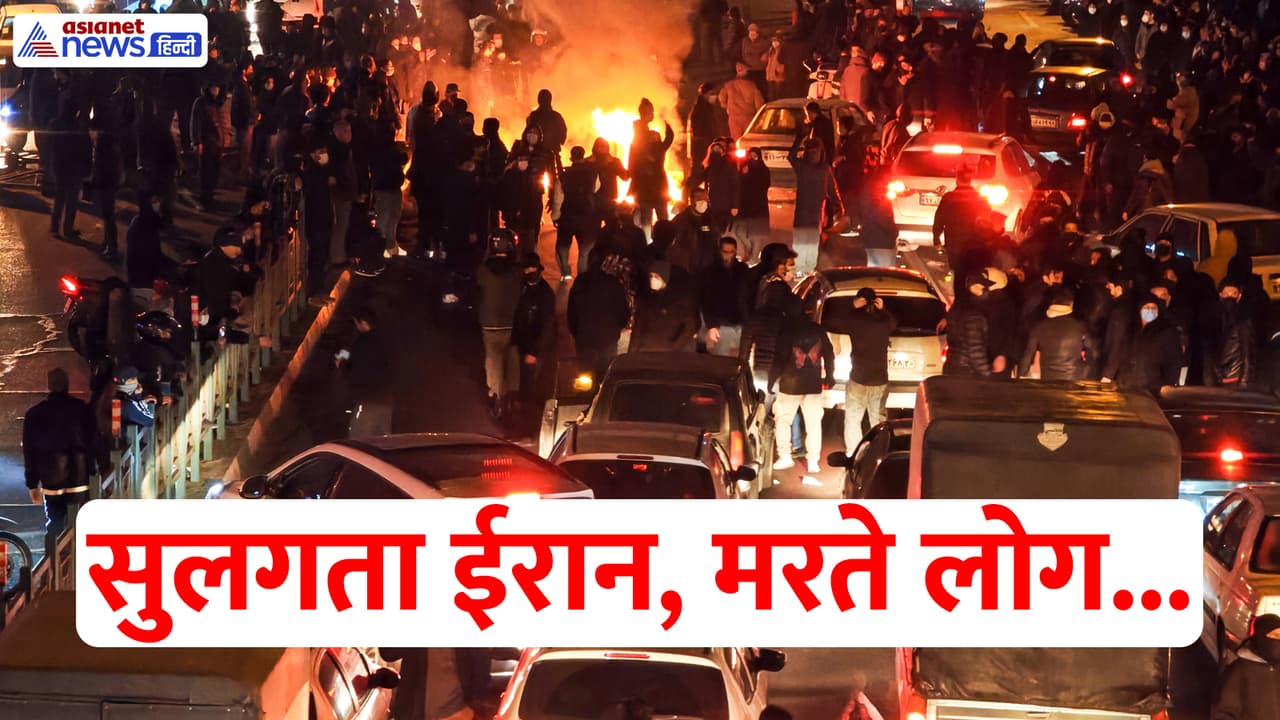
There is deep controversy over the death toll from recent protests in Iran. Government claims are of “hundreds” of deaths, while human rights groups and media estimates range from 3,428 to 20,000. Internet blackouts have made an accurate count almost impossible.
The streets of Iran have become quiet, but the debate on how many people were killed there is increasing. Following weeks of nationwide protests, varying figures of deaths have been reported, ranging from “hundreds” to 20,000. This deepens the fog over one of the bloodiest chapters in the recent history of the Islamic Republic. Behind every figure lies a story that may never be fully revealed – of students who disappeared after leaving their hostels, of shopkeepers caught between protesters and riot police, and of families who could not contact their relatives after the government-imposed internet blackout on January 8. This digital silence has made counting the dead a terrifying guessing game.
Different figures, same sorrow
The most detailed data comes from Iran-focused human rights groups operating outside the country. The Norway-based Iran Human Rights (IHR) organization says it has confirmed 3,428 protesters have been killed by security forces. The group emphasizes that the numbers only reflect cases it could confirm either itself or through two independent sources, including information from contacts inside the health ministry between January 8 and 12.
Even when releasing this figure, IHR warned that the true number may be much higher, “citing estimates of 5,000 to 20,000 deaths”, while also acknowledging that the Internet blackout “severely hampered verification.”
Another monitoring group, Human Rights Activists in Iran (HRANA), presented a slightly different picture. As of January 15, it said 2,677 deaths had been confirmed and it was investigating another 1,693 cases. The group also reported that 2,677 people were seriously injured, showing that hospitals across the country are filled with the injured, whose names may never reach the outside world.
Leaks and anonymous sources
Media outlets operating outside Iran’s borders have presented an even more dire picture. Iran International, a Persian-language opposition channel, citing senior government and security sources, reported that at least 12,000 people were killed during the demonstrations, most of them on 8 and 9 January.
“After examining information from reliable sources, including the Supreme National Security Council and the Presidential Office, the Islamic Republic’s security institutions initially estimate that at least 12,000 people were killed,” the channel said.
US network CBS News also repeated these claims, saying that “two sources, one of whom is inside Iran” told the outlet “that at least 12,000, and perhaps 20,000 people have been killed.” Neither source could be named for fear of reprisals, a reminder of how dangerous even simple counting has become in Iran.
Tehran’s counterattack
Iranian officials dismiss foreign speculation as part of information warfare. Foreign Minister Abbas Araghchi told Fox News that the death toll was in the “hundreds”, and dismissed the higher figures as “exaggeration” and a “disinformation campaign” designed to provoke US President Donald Trump into attacking Iran.
Although Tehran has acknowledged dozens of deaths among security personnel – whose funerals turned into huge rallies – it has not released any recent nationwide figures for civilian casualties, deepening suspicions that the true scale is being hidden.
concern in the united nations
International organizations say this violence represents a new frontier. UN High Commissioner for Human Rights Volker Turk said he was “appalled” by the crackdown, noting that “reports indicate that several hundred people have been killed.”
Amnesty International went further, calling it “a genocide”. The group said the death toll had reached 2,000 by January 14 “as per official acknowledgement”, while stressing that independent monitors estimate the figure to be much higher.
Human Rights Watch said that “thousands of protesters and bystanders are feared dead,” adding that the government’s “severe restrictions on communications have hidden the true scale of the atrocities.”
In Geneva, a UN human rights spokesman told AFP the organization was coordinating with groups including IHR and “are receiving reports that indicate a high death toll, much higher than in previous demonstrations, indicating levels of violence that we have not seen in the past.”
Lives behind the figures
For families inside Iran, this debate over statistics feels very painful. Parents search hospital corridors for familiar faces; Others wait outside prisons with photographs and pieces of information. With phone lines unreliable and social media shut down, many people learn of the death of a loved one only through whispers or anonymous videos.
This uncertainty has created a second trauma – the fear that the dead will disappear twice, first from the streets and then from history. Until the blackout is lifted and independent investigators are allowed inside, Iran’s true figure will remain an open wound measured in estimates rather than names.
It is clear that the country has entered uncharted territory. As one UN official warned, the scale suggested by the incoming reports “points to potential levels of violence that we have not seen in the past.” Whether the final count is in the hundreds or thousands, the wounds inflicted on Iranian society are already beyond calculation.
(With inputs from AFP)