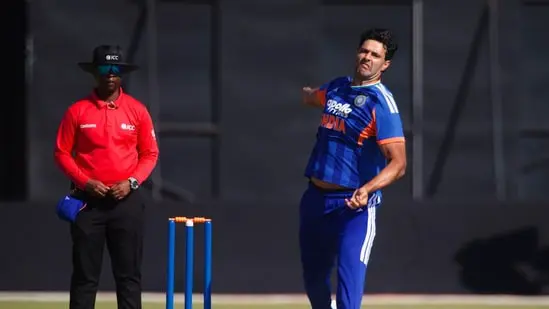
Shivam Dube, the Indian all-rounder, last played an international match on July 25, but the next three months promise to be demanding, with a packed schedule ahead.
The T20I team will travel across the globe for several assignments, but none bigger than the Asian Games, which begin on September 19. The BCCI has named a full-strength squad, with the pressure on Shreyas Iyer’s Indian team to defend the gold medal from Hangzhou three years ago.
In the previous Asian Games, India had bagged the top honour under the captaincy of Ruturaj Gaikwad, with Dube part of the winning squad. At the time, India had sent a B team, but the all-rounder made his mark, chipping in with 25 off 19 balls in the quarter-final against Nepal. Cricket enthusiasts may fondly remember him conceding just six runs in the final over.
Three years on, a lot has changed about him. Dube has transformed into a full-utility player, and his bowling, too, has come of age. Under bowling coach Morne Morkel, Dube has realised his potential, even playing as India’s second frontline pacer during last year’s Asia Cup final in Hardik Pandya’s absence.
Besides bowling, Dube also performs the difficult job of finishing T20I games with the bat and has been nailing the specialist role of late. Batting in the middle to lower-middle order comes with its own set of challenges, as players don’t get many deliveries to play around with, but Dube has slowly and steadily warmed to the role.
As the build-up to the Asian Games intensifies, HT Digital caught up with the 33-year-old to discuss his preparations and willingness to do whatever is required of the team.
Excerpts:
The next upcoming big assignment is the Asian Games. How excited are you about playing in such a global event and winning gold? How much value does it hold for you?
The Asian Games are a very big thing. We won gold last time in 2023, and repeating that would be a great opportunity for my team and me. So it feels great, and it’s a really big thing for us to be playing in the Asian Games, representing our country, and doing so in Japan.
Ahead of the Asian Games, India will play three T20Is against Afghanistan. Do you think it would be the ideal preparation?
We aren’t using the Afghanistan series as preparation for the Asian Games. When you play any series for the national team, you can’t think that I’ll use this series to prepare myself for the next assignment. It doesn’t look good, and it doesn’t suit our style as well. It’s a big challenge for us to play against Afghanistan, and yes, we will try to win the series.
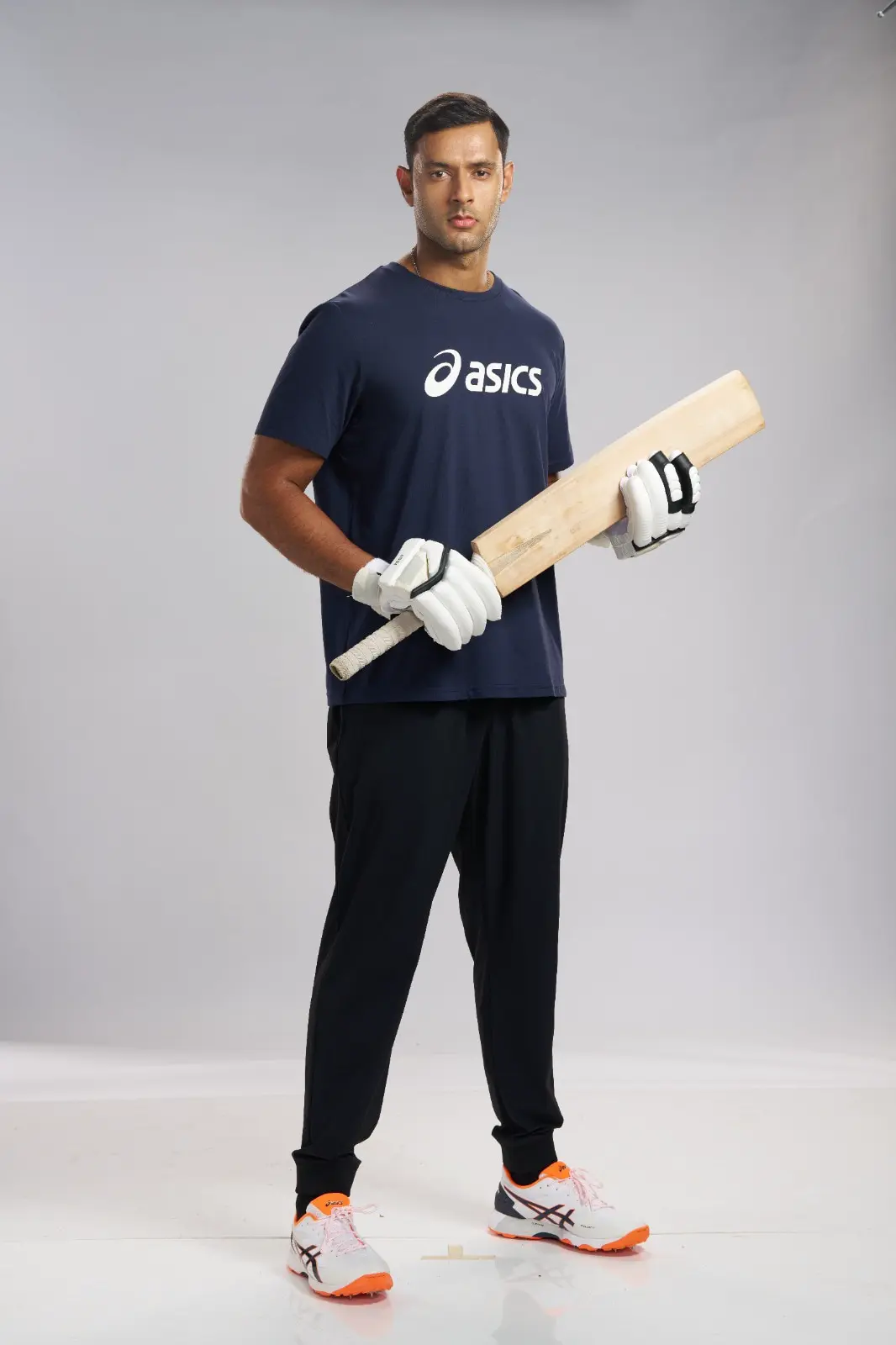
You recently partnered with ASICS. What appealed to you about this association, and what does representing a performance-driven brand like this mean to you as a professional athlete?
It feels great to be part of the ASICS family, and the brand is amazing. It’s one of the best brands in the world, I feel. So, joining one of the best brands in the world feels great, and wearing the ASICS jersey and representing it everywhere feels great to me.
As an all-rounder, my game demands a lot, batting, bowling, and fielding, often in the same day, so having footwear that supports me through all of it is incredibly important. Beyond that, what I really connect with ASICS is its philosophy of Sound Mind, Sound Body. So much of what shows up on the field is a result of what happens away from it. The training, the recovery, the mental preparation before the next challenge.
You play the difficult role in T20Is of batting in the middle and lower order. Batters don’t generally get too many balls to play around with. What are the biggest challenges that come up?
It’s always difficult because my position is not always fixed. My position is dependent on what the team requires. If the team requires me to bat after the 6-over mark, I am ready for that. If they require me after 12 over mark, I am ready for that. It’s always a difficult job, but I feel good knowing that when the team needs me, I stand there and do all the things required of me.
The last few months have seen your bowling improve significantly. When bowling coach Morne Morkel has heaped praises on you. What has it been like working alongside the South African great?
As an all-rounder, they want me to bowl those difficult overs. They want to concede fewer runs or take a wicket when it’s really needed. There is no concrete plan regarding which over I will bowl, so I don’t know when I will be called upon to bowl. I am working really hard towards that.
Morne has helped me a lot because he told me that bowling those good balls is important, but as a bowler, reading the game is more important. So I am working on that now as well, because I should be smarter than the batters. I should know where he would be looking to hit me. So we are both working in the same direction and trying to get better every day.
What about Shreyas Iyer? You have been playing with him for a long time. What are his biggest attributes as captain?
I have been playing him with Shreyas for a long time. I also played under him during the 2018 or 2019 season when he was the captain of Mumbai. He has always been great, and he is very calm on the ground. He decides everything at that moment, and I feel he can read the game very well. He knows about my strengths and what I can do for my team. He knows everything about me. So he uses me like that only.
Lastly, I have to ask you about CSK. It’s often said that the franchise lets the players flourish by giving them full freedom. Can you elaborate further on the same?
It’s not a big thing. There is no rocket science over there, but CSK keeps it very simple. First of all, when you’re there in the IPL for two months, it’s a long time, and I feel every player and every support staff member needs some family time. So they always allow the family to be with you. When you’re with your family, you’re free and enjoying your time, but then again, when you come to ground, you’re fresh. This is the thing that they do behind the scenes, and when you come to the ground, they tell you exactly what they want. As they have told me on numerous occasions, ‘Shivam, we want this from you.’ If you try and you succeed, that’s good for you, and then for the team. But if you don’t succeed, it’s totally fine. You have tried your best. That is what we want.
This is what I have always heard: try your best. If you don’t succeed, it’s not only that you have lost; the team has lost first. But when you succeed, the success first comes to you, then to the team. So that is where it comes from, okay, I get the freedom. If I don’t perform, if I don’t get runs in every match, they believe in me that I have the strength, I can do this. Next match again, they come to me and say, ‘Boss, this is your role. Try to do this.’