
New Delhi: International Women’s Day 2026 shines a spotlight on extraordinary women leading change across India, from social impact to cutting-edge tech. As we mark 8 March, it’s a moment to honour those breaking barriers in male-dominated fields and reshaping society for the better. These trailblazers aren’t just achieving personal success—they’re uplifting communities, fostering economic resilience, and proving that women’s leadership drives real progress. This day reminds us that empowering women at the forefront isn’t optional; it’s essential for a thriving nation. With India’s push towards gender parity gaining momentum—especially in workforce participation and STEM—these stories inspire us all to demand more inclusive systems.
Yet, behind the celebrations lie deeper challenges: restricted mobility, unsafe workplaces, and the juggling act of care and ambition. International Women’s Day 2026 calls for action beyond applause, urging investments in skilling, safe spaces, and market access. It’s about turning aspirations into reality for women on the margins, whether they’re informal workers or tech pioneers.
Celebrating women leaders on International Women’s Day 2026
1. Dr. Gayathri Vasudevan: Empowering the invisible workforce
Dr. Gayathri Vasudevan serves as Chief Impact Officer at Sambhav Foundation, a Bengaluru-based powerhouse that’s transformed lives for over half a million marginalised folks since 2006. With a doctorate in Development Studies and stints at the ILO, UNDP, and UNICEF, she’s no stranger to gender and labour issues—boasting over 30 publications and TEDx talks on collective action. She works in cluster-based livelihood programmes that skill women in beauty therapy, waste management, and more, linking them to formal markets while tackling health, digital literacy, and safe migration.
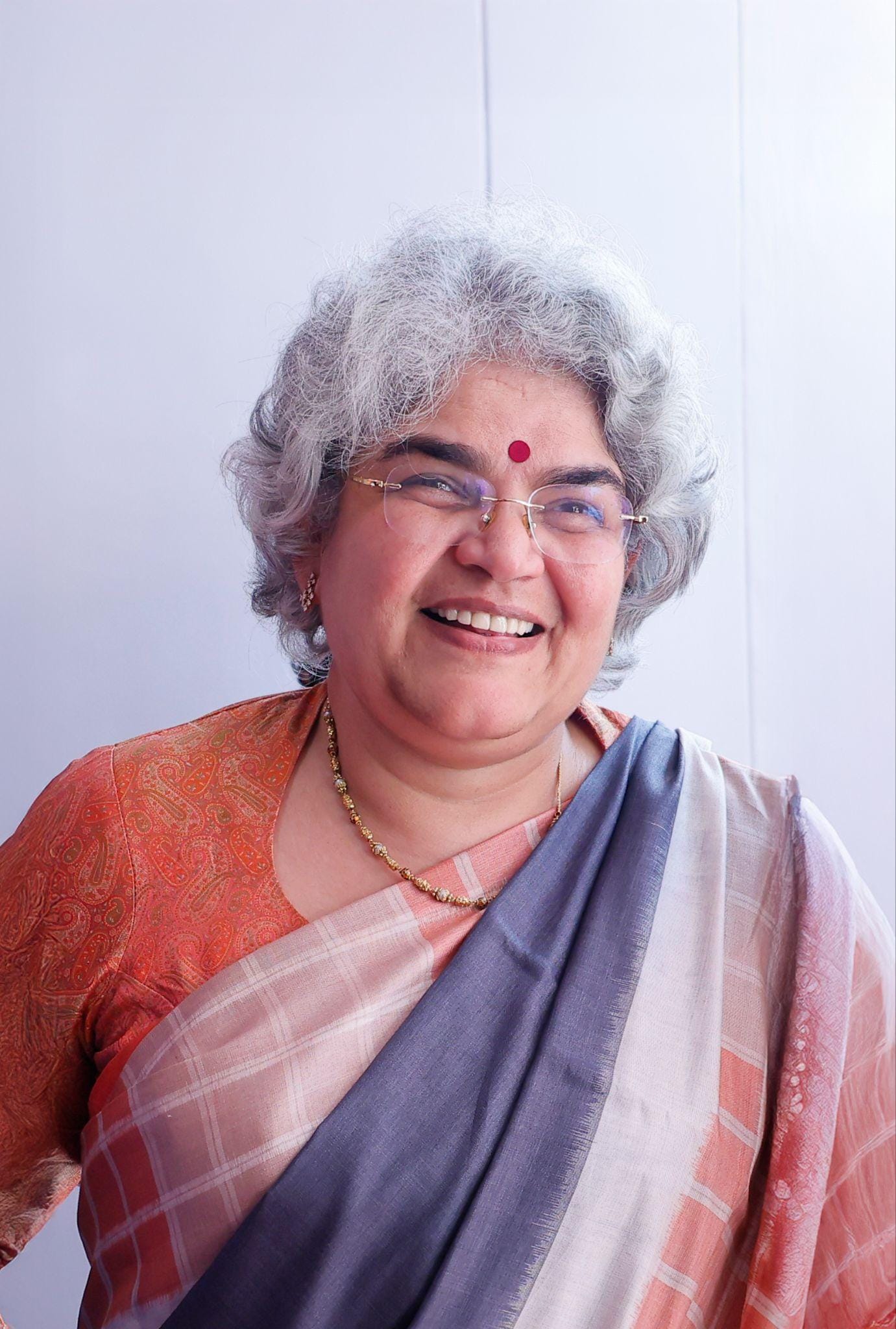
Gayathri’s led sanitation overhauls in 42 Karnataka schools, slashing girl dropouts with 240 new toilets and hygiene workshops for 35,000+. Awards pile up—Forbes India Entrepreneur with Social Impact (2018), NITI Aayog’s Women Transforming India (2021)—but she insists work equals dignity. Here’s her take:
“Women everywhere are negotiating work, care, safety, and aspiration within systems that are still evolving to integrate these realities. Now imagine navigating those same systems while also being financially vulnerable, informally employed, or living with a disability. The barriers multiply, access to education narrows, mobility becomes restricted, digital systems feel distant, and entry into formal markets remains elusive.
At a workforce level, women face limited access to skilling, restricted mobility, unsafe work environments, and exclusion from formal value chains. At home, stigma, financial illiteracy, limited control over income, and the disproportionate burden of caregiving quietly shape their choices. At a community level, opportunities are often inadequate, and economic systems frequently assume male mobility, asset ownership, and unrestricted time, effectively designing women out of upward mobility.
If we want meaningful progress, we must invest in structural access, including accessible skilling, safe hostels and workplaces, pathways into gig and part-time roles, and mechanisms that enable safe migration and entry into male-dominated sectors. But skilling alone is insufficient. Capacity building must work in tandem. For example, including health security, economic literacy, digital confidence, and the ability to make informed choices about modes of work will enable women to sustain employment, negotiate fairer terms of work, and make upward mobility a deliberate choice rather than a fragile opportunity.
Equally important is recognising the economic potential within the clusters and communities where women already live and work. When we strengthen local production ecosystems and enable women to tap into existing demand-supply patterns around them, agency becomes tangible. Through Sambhav’s cluster-based livelihood interventions, we have seen that when skilling, capacity building, and market integration are designed together, outcomes are measurable: incomes stabilise, women transition into structured value chains, and decision-making power shifts within households. The true progress of a community is reflected in whether women at its margins can participate in, shape its economic growth, and eventually move toward decision-making thresholds – all of this without having to choose between caregiving and opportunity.”
— Dr. Gayathri Vasudevan, Chief Impact Officer, Sambhav Foundation
2. Deepali Kelkar: Revolutionising tech and automation
Deepali Kelkar co-founded Secutech Automation in 2000 and steers it as COO from Mumbai, turning a bootstrapped outfit into a go-to for smart infrastructure across banks, hospitals, and infra giants. Over two decades, she’s scaled it sans funding, focusing on financial discipline, client trust, and mentoring young engineers in a field screaming for diverse talent. She deployed Aadhaar-verified visitor systems at high-security spots like Mantralaya, blending automation, AI, and cybersecurity to make buildings “think.”
In a sector long tagged high-stress and bloke-heavy, Deepali’s flipped the script—pushing mid-career retention via mentorship and upskilling amid AI booms. No flashy awards listed, but her quiet grind built retention-driven teams handling complex projects nationwide. In her words:
“In sectors such as industrial automation, cybersecurity, etc., women have historically been underrepresented. This was not due to capability issues, but because of varying perceptions around the capability required for the role, along with a lack of access.
When we started Secutech over two decades ago, this industry was seen as high-stress, site-driven, and largely male-dominated. Today, technology is changing that narrative. Automation, AI, and intelligent systems are removing traditional barriers and creating space for diverse talent to lead mission-critical environments.
However, representation alone is not enough. The real shift must happen at the mid-career and leadership levels, where many women exit the pipeline. Organisations must move beyond symbolic inclusion and build structures that enable mentorship, continuous skilling, and confidence in high-impact roles. In fast-evolving sectors like ours, learning cannot pause, and neither should opportunity.
The future of smart infrastructure and cyber-secure environments demands collaborative thinking, empathy, and ethical leadership. International Women’s Day is a reminder that progress is not about participation alone; it is about ensuring women shape the systems that power our cities, industries, and institutions.”
— Deepali Kelkar, Co-founder & COO, Secutech Automation
These women exemplify International Women’s Day 2026’s spirit: leading with impact, dismantling barriers, and building inclusive futures. Their work urges us all to champion structural change for lasting empowerment.