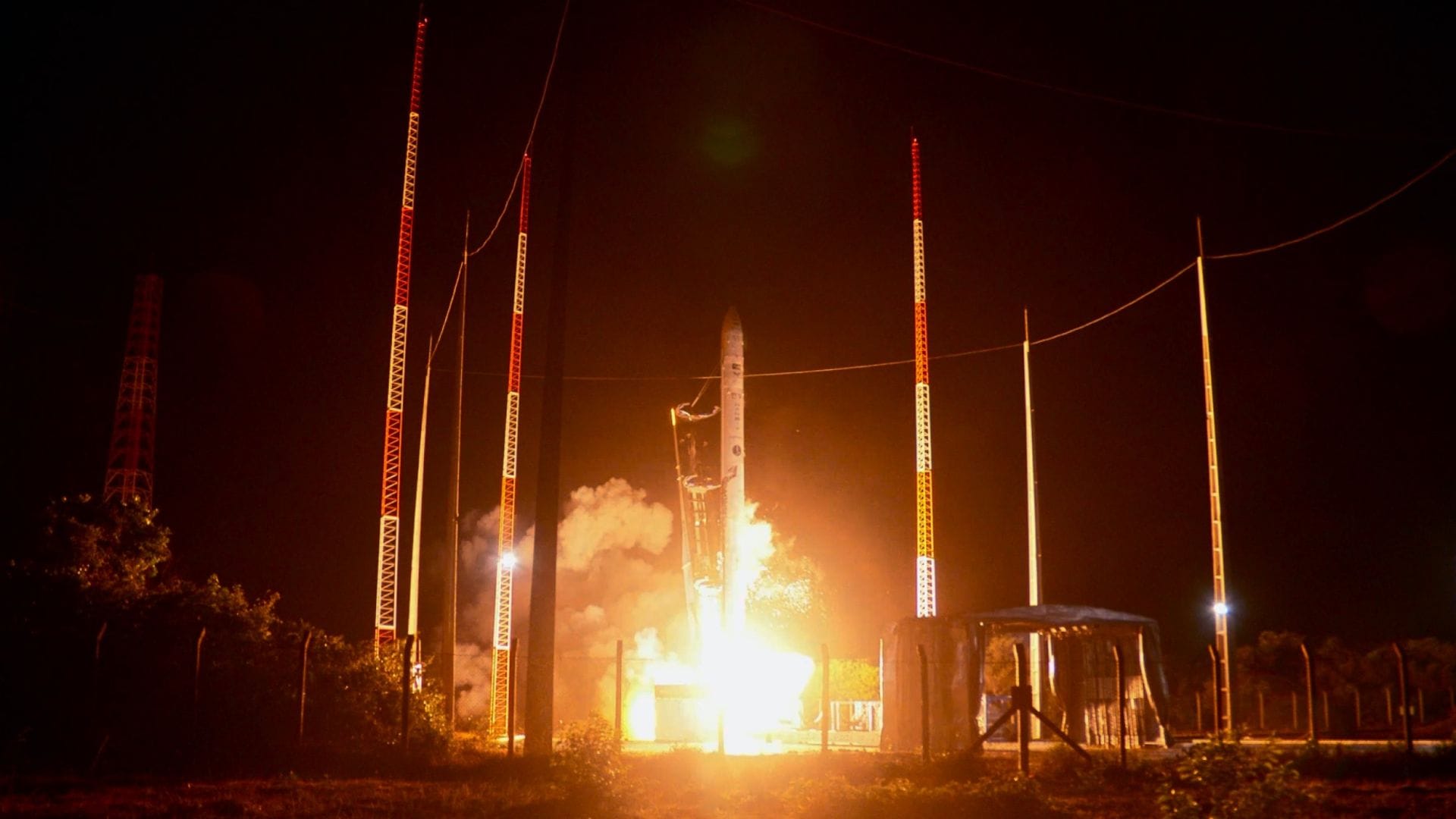
New Delhi: In December 2025, South-Korea-based Innospace lost its Hanbit-Nano rocket a minute after launch from the Alcântara Space Center (CEA) in Brazil. The rocket was on the ‘Spaceward’ mission, its inaugural flight. Innospace has investigated the cause of the mission termination through a joint investigation with CENIPA, a unit of the Brazilian Air Force that investigates aerospace accidents. After analysing flight data, video records and over 300 pieces of recovered debris, the cause has been determined. About 33 seconds after liftoff, gas leaked from the forward section of the first-stage hybrid rocket combustion chamber assembly, resulting in a rupture of the combustion chamber.
The investigation revealed that the leakage was caused by insufficient compression of sealing components during the on-site reassembly of the forward chamber plug, as part of the launch preparation activities in Brazil. Innospace is bolstering its assembly process, as well as the quality management procedures, while implementing additional verification steps and improvements in individual components. Innospace plans to conduct a follow-up launch from Brazil in the third quarter of 2026, pending authorisation from the Korea Aerospace Administration (KASA). Innospace has indicated its continued commitment towards enhancing the reliability of its launch vehicles, and improve mission success rates in the future.
The Indian Payload on Board
There were eight payloads on the Spaceward mission from Brazil, South Korea and India. Bengaluru-based Grahaa had intended to launch its Solaras S2 technology demonstration satellite on the Hanbit-Nano rocket. The company ultimately aims to reduce dependence on CCTVs by monitoring cities from space with a constellation of satellites, with the capability of observing any location on the planet, on-demand. The Hanbit-Nano is a 21.7 m tall two-stage to orbit rocket capable of delivering 90 kg of payloads to an altitude of 500 km. The founders of the company had previously worked on educational satellites with SpaceKidz India.