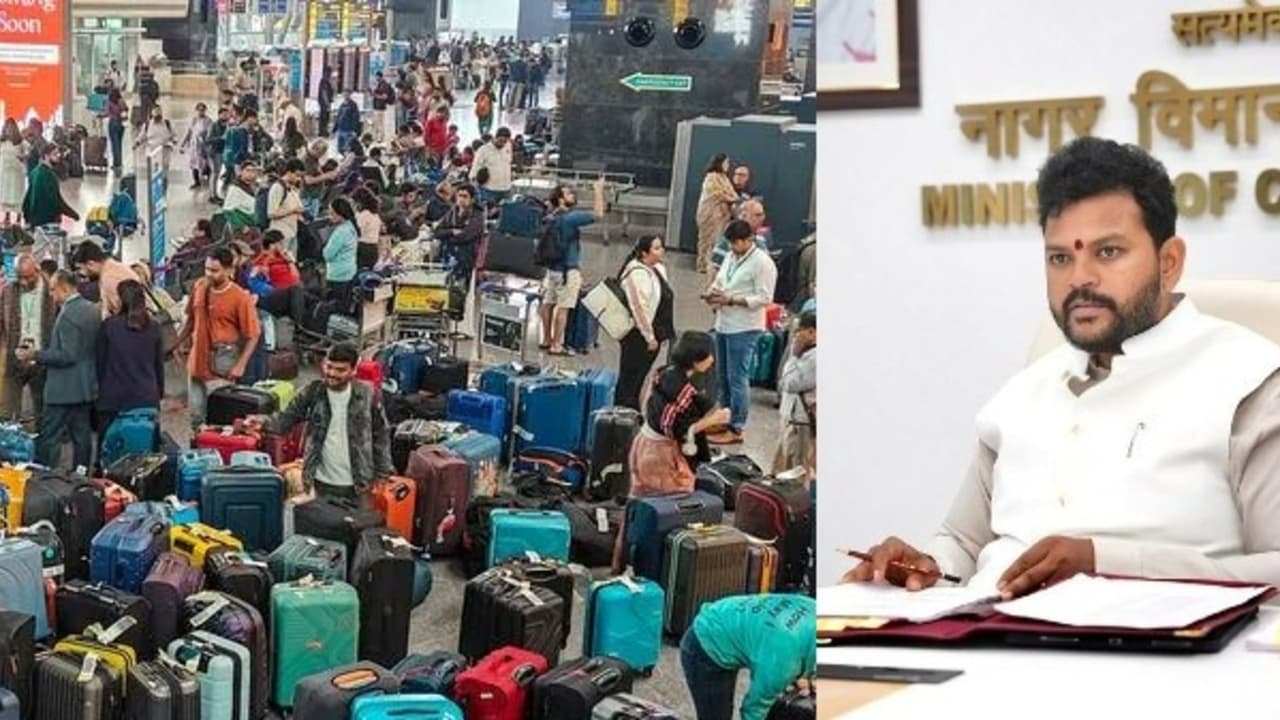
Due to wrong calculations in the new FDTL rules, IndiGo got into big trouble and had to cancel more than 1,000 flights. There was chaos at airports across the country. The Aviation Ministry ordered a strict investigation and the DGCA provided temporary relief.
New Delhi. India’s largest airline IndiGo is stuck in a major operational crisis for the last four days. More than 1,000 flights have been canceled due to the new FDTL (Flight Duty Time Limitation) rules, massive pilot-rostering irregularities and company miscalculations. Lakhs of passengers are stranded across the country, there is chaos at airports and ticket prices are skyrocketing. The government has now announced a formal investigation against IndiGo, temporary suspension of FDTL norms and a ban on increasing fares by airlines. But the question is, how did such a big crisis happen in the world’s fastest growing airline?
Did FDTL rules blow IndiGo?
The second phase of FDTL, which came into effect from November 1, 2025, required pilots to be given more rest, make fewer night landings and increase the rest time between consecutive flights. While other airlines adjusted their schedules in time to accommodate these changes, IndiGo did not. In the words of Aviation Minister Ram Mohan Naidu, “IndiGo miscalculated the crew requirements. That’s why their operations started breaking down from December 3.” That is, the company made a wrong calculation of how many pilots would be required under the new rules. Result – flights were left without crew. Night flights had to be canceled and the schedule collapsed like a chain-reaction.
How were 1,000 flights cancelled? Which airports were most affected?
Indigo’s condition was worst in India on Friday and Saturday.
Most cancellations:
Delhi-106 flights
Mumbai-109 flights
Bengaluru-124 flights
Hyderabad-69
Pune-42
Chennai-30
Ahmedabad-19
The situation became so bad in Jammu and Srinagar that many passengers waited for 9 hours each without any update. The check-in bags of some people were kept in a heap outside the airport. During this, a passenger said, “We did not know whether the flight would run or not. Neither message nor information came.”
Why did fares increase from Rs 4,000 to Rs 90,000?
IndiGo handles two-thirds of the country’s domestic air traffic. So as IndiGo canceled hundreds of flights, other airlines increased fares.
Example:
- Kolkata–Mumbai (SpiceJet): ₹90,000
- Mumbai–Bhubaneswar (Air India): ₹84,485
Travel experts called it “black marketing” and called on the government to impose a cap on fares.
Government’s emergency action: Why were FDTL rules stopped?
Seeing the increasing anger of the passengers, the government came into action. Ministry of Civil Aviation temporarily put FDTL norms on hold. Instructed DGCA to monitor Indigo on a daily basis. Warned airlines that no one should take advantage by increasing fares. Indigo has been asked to provide the facility of auto refund, free rebooking, hotel stay. The government has also activated a 24×7 control room so that passengers can get immediate assistance.
Why did the government come in between? Will there be action against Indigo?
The ministry took immediate steps-
- Inquiry committee formed
- FDTL rules temporarily paused
- Airlines warned not to increase fares
- 24×7 control room for passengers
- Hospitality and full refund orders
- DGCA teams deployed at airport
The minister claims that “the situation should become normal in three days.”
Did Indigo CEO take responsibility?
IndiGo CEO Peter Albers said the company is “rebooting” its systems. He claimed that the situation will improve from Saturday. Operations will become normal between 10–15 December. However, aviation experts believe that after such a major breakdown, recovery may take at least 2 weeks. The big question remains: Was this just a planning mistake or a sign of some bigger crisis? According to experts, this crisis of IndiGo brings to light some hidden issues of India’s aviation sector:
- National shortage of pilots
- Over-optimization of scheduling
- excessive dependence on a single airline
- System communication failure
Industry experts are warning that this incident should not be taken lightly, because if the same mistake had happened to any other airline, the country’s air service could have come to a complete halt.