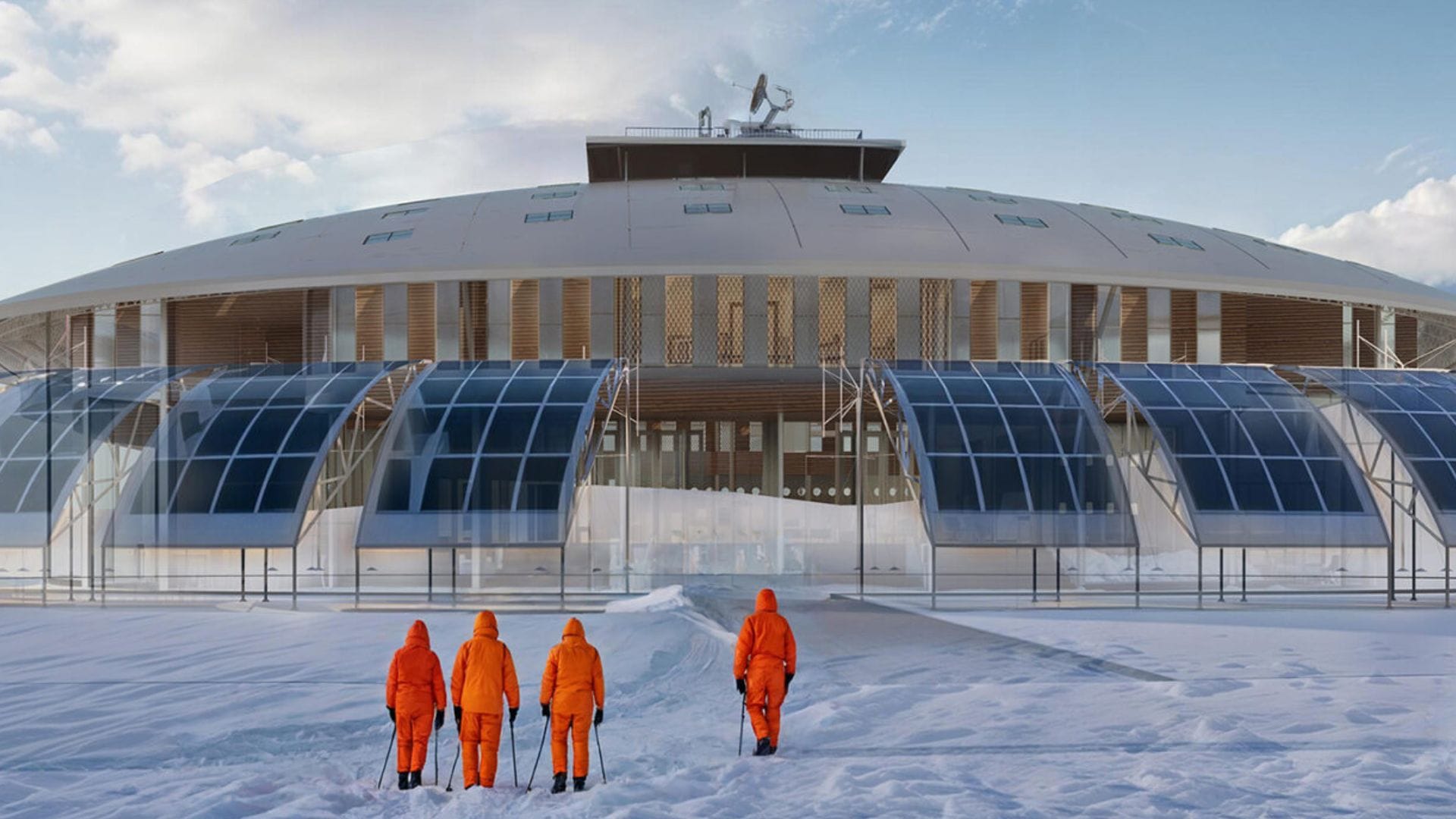
New Delhi: The Ministry of Earth Sciences has approved Rs 29.2 crore for pre-investment activities towards the planned Maitri II research station in Antarctica. The budget covers architectural design and the preparation for a detailed project report. The new station will enhance India’s ability to conduct multidisciplinary research in Antarctica, and will be located close to the Maitri station in the Schirmacher Oasis. The facility is conceived as a state-of-the-art research hub that can operate throughout the year, elevating India’s research capabilities in biology, earth sciences, glaciology, atmospheric studies and environmental monitoring. The timeline for the project is estimated to be seven years, with the aim of constructing and operating the research station by 2032.
The upgraded station will feature modern laboratories including facilities for storing and processing ice-cores, a dedicated research suite for biological and microbial studies, and expanded provisions for atmospheric observations. The logistical backbone will be bolstered to ensure uninterrupted science operations throughout the year. The enhancements are expected to expand the scope, precision, continuity and global relevance of India’s Antarctic research, allowing India to contribute high-quality data and cutting-edge findings to global polar science. This new facility will be India’s fourth Antarctic base, joining the operational Maitri and Bharti stations.
The Maitri II project is delayed
The Maitri II project was originally targeted for completion by January 2029, but has been delayed because of the logistical challenges in polar infrastructure development. The Maitri station has been operational since 1989, and faces waste management issues. The outpost is managed by the National Centre for Polar and Ocean Research (NCPOR). The base will be about to accommodate up to 90 personnel at a time. Maitri II is designed as a sustainable base incorporating renewable energy from solar and wind sources, complying with the Environmental Protocol of the Antarctic Treaty. The construction will rely heavily on prefrabricated structures. Environmental impact assessments and site surveys are ongoing.