India’s climate story is often framed through its coal use, but a closer look reveals a far more complicated energy transition unfolding alongside rising demand, infrastructure challenges and rapid renewable expansion.
India is frequently portrayed in global climate discussions as a country whose dependence on coal continues to drive rising emissions. Yet recent developments in the country’s energy sector suggest a more nuanced reality, one in which rapid renewable expansion is unfolding alongside continued reliance on fossil fuels.
The contradiction sits at the centre of India’s climate debate.
While thermal power still generates roughly 70 per cent of the country’s electricity and emissions continue to rise, India has simultaneously emerged as one of the fastest-growing clean energy markets in the world.
Much of the criticism directed at India focuses on present-day emissions. However, energy transitions are long-term processes, and recent figures show significant movement in the country’s power mix.
India’s earlier commitment to ensure that 40 per cent of installed electricity capacity came from non-fossil sources by 2030 was achieved years ahead of schedule. After increasing that benchmark to 50 per cent, the country crossed the revised threshold in 2025, again ahead of its target date.
The pace of expansion has remained strong.
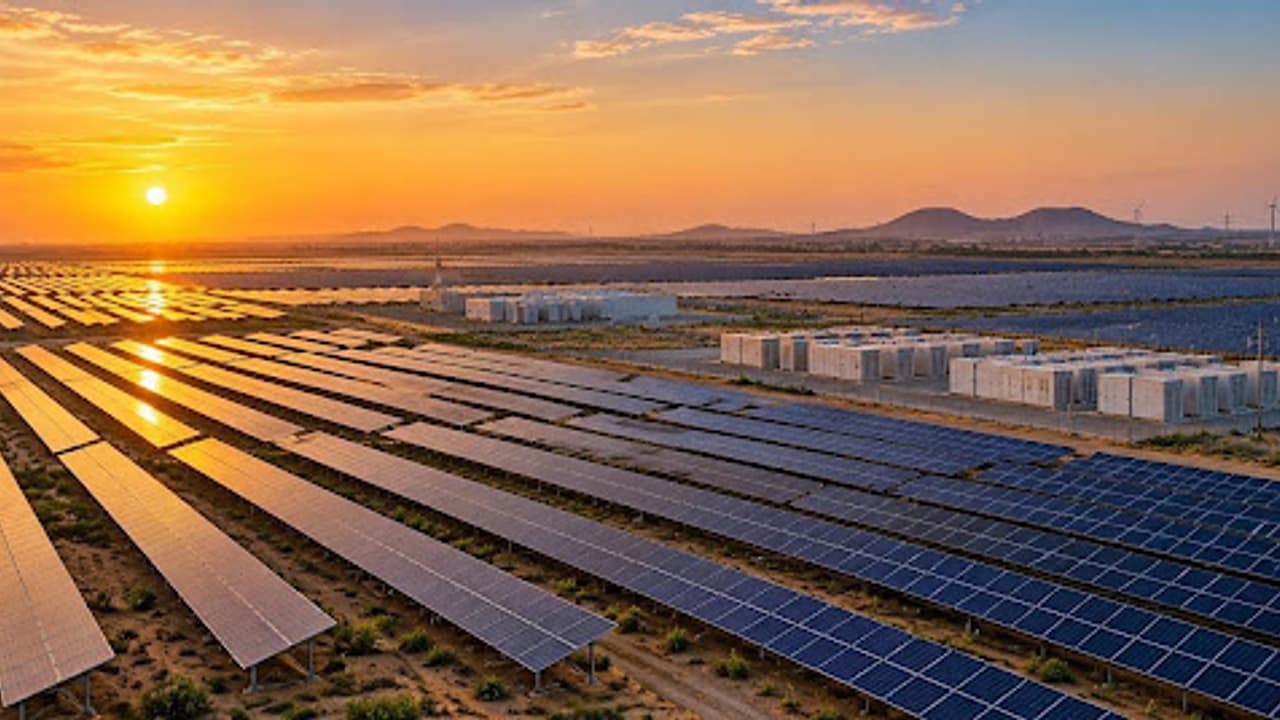
Non-fossil fuel capacity exceeded 300 gigawatts in 2026, accounting for more than half of India’s installed power capacity. During the 2025-26 financial year, the country added a record volume of clean energy infrastructure, reinforcing its position among the world’s leading renewable energy markets.
The growing role of renewables was also reflected in electricity supply records, with renewable sources meeting more than half of demand on a peak day during 2025.
These milestones point to an energy system changing more rapidly than conventional narratives often acknowledge.
Capacity Growth Still Faces Generation Challenge
Despite these achievements, substantial obstacles remain.
The most significant gap exists between installed capacity and actual electricity generation.
Although non-fossil sources now represent more than half of installed capacity, they still account for less than one-third of total electricity generation. Solar and wind resources do not produce power continuously, creating challenges during periods of peak demand.
Storage facilities and transmission networks capable of balancing this variability remain under development.
As a result, coal continues to provide much of the reliability required by the grid.
The challenge is intensified by rising demand.
Economic expansion, urban growth and increasingly frequent heatwaves have pushed electricity consumption higher. New renewable capacity is arriving rapidly, but demand has grown quickly enough to keep total emissions moving upward.
Heavy industry presents another complication.
Sectors such as steel and aluminium face mounting pressure from emerging carbon-related regulations in export markets. Meeting those requirements often demands investments in emissions measurement and cleaner production methods, costs that can be particularly difficult for smaller businesses.
Finance And Infrastructure Remain Critical
The scale of India’s energy transition requires enormous financial resources.
Large investments are needed not only for renewable generation but also for transmission systems, energy storage and industrial decarbonisation. These projects often involve substantial upfront spending and long investment horizons.
The country has continued introducing policy mechanisms designed to support the transition, including a national carbon market intended to encourage emissions reductions across industry.
There are also signs that growth in fossil fuel emissions has begun slowing compared with previous years.
Even so, India’s energy pathway remains shaped by realities different from those faced by many developed economies.
Many advanced nations industrialised using fossil fuels for generations before beginning large-scale decarbonisation efforts. India is attempting to expand energy access, support industrial growth and build clean energy infrastructure simultaneously.
The country’s per-capita emissions remain far below those of many industrialised economies, while its historical contribution to cumulative global emissions is comparatively limited.
These factors increasingly influence debates over how climate progress should be measured.
Rather than focusing exclusively on current coal use, some analysts argue that greater attention should be paid to the direction of change, pace of clean energy deployment and broader development circumstances.
India’s transition remains incomplete and significant challenges lie ahead. Yet the scale of renewable deployment underway suggests that the country’s climate story cannot be understood through coal statistics alone.