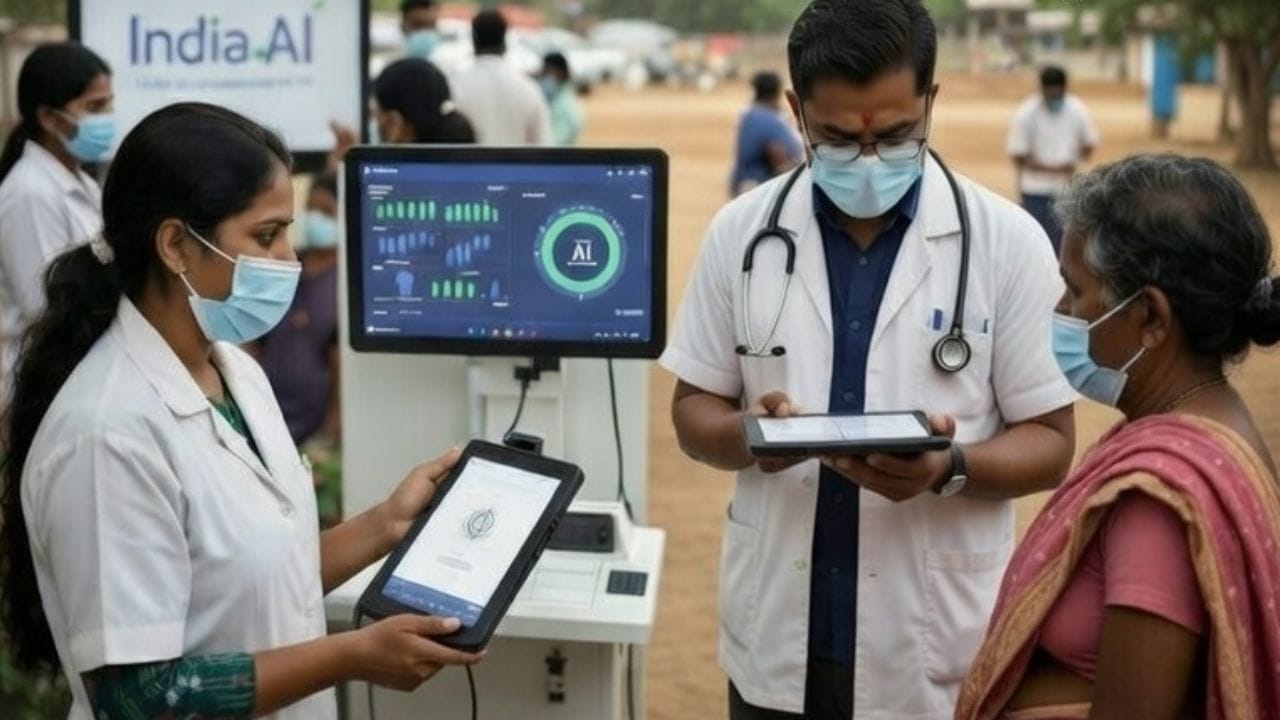
New Delhi: The revolution of healthcare delivery in India is leveraging AI-powered diagnostics, telemedicine, and surveillance tools across both public and private sectors. By integrating these frontier technologies, the Government is fulfilling its commitment to Universal Health Coverage—effectively bridging delivery gaps, elevating the standard of medical services and products, and ensuring affordable care for every citizen.
Guided by the vision of ‘Welfare for All, Happiness for All’ (Sarvajan Hitaya, Sarvajan Sukhaya), the Union Cabinet launched the IndiaAI mission in March 2024 to advance inclusive development, strengthen governance, and improve public service delivery—including healthcare. The mission embodies two core principles:
- Democratisation of technology, ensuring AI tools reach all segments of society including rural and underserved populations.
2. Technology for humanity, deploying AI not merely for technological advancement but to address critical societal challenges, improve quality of life, and advance the public good.
This comprehensive approach aims to transform healthcare delivery as part of India’s journey toward Viksit Bharat @2047.
The Union Government recognised AI’s transformative potential in healthcare delivery years ago. In 2018, the NITI Aayog published the National Strategy for Artificial Intelligence, which envisions AI, robotics and the Internet of Medical Things as the “new nervous system for healthcare”, among its myriad applications across various sectors.
AI-powered tools, adopted by the Ministry of Health and Family Welfare, are democratising healthcare expertise across India. For example, these tools enable frontline workers to screen for TB and diabetic retinopathy while supporting 282 million telemedicine consultations nationwide. Together, these efforts have delivered measurable impact, including a 27% reduction in adverse TB outcomes and 12-16% increase in case detection.