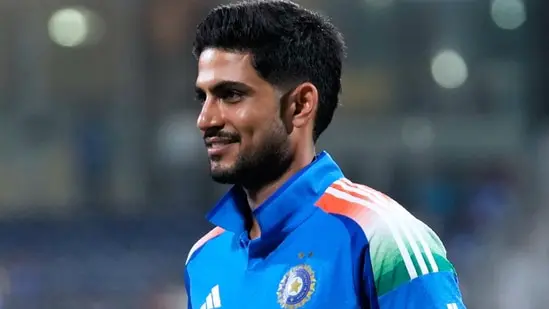
India’s 3-0 ODI series win over Afghanistan will be remembered on the surface for Shubman Gill’s authority, Ishan Kishan’s assault in Lucknow, Yashasvi Jaiswal’s unbeaten hundred in Chennai and Prasidh Krishna’s five-wicket burst.
But from India’s 2027 ODI World Cup lens, the series was more revealing for what it exposed than what it confirmed. Against Afghanistan, India were rarely stretched for long periods. Yet the series still gave the management three major takeaways: the Hardik Pandya backup question has become urgent, Ishan Kishan has complicated the World Cup squad debate, and the lower-middle order remains worryingly under-tested.
Hardik insurance is no longer a luxury for India
The biggest takeaway from the series had little to do with the scoreline. It was about structure.
India can find top-order batters. They can produce spinners. They have a growing pool of fast bowlers. But the one profile that remains genuinely rare is the Hardik Pandya type: a batter who can finish an innings, absorb pressure at No. 6 or No. 7, and still give the captain five to eight overs of seam.
That is why Nitish Kumar Reddy’s presence in this series mattered, even though the numbers alone do not fully explain his significance. India are clearly not looking at him as just another young all-rounder. They are looking at him as insurance for the one role that can decide the balance of the entire XI.
The 2027 ODI World Cup will not be played in India. With South Africa expected to stage the bulk of the tournament, India will almost certainly need a pace-heavy plan. That means three specialist seamers could become necessary on several surfaces. But playing three specialist quicks without weakening the batting requires an all-rounder who can bridge the gap.
This is where Hardik’s importance becomes obvious. When fit, he allows India to play their ideal ODI combination. When unavailable, India are forced into compromises – either a batter short, a bowler short, or a team that looks balanced on paper but thin under pressure.
Nitish, Harshit Rana, Gurnoor Brar, and even bowling all-rounder options lower down the order represent India’s attempt to solve this problem early. The Afghanistan series did not provide a final answer, but it showed the direction of travel. India are no longer waiting for a Hardik replacement to emerge naturally. They are actively building one.
Ishan Kishan has turned into a squad-balance problem – in a good way
Ishan Kishan’s 125 off 79 balls in the second ODI was not just a comeback statement. It was a selection warning.
India already have a crowded top-order picture. Rohit Sharma is still around. Shubman Gill is central to the ODI project. Virat Kohli’s place, if available, remains almost automatic. Yashasvi Jaiswal has now pushed his case further. KL Rahul and Shreyas Iyer have strong claims in the middle order. In that traffic, Ishan needed more than runs. He needed to remind India that he offers something different.
He did that.
Ishan’s value is not limited to being a left-hander. He is a wicketkeeper, a top-order aggressor and a player who can alter the rhythm of an innings very quickly. That combination makes him dangerous in a 15-member World Cup squad conversation.
The direct fight may not be Ishan vs one batter. It could be Ishan vs a reserve keeper, Ishan vs a spare top-order option, or even Ishan vs a safer middle-order pick. That is what makes his case interesting. He is not just competing through volume of runs. He is competing through utility.
For India, this creates a good headache. If they pick Ishan, they get left-hand variety, wicketkeeping cover and a batter who can open or float. If they leave him out, they may have to use two separate squad slots to cover what he offers in one.
The Afghanistan series should not be treated as proof that Ishan walks into India’s first XI. That would be too simplistic. But it did make one thing clear: he is no longer an easy player to ignore when India start building their 2027 World Cup squad.
The sweep hid India’s biggest unresolved question
A 3-0 win can sometimes create the illusion of completeness. That is the danger for India after this series.
The top order dominated. Gill made a major statement. Ishan cashed in. Jaiswal finished the series with a hundred. Rohit showed fluency. But because the top order did so much of the work, India still did not get enough clarity on the middle and lower-middle order.
That matters more than it seems.
World Cups are not won only when openers make hundreds. They are also won from 70 for 3, 180 for 5, or 45 needed off the last six overs. India did not face enough of those moments against Afghanistan. The series gave them batting comfort, but not batting stress.
KL Rahul, Shreyas Iyer, Nitish Kumar Reddy, Washington Sundar, and the lower order still need more role-specific examination. Who rebuilds if the top three fail? Who attacks spin in the middle overs? Who finishes if Hardik is absent? Who bats at No. 7 if India play three seamers and two spinners? These are the questions that matter for 2027.
The second ODI in Lucknow offered a small warning. After Gill and Ishan built a massive platform, India still lost wickets late and were bowled out for 402 with one ball unused. It did not hurt them because the total was already enormous. Against a stronger attack in a World Cup knockout, that kind of late-innings wobble could become more expensive.
So India’s biggest concern is not lack of batting talent. It is lack of middle-order evidence.
The Afghanistan series told India plenty about their options. It did not tell them enough about their crisis-management ability.
India are building depth, but depth is not the same as role clarity. They have names. They have talent. They have options. What they still need before 2027 is pressure-tested certainty.
The series gave India three serious answers. Nitish Kumar Reddy and the all-rounder pool must be developed as Hardik insurance. Ishan Kishan has made himself a genuine squad-balance contender. And despite the clean sweep, India still need to put their middle order through harder tests.
Afghanistan were beaten convincingly. But for India, the larger examination has only begun.