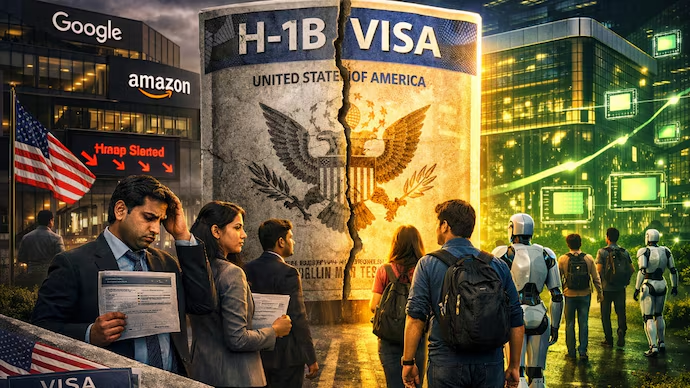
For thousands of Indian professionals dreaming of working in the United States, the latest hiring data from major technology companies paints a mixed picture. While some of America’s biggest employers are slowing down foreign recruitment, one AI giant is continuing to expand aggressively. Recent federal filings seen by Business Insider suggest that foreign hiring has cooled across parts of the US technology industry as the Trump administration pushes a tougher immigration agenda. Companies that have traditionally relied heavily on H-1B visa holders appear to be becoming more cautious with sponsorships, creating fresh uncertainty for skilled workers looking to move to the US.
Among the biggest changes are at Google and Amazon. Data from federal filings shows that Google secured approval for around 2,200 H-1B hires during the second quarter of this year, a sharp decline from roughly 5,100 approvals during the same period a year earlier. Amazon also recorded a notable drop, with approvals falling from around 6,100 to 4,300. This suggests that up to 2,900 roles have been reduced by such companies in 2026, which means should keep their expectations in check because the competition is about to get even stronger due to fewer entries now. The data clearly hints that the two tech companies in combination have significantly reduced approved H-1B hiring compared to last year, suggesting a slowdown in foreign recruitment.
The trend comes at a time when the US administration has been tightening immigration rules. Last year, the Trump administration introduced a $100,000 H-1B visa application fee aimed at discouraging companies from prioritising foreign workers over US-born talent. According to Homeland Security Secretary Markeayne Mullin, more than 200,000 applicants have chosen to pay the fee to speed up visa processing, while others continue to face significantly longer wait times, Hindustan Times reported earlier today.
“We had 286,000 applicants a year to date for the H-1B visas. Out of those, over 200,000 of them paid the $100,000 to be able to come in, because it allows us to process them in a little bit faster manner. In fact, when we do that, we’re able to process them in about 15 days, because we’re able to throw stuff out,” Mullin said in response to a question from Maine Senator Susan Collins.
Nvidia providing some relief to H1-B visa holders
While several technology companies are slowing recruitment, Nvidia appears to be moving in the opposite direction. Federal filings show that the AI chip giant received certification for approximately 1,200 H-1B positions during the first two quarters of fiscal 2026, up from around 1,000 certifications during the same period last year.
The increase suggests Nvidia is continuing to invest heavily in talent as competition in AI intensifies. The company is hiring across hardware engineering, software development and customer-facing roles that help businesses deploy AI systems.
Nvidia’s aggressive hiring push comes as demand for AI infrastructure continues to grow globally. The company’s soaring stock price has also helped strengthen compensation packages, with equity awards becoming a major attraction for skilled workers. Although federal filings only reveal base salaries and not stock-based compensation or bonuses, they offer a glimpse into Nvidia’s efforts to attract top talent.
Nvidia CEO Jensen Huang, who was born in Taiwan, has previously described immigrants as crucial to the company’s mission, reinforcing the firm’s continued openness toward global talent.
The latest hiring trends arrive amid wider concerns among foreign workers over US immigration policies. Earlier this year, proposed changes to green card processing rules sparked fears among H-1B visa holders that they could be required to leave the US and complete permanent residency applications from their home countries. The concerns were later e serve the national interest may still be allowed to remain in the country while pursuing permanent residency. The clarification was particularly important for Indian professionals, who account for more than 70 percent of approved H-1B visas. For more such updates, you can stay tuned to India Today Tech.