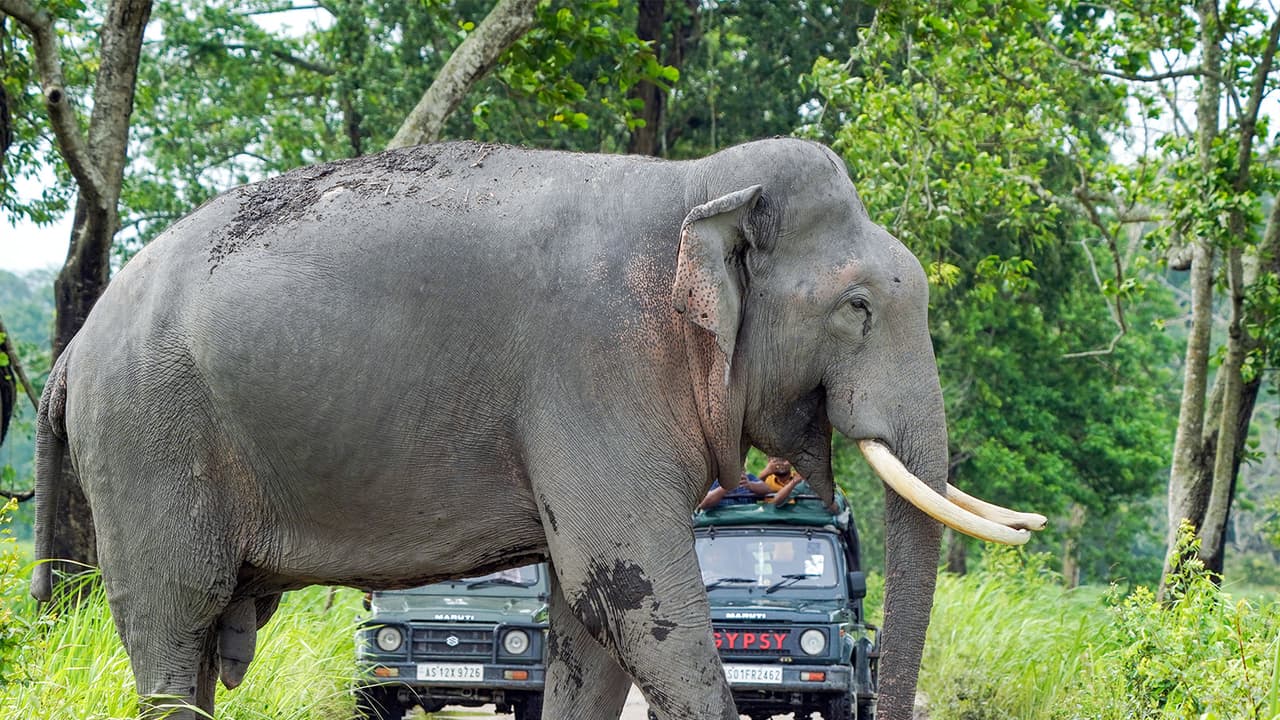
Indian Railways has launched an AI-powered Intrusion Detection System (IDS) using acoustic sensors to prevent elephant-train collisions. It provides real-time alerts to railway staff and is currently active on 141 Rkms in the Northeast.
The Ministry of Railways, in collaboration with the Ministry of Environment, Forest & Climate Change, has launched an Artificial Intelligence (AI)-enabled Intrusion Detection System (IDS) to prevent elephants from being hit by trains.
How the AI System Works
According to a release, the system uses Distributed Acoustic Sensors (DAS) to detect the presence of elephants on railway tracks and alerts loco pilots, station masters, and control rooms in real time. The system components include Optical Fibre, hardware and pre-installed signatures of elephant locomotion. The system is designed to generate alerts for loco pilots, station masters, and the Control Room about the movement of elephants in the vicinity of railway tracks, enabling timely preventive action.
Deployment and Expansion Plans
Presently, the IDS system is working over 141 Rkms (route kilometres) on critical & vulnerable locations identified by the forest department in Northeast Frontier Railway. Works of IDS have also been sanctioned for identified corridors across Indian Railways covering NFR (403.42 Rkms), ECOR (368.70 Rkms), SR (55.85 Rkms), NR (52 Rkms), SER (55 Rkms), NER (99.18 Rkms), WR (115 Rkms) & ECR (20.3 Rkms).
Other Preventive Measures
In case of any incident involving an elephant hitting a train, Zonal Railways investigate the matter in close coordination with the Forest department and takes immediate steps accordingly. These include imposing appropriate speed restrictions at designated locations and alerting train crews and station masters. Regular meetings with concerned forest officials are conducted to update and sensitise the train crew. In the past five years, an average of 16 incidents have been reported, the release said.
Other measures to prevent the accident include constructing underpasses and ramps to facilitate elephant movement at designated locations. The installation of suitable fencing along tracks in vulnerable locations to discourage elephants from approaching railway lines has also been taken as preventable measures. Additionally, provide signage boards at all identified elephant corridors to warn loco pilots in advance, and clear vegetation and edible items from the track within the railway land.
Providing LED lights with a solar system in a forest area. Deployment of elephant trackers engaged by the Forest Department for timely action by alerting station masters and loco pilots is also taken. To prevent wild animals/ elephants from moving near railway tracks, innovative Honey Bee buzzer devices have been installed at level crossings. The sound created by this device acts as a repellent to move elephants away from the railway track. A thermal vision camera is also being tried for detecting the presence of wild animals on a straight track during night/poor visibility, which alerts loco pilots to the presence of wild animals.
This information was provided by the Union Minister for Railways, Information & Broadcasting and Electronics & Information Technology, Ashwini Vaishnaw, in a written reply to a question in Lok Sabha today. (ANI)
(Except for the headline, this story has not been edited by Asianet Newsable English staff and is published from a syndicated feed.)