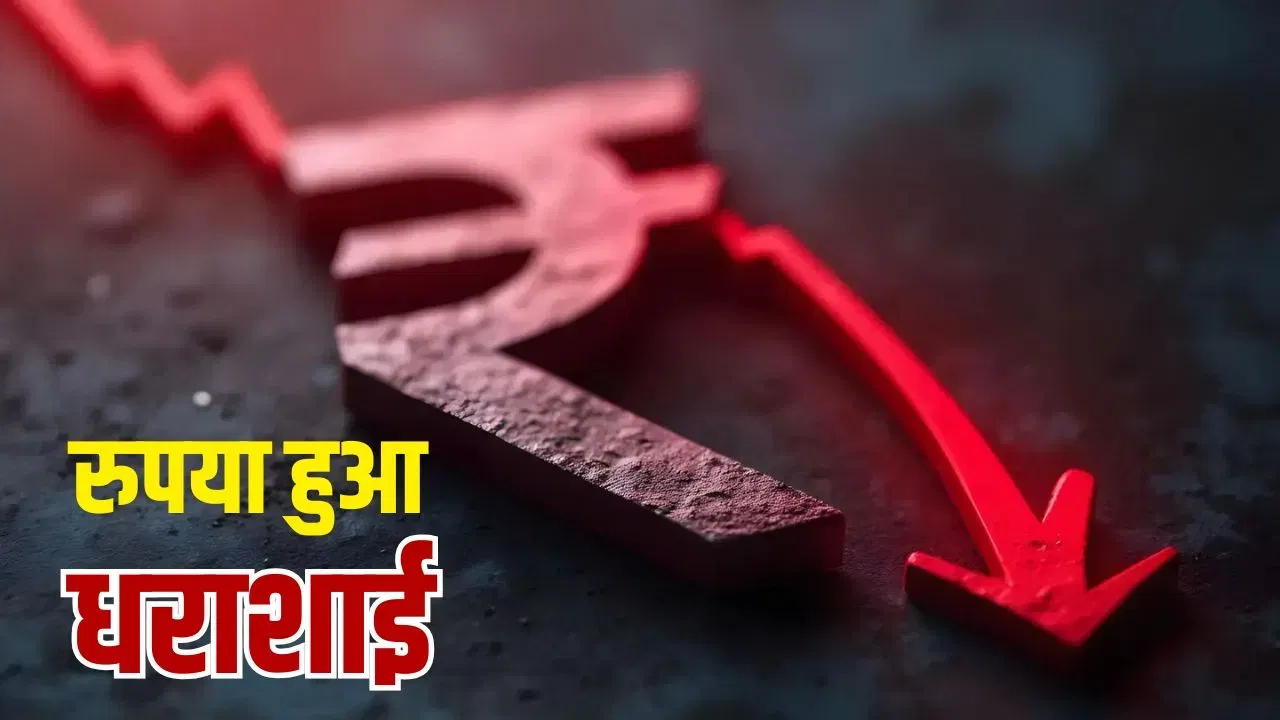
Rupee fell face down
On Thursday morning, the Indian Rupee has reached its lowest level ever against the US Dollar. A huge fall in the rupee was seen at the beginning of the trading session and the price of one dollar reached almost Rs 92.00. As soon as the market opened, the rupee fell to 91.99, whereas in the previous session it had closed at 91.78.
The main reason behind this sudden fall of the rupee is the changes taking place across the seven seas in America. In fact, the US Federal Reserve has indicated that inflation there still remains at a high level and their labor market is stabilizing. After this news, US treasury yields rose and the dollar index became stronger.
When interest rates or bond yields increase in America, investors from all over the world start moving their money from emerging markets like India to America for safe investment. Market experts say that this increased capital outflow and uncertainty in the market is weakening the rupee. According to Singapore fund managers, there is an atmosphere of panic in the market and the fall has intensified due to the trigger of stop-loss.
Petrol, mobile and foreign travel will all become expensive
For a common Indian, the weakness of the rupee is directly related to inflation. India imports a large part of its needs. When the rupee weakens, we have to spend more dollars to buy goods from abroad.
- Petrol-Diesel and Gadgets: India is a major importer of crude oil, electronics, machinery and mobile parts. Due to the fall of rupee, imports will become expensive, due to which the prices of petrol and diesel may increase. This will impact freight transportation and ultimately the prices of vegetables and ration may increase. Apart from this, prices of mobiles, cars and home appliances may also increase.
- Study and travel abroad: If your child is studying abroad, this news can spoil your budget. Due to the expensive dollar, college tuition fees and living expenses will increase significantly in Indian rupees. Also, if you are planning to travel abroad during holidays, then now you will have to shell out more money for hotels and flights.
Will the situation improve or will the rupee fall further?
Figures for December 2025 show that the country’s import bill has increased by 8.7% to $63.55 billion, due to which the trade deficit has increased. However, there is another aspect to the rupee’s weakness. Those who send money to India from abroad (Remittance) or who are exporters, will benefit from getting more rupees in exchange for dollars. But, sectors like electronics which are dependent on imported components may have to suffer losses.
Amit Pabari, MD of CR Forex Advisors, believes that tensions between Iran and America and rising crude oil prices have added fuel to the fire. If the rupee remains above 92.00 level, it may fall to 92.20 to 92.50. Now the market’s eyes are on the Reserve Bank of India (RBI) whether it will use its foreign exchange reserves to stop this fall or allow the rupee to fall further.