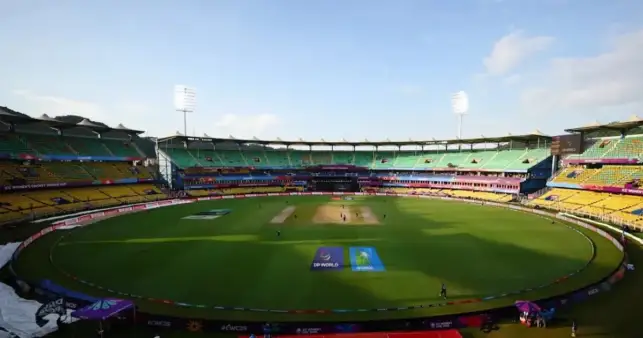
India will take on West Indies in the second ODI of the three-match series at the Barsapara Cricket Stadium in Guwahati on Wednesday, with rain threatening to disrupt the contest.
The match is scheduled to begin at 2 PM IST, and the weather forecast has raised concerns over whether the teams will be able to complete the full 50-over game. India enter the fixture with a 1-0 lead after registering a convincing eight-wicket victory in the opening ODI in Thiruvananthapuram. A win in Guwahati would give Shubman Gill’s side an unassailable lead in the series with one match still remaining.
The biggest concern for the teams is the possibility of rain around the start of play and during the afternoon. Forecasts available ahead of the match have indicated a high probability of precipitation in Guwahati, with one forecast putting the chance of rain at as high as 96 percent during the day. The risk is particularly significant because the match begins in the afternoon, when rain and thunderstorms could affect conditions at Barsapara Stadium. While different weather models have produced varying precipitation probabilities, forecasts broadly point towards an unsettled day, making interruptions a possibility from the beginning of the contest.
There is, however, some relief in the forecast for the latter part of the day. Rain chances are expected to gradually ease as the evening progresses, raising the possibility that the teams could get enough playing time even if the start is delayed or the match is interrupted. Some short-range forecasts have shown considerably lower rain probabilities than the higher estimates, highlighting the uncertainty involved in predicting localised showers and thunderstorms in Guwahati. The more consistent indication across forecasts is that the late morning and afternoon carry the greater weather risk, while conditions could become more favourable later in the evening.
If rain interrupts the game, the match officials will have to assess the playing conditions and available time before deciding how many overs can be contested. In a rain-affected ODI, the Duckworth-Lewis-Stern method can be used to revise targets when overs are lost. A shortened match can still produce a result if both sides receive the required minimum number of overs. However, if persistent rain prevents sufficient play, the fixture could end without a result. There is no reserve day scheduled for this second ODI, meaning a complete washout would leave India 1-0 ahead before the teams move to the third and final match.
India will be particularly keen to get onto the field after their commanding performance in the series opener. The visitors were bowled out after scoring 295, setting India a target of 296. India reached the target in just 41.4 overs, with captain Shubman Gill and Virat Kohli both scoring centuries. Kuldeep Yadav also played an important role with the ball, claiming four wickets as India controlled the match. The result gave Gill’s team a strong start to the series and allowed India to continue assessing combinations as they build towards the 2027 ODI World Cup.
West Indies, meanwhile, need a much-improved performance if they are to level the series in Guwahati. Shai Hope’s team struggled to convert its opportunities in the opening match and will need stronger contributions from both its batting and bowling units. For India, the immediate objective is to secure another victory and seal the series, but the weather could prove to be the biggest factor outside the teams’ control. With rain expected to pose the greatest threat around the afternoon and forecasts suggesting an improvement later in the day, the timing and duration of any showers could determine whether the second ODI becomes a full contest, a shortened match or, in the worst-case scenario, a washout.