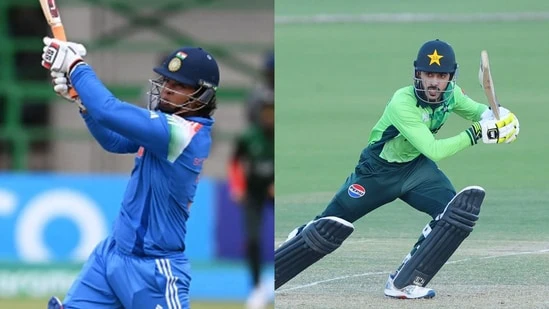
It’s India vs Pakistan in the Super Six of the U19 World Cup, and it’s basically a virtual knockout: one match that can decide the last semi-final slot depending on margins and net run-rate maths.
As the stage gets set here is a look at a few key battles that might decide the fate of the game.
The battles that could decide it
1. Vaibhav Suryavanshi vs Ali Raza
If you want a ready-made rivalry, it’s this. Pakistan would take inspiration from when these two sides last met in the ACC Men’s U19 Asia Cup final: Ali Raza took four wickets, while Pakistan hammered India by 191 runs with a big Sameer Minhas innings.
Vaibhav Suryavanshi has entered this tournament as the kind of batter who changes a game in two overs. India’s game against Zimbabwe featured him striking quickly again, reinforcing that he is a momentum stealer.
Why it matters: If Raza gets early movement and pins Suryavanshi with hard lengths, India’s top-order turbo button can get unplugged. If Suryavanshi wins the first two or three overs, Pakistan’s pl;ans gets thrown into the hard pool.
2. Ayush Mhatre vs Pakistan’s first 10 overs
Ayush Mhatre isn’t just a stroke-maker: he is also the captain, which makes his innings double-weighted. India’s unbeaten run has been powered by how quickly they have taken control, including the win over New Zealand where Mhatre was the stand out in a chase affected by DLS.
Why it matters: Pakistan can survive a fast start if it is reckless from India. What they can’t afford is well managed speed – the kind where Mhatre keeps the scoring rate up and forces panic bowling changes.
3. Usman Khan vs RS Ambrish
Usman Khan has been the stabiliser for Pakistan in the tournament with 122 runs in four matches. India’s counterweight would be early pressure: if Ambrish hits that heavy ball length and forces false shots, Pakistan can get trapped into a timid powerplay.
Why it matters: This is the matchup that decides whether Pakistan bat with freedom or spend the next 20 overs trying to recover oxygen.
4. Sameer Minhas vs India’s middle-over squeeze
Sameer Minhas is the lingering nightmare from the Asia Cup final: an unforgettable 172.
That history matters because Minhas doesn’t just score – he occupies the game. If he’s in at 15 overs with wickets in hand. Pakistan’s ceiling jumps.
Why it matters: India’s best strategy is not get him out early but also don’t let him get comfy. Fields that cut the easy twos, lengths that deny his favourite shots, and constant micro-changes. Make him win on two fronts, against the bowlers and against impatience.
5. Vihaan Malhotra and Abhigyan Kundu vs Pakistan’s strike overs
India’s Super Six statement win over Zimbabwe was built on a simple blueprint: bat big, bat deep, then bury the chase. Malhotra’s hundred and Kundu’s contributions were central to that dominance.
Why it matters: Pakistan don’t need to win every over – they need two wicket bursts. One in the 12-18 window to stop India setting up a finish, and one in the 35-42 window to prevent 270 becoming 310. If they don’t find those wickets, India’s innings tends to look like it has only one speed.
The match within the match
Because this is Super Six maths, it is not only about winning – it is about how you win. Pakistan need to win the game by a healthy margin to force the semi-final door open.
So expect the weird stuff: captains chasing a target like it’s a heist, or batting first and still swinging late because net run rate is the ultimate decider. In a rivalry this loud, the quietest thing might be the real headline, a team choosing the ruthless options because the table demands it.