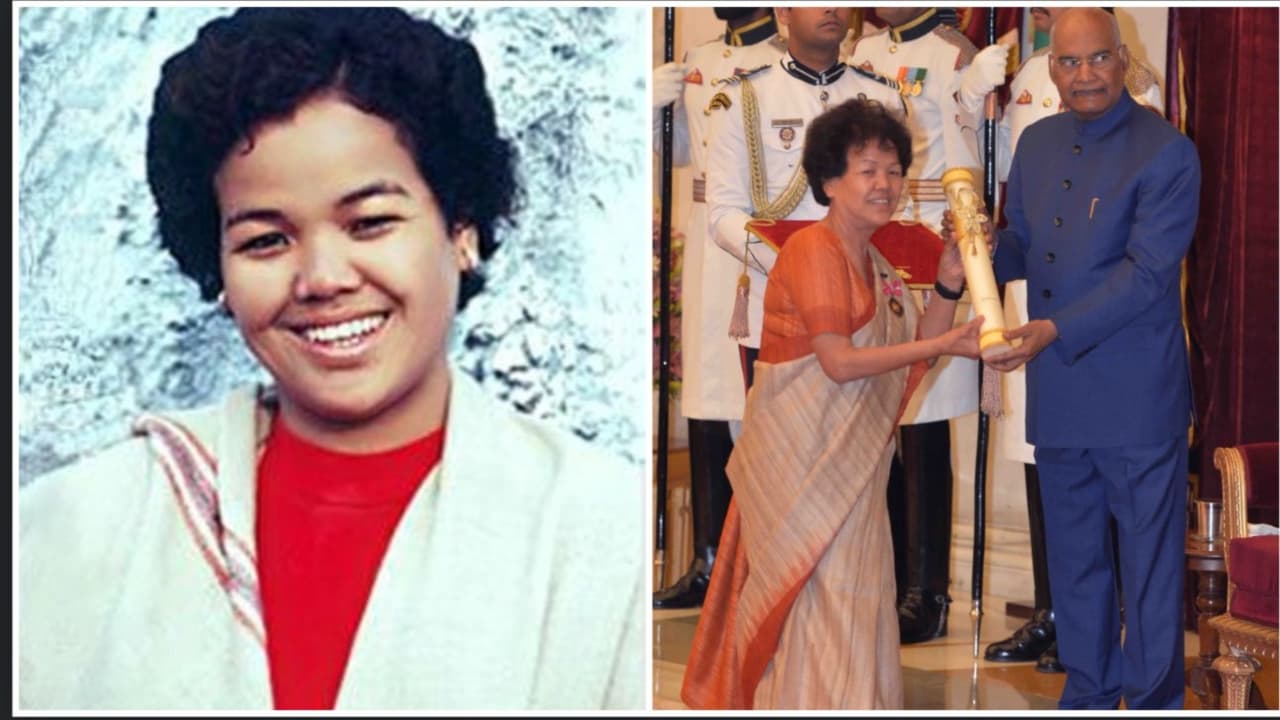
“My heart stood still. It dawned on me that success was within reach. And at 1.07 pm on 23 May 1984, I stood on top of Everest, and I was the first Indian woman to have done so,” Bachendri Pal writes in her memoir Everest: My Journey to the Top.
“My heart stood still. It dawned on me that success was within reach. And at 1.07 pm on 23 May 1984, I stood on top of Everest, and I was the first Indian woman to have done so,” Bachendri Pal writes in her memoir Everest: My Journey to the Top, capturing the electrifying moment that redefined her life.
Born on May 24, 1954, into a humble family in the Harsil Valley, Bachendri grew up amid scarcity. Her father, a small border tradesman, bartered goods across the Indo-Tibetan frontier, but the devastating flash flood of 1943 left the family homeless for months. Her parents rebuilt their lives through farming and producing woollen goods.
Despite the relentless financial constraints, Bachendri pursued education, completing her MA in Sanskrit and a B.Ed. She chose unconventional road of mountaineering in an era where women’s ambitions were often dismissed.
In her early years, Bachendri grew up under the strict but loving eyes of her father, who she often tested with her playful antics. One day, while he was reciting the Ramayana, she pushed his patience too far and was flung down the terrace slope in anger — only to cling onto a branch and escape a near disaster. Her mother rushed to her defence, and her father, shaken and remorseful, embraced her with repeated apologies.
Her first taste of mountaineering came at just 12. Along with ten classmates, she scaled nearly 4,000 metres simply to enjoy lunch atop a mountain. Their descent turned treacherous as they slipped on snow, struggled with nausea, and spent a freezing night stranded without food or water, returning home only to face a severe scolding.
The Dreamer Who Refused Limits
From childhood, Bachendri saw no ceiling to her aspirations. She would point to a news photo and say, “I will meet Indira Gandhi.” When a car drove by, she confidently said, “I will own a car when I grow up.” Spotting an airplane, she would say, “One day I will fly in an aeroplane.”
To fund her education, she learned stitching and earned a Rs 5–6 a day sewing salwar-kameez sets. A natural athlete, she excelled in shot-put, javelin, sprinting and discus, eventually becoming the first girl in her village to graduate.
Her mountaineering journey accelerated at the Nehru Institute of Mountaineering, where she scaled Mt. Gangotri and Mt. Rudragaria in 1982. As an instructor at the National Adventure Foundation, she helped inspire the creation of the Bhagirathi Seven-Sisters Adventure Club — an all-women organisation to support underprivileged girls in adventure sports.
For years, she idolised Sherpa Tenzing Norgay. When she finally met him during a mountaineering event, she recalls being utterly starstruck. “I couldn’t keep my eyes off two super stars… Though I wanted to talk to the Everest hero, I was too tongue-tied,” she writes — capturing her awe at standing beside a legend.
During the selection camp for Everest ’84 at Mana mountain, Bachendri trained relentlessly despite battling fever. Her persistence paid off when she was chosen as one of six women in India’s first mixed-gender Everest expedition team.
But the mountain tested them brutally. On May 16, 1984, an enormous avalanche at Lhotse glacier destroyed Camp III. Bachendri described the terrifying moment: “I was jolted awake; something had hit me hard… I found myself being enveloped within a very cold mass of material.” Many climbers abandoned the mission — but she refused to retreat.
When Colonel Khullar asked whether she was frightened, she said “Yes.” When asked if she wished to descend, she replied with unshakable resolve: “No.”
On May 22, 1984, Bachendri pressed on with Ang Dorjee and a handful of climbers, the lone woman in the group. They battled temperatures plunging to minus 40 degrees Celsius, climbing what she described as “vertical sheets of ice.”
And on May 23, 1984, at 1:07 pm, on the eve of her 30th birthday, Bachendri Pal conquered the world’s highest peak — becoming the first Indian woman to plant her footsteps atop Mount Everest. Her triumph arrived just six days before the 31st anniversary of the mountain’s first ascent.