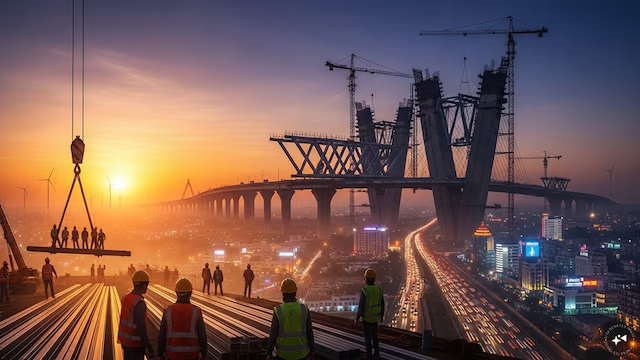
India is poised to become a major driver of global steel demand in the coming years, supported by large-scale infrastructure development, rapid urbanisation and investments linked to the energy transition, ArcelorMittal Executive Chairman Lakshmi Mittal said as the world’s second-largest steelmaker approaches the 20th anniversary of its formation.
In a video message delivered at the World Steel Dynamics Global Steel Dynamics Forum 2026 in New York, Mittal reflected on the two decades since the merger of Mittal Steel and Arcelor created ArcelorMittal, describing India as the next major growth story for the global steel industry.
“The last 20 years have been characterised by China’s remarkable growth. Now it is India’s turn, with massive infrastructure expansion, rapid urban housing growth, and energy transition infrastructure all on the cards,” Mittal said.
ArcelorMittal, which will complete 20 years on July 31, was formed through the merger of Mittal Steel and Arcelor in 2006, creating the world’s largest steel producer at the time.
Looking back on the merger, Mittal said the combination had strengthened the company’s resilience through greater scale, diversification and geographic reach, helping it navigate major global disruptions including the Global Financial Crisis and the COVID-19 pandemic.
“If I look back over the 20 years, I genuinely believe that the merger did indeed create a stronger company, benefiting from greater scale, diversification, resilience and strategic reach,” he said.
Mittal acknowledged that several developments over the past two decades had been difficult to foresee, including the lasting effects of the financial crisis and the profound economic and industrial disruptions caused by the pandemic.
“The aftershocks of the Global Financial Crisis are still with us, and the fallout from COVID has been similarly dramatic. I am adamant though that we navigated these shocks better together than we could have done separately,” he said.
He noted that the steel industry today operates in a vastly different environment than it did in 2006, with markets moving faster, competition becoming increasingly global and technological change accelerating.
“Operating in 2026 is obviously very different to 2006. Today markets move faster, competition is more global, technology changes constantly, and companies are expected to adapt in real time,” Mittal said.
According to him, even traditional manufacturing sectors such as steel have become more data-driven and are operating under greater environmental and regulatory constraints than they did two decades ago.
Despite these challenges, Mittal expressed confidence in the industry’s long-term prospects, citing growth opportunities from emerging economies, infrastructure renewal programmes in developed markets and investments linked to decarbonisation and energy security.
“There are plenty of reasons to remain optimistic and excited about the future,” he said.
Mittal also highlighted the growing importance of domestic industrial policy in shaping competitiveness and investment decisions, while stressing the need for countries to maintain strong steel manufacturing capabilities.
After spending more than five decades in the steel business, Mittal said he remains optimistic about the sector’s future despite the uncertainties that lie ahead.
“I have no doubt that we will continue to face plenty of challenges and unexpected events. But honestly, I can say that after 50 years in the steel industry, there is no place I would rather be,” he said.