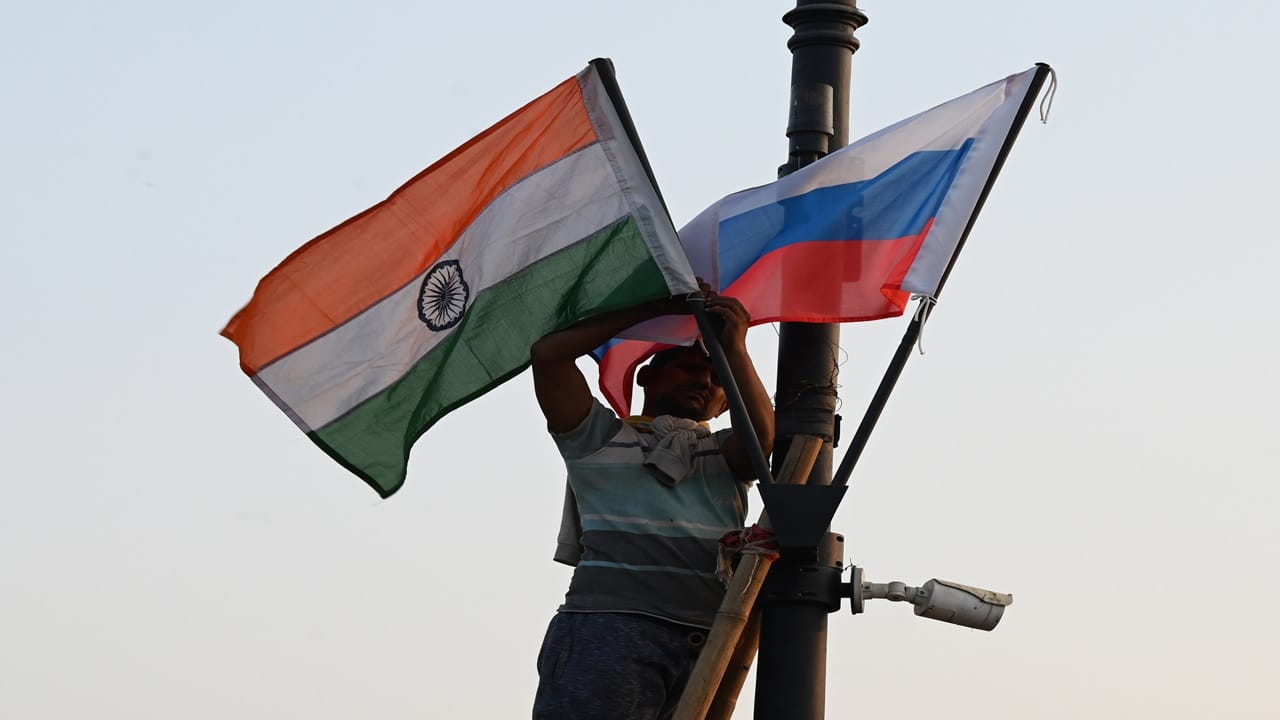
New Delhi: India and Russia have brought into force a sweeping new defence agreement that allows both countries to station troops, warships and aircraft in each other’s territory. The pact, known as the Reciprocal Exchange of Logistics Agreement (RELOS), enables deeper operational cooperation and access to military infrastructure during both peacetime and conflict.
Negotiated over the past eight years, the RELOS agreement was signed in Moscow in February last year. Russian President Vladimir Putin ratified it under federal law on December 15. The pact has been in force since January 12, but the details were finally published by Russian officials only this week.
What the pact allows and why it matters?
Under the deal, India and Russia can deploy up to 3,000 troops each on the other’s soil, along with five warships and around 10 military aircraft at any given time. The agreement also provides mutual access to military bases, naval ports and airfields for logistics and operational support.
The pact goes beyond simple troop deployment. It lays out detailed provisions for refuelling, maintenance, navigation support, supplies and repairs for military assets. It also allows for joint training exercises, humanitarian missions and improved coordination during emergencies.
Analysts see this as a major step because it is the first time India has agreed to allow a foreign military limited stationing rights on its territory, signalling a shift in its defence posture. The agreement also reduces logistical costs and improves operational efficiency for long-distance deployments.
Strategic implications for India and Russia
For Russia, the pact offers greater access to the Indian Ocean region, where it previously had limited presence. This could allow Russian naval forces to operate more effectively in key maritime routes and extend their reach into Asia.
For India, the agreement opens access to Russian ports along the Arctic and northern sea routes, enhancing its strategic mobility and trade security. It also helps counterbalance China’s growing presence in critical global shipping lanes.