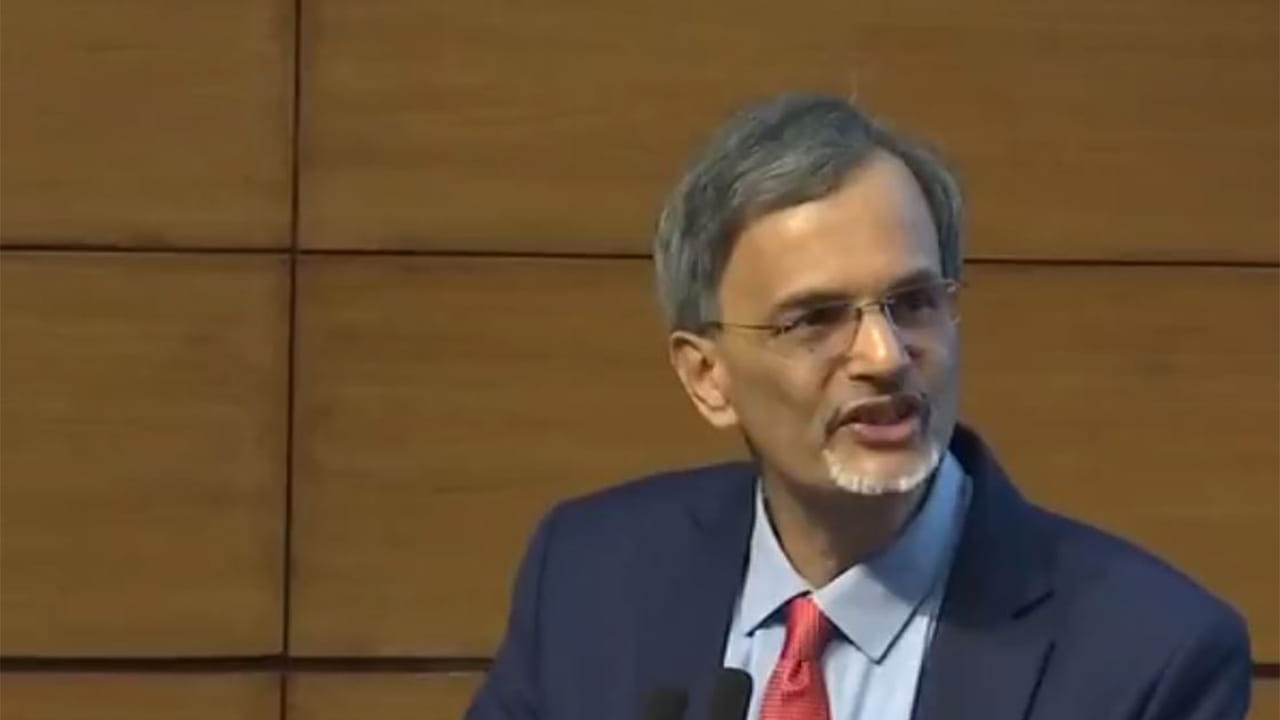
CEA V Anantha Nageswaran asserts that India is a prime beneficiary of shifting global capital as AI investments cool, citing strong GDP growth, significant foreign portfolio inflows, and successful poverty reduction as key economic pillars.
India Poised for Growth as Global Capital Rotates Away From AI
India’s post-pandemic economic resilience, broad-based poverty reduction, and corporate dynamism have positioned the country as a prime beneficiary as global capital rotates out of overheated artificial intelligence (AI) investments, Chief Economic Adviser (CEA) V Anantha Nageswaran said on Thursday.
Addressing the 65th General Assembly and Annual Meeting of the World Federation of Exchanges (WFE), hosted by the National Stock Exchange (NSE) in Mumbai, Nageswaran pointed out that foreign portfolio outflows triggered by the global AI feeding frenzy are reversing sharply as oil prices cool and AI valuation risks emerge. “As oil prices begin to decrease and as the AI bubble comes down to realistic levels… India remains poised to be the big beneficiary in the course of the next financial year,” he said.
Nageswaran noted that India attracted USD 11.3 billion in the first 18 days of November alone, surpassing the USD 7.8 billion recorded over the previous three months combined, adding that earlier currency pressures from AI-driven outflows will likely turn into a source of rupee strength. He further highlighted that India has sustained roughly 7 per cent real GDP growth despite global tariff turmoil, supply shocks, and geopolitical conflicts. “India’s post-pandemic growth record offers a good platform to meet future challenges. Resilience built up in good years is going to demonstrate its usefulness for India in the coming years,” he said.
Emphasising inclusive growth, the CEA noted that around 500 million Indians have moved above the USD 4.20-a-day moderate poverty line, while extreme poverty dropped from 27 per cent in 2011–12 to 2.6 per cent. “Unless growth finds its way to the bottom of the pyramid, then in a large country like ours, mere headline growth numbers will not be satisfactory or contribute to social and economic stability,” Nageswaran said. “More importantly, poverty has fallen faster in rural than in urban India, narrowing the rural-urban gap as well.”
He highlighted how growth is diffusing into smaller towns, noting that half of India’s 200,000 registered startups and 63 per cent of active credit consumers now originate from Tier-2, Tier-3, and semi-urban areas, while invoice discounting platforms have scaled to Rs 3.5 trillion to ease working capital for small businesses. Corporate competition is equally vibrant, he observed. “Over one-third of India’s 500 most valuable private firms have changed since 2021. The economy is vibrant enough to create new winners and create churn.”
Looking toward the Viksit Bharat 2047 goal, Nageswaran flagged five structural challenges—geopolitical fragmentation, China’s manufacturing scale, the energy trilemma, AI-led job shifts, and social media’s impact on youth cognitive skills—that earlier developed nations never faced simultaneously. “Closing technology gaps will buy resilience for India, but agriculture, trade skills, and human-centric services will buy leverage for India,” he concluded, urging investments in food processing and skilled trades to serve ageing global economies.