India will continue building new oil refineries to secure its supply chains even as Western nations shut down processing capacity, Prime Minister Narendra Modi said, crediting the sector’s expansion for helping the country avoid the fuel shortages and price spikes that hit other nations during the West Asia conflict.
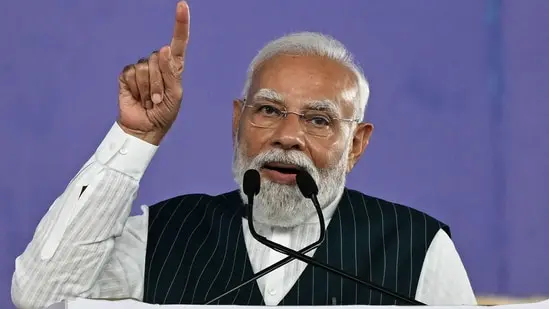
“In the United States, not a single new refinery has been built in the past 50 years. Europe’s refinery capacity has steadily declined. Meanwhile, India has become the fourth-largest refining nation in the world. And we will not stop here – in the coming years, this capacity will increase further. These efforts enabled India to fight and overcome the greatest energy crisis of the century,” Modi said on Saturday, inaugurating the Pachpadra Refinery in Rajasthan’s Balotra alongside development projects worth about ₹1.06 lakh crore.
He said the war in West Asia had created the biggest energy crisis of the 21st century, with many powerful nations facing fuel shortages, while India “took the right decisions at the right time, assessed the situation correctly, used its resources wisely and strengthened its diplomatic engagement,” calling India’s handling of the crisis an “unprecedented” chapter.
He said India was particularly exposed because around 70% of its LPG demand relies on imports, with roughly 90% of that historically routed through Gulf countries via the Strait of Hormuz.
He alleged that while some people were spreading rumours and creating panic, the Centre was working continuously at the policy and diplomatic levels to ensure uninterrupted energy supplies. As the conflict disrupted shipping, the government redirected industrial gas into LPG production, adding 54,000 tonnes of supply within a week, and reconfigured refineries that had not previously made LPG. Piped natural gas connections were also fast-tracked, reaching over 1.1 million households, Modi said.
Cylinder prices, which some estimates suggested could climb to nearly ₹2,000, instead held near ₹950 for domestic consumers, according to Modi; commercial LPG prices were cut as well.
Crude prices rose from around $70 a barrel to nearly $120 after the conflict escalated, Modi said. “In several countries, petrol and diesel prices increased by 40-50% and fuel was rationed. India did not witness such a situation even for a single day,” he said, adding that rumours and political criticism had failed to undermine the government’s response. Modi put oil marketing companies’ losses during the period at more than ₹75,000 crore.
To be sure, pump prices had been frozen at ₹94.77 for petrol and ₹87.67 for diesel since March 2024 – a period through which international crude fell well below current levels, allowing state-run oil companies to post strong profits even as retail rates stayed unchanged. That freeze held through the early months of the West Asia crisis, with OMCs absorbing under-recoveries of up to ₹26 a litre on petrol and ₹81.90 a litre on diesel by late March, before the government cut excise duty by ₹10 a litre on both fuels – relief that went to the companies’ balance sheets rather than the pump. Prices finally moved on May 15, rising by a cumulative ₹7.35 a litre on petrol and ₹7.53 a litre on diesel over the following ten days – an increase of roughly 8%, against the 40-50% hikes Modi said other countries had imposed.
Modi said India also diversified its crude sourcing from about 25-26 countries before the crisis to more than 40 now. “Our diplomacy demonstrated its strength. India made it clear that national interest and the welfare of its citizens are paramount,” he said. He also pointed to India managing fertiliser-supply disruptions stemming from the Ukraine conflict.
On the Pachpadra project itself, Modi said work had slowed between 2018 and 2023 under the previous Congress state government despite the agreement being signed in 2017, and picked up pace after the BJP returned to power in Rajasthan. “We do not merely lay foundation stones; we complete projects and dedicate them to the nation,” he said. The refinery had been due to open two months earlier, but the event was postponed after a fire broke out at the facility the day before the planned April inauguration.
Modi also announced a Rajasthan-Haryana agreement to supply Yamuna water to the Shekhawati region – covering Sikar, Churu, Jhunjhunu and adjoining districts – at an estimated cost of ₹34,000 crore, and said Rajasthan had emerged as a major renewable energy hub. He also accused the Congress of neglecting Rajasthan’s interests and failing to address the state’s water scarcity.
The inauguration drew a sharp response from the Congress, which accused the BJP of claiming credit for a refinery conceived under the UPA government and questioned both the delay and cost escalation.
Former Rajasthan chief minister Ashok Gehlot rejected Modi’s claim that work had stalled under the Congress state government, calling it “unfortunate” that the Prime Minister “behaved like a BJP leader even at official government functions.” “The PM claimed that the project remained stalled during the Congress government from 2018 to 2023 and was completed in just two-and-a-half years under the BJP. Such statements sound ridiculous,” Gehlot wrote on X, adding that refinery officials would confirm work continued through the Covid-19 pandemic and that nearly 85% of the project was completed during the Congress government’s 2018-2023 tenure.
Gehlot pointed out that the BJP government’s own Budget documents had targeted an August 2025 completion date, meaning the refinery opened nearly a year behind schedule. He said the project originated under the UPA government, crediting then-UPA chairperson Sonia Gandhi and then-prime minister Manmohan Singh for its approval, and noted that Sonia Gandhi and then-petroleum minister M. Veerappa Moily laid the foundation stone in 2013 following talks that also involved former minister Murli Deora. Gehlot alleged the project was stalled for nearly five years “due to political reasons,” driving up costs, before work resumed at pace after the Congress returned to power in Rajasthan in 2018.