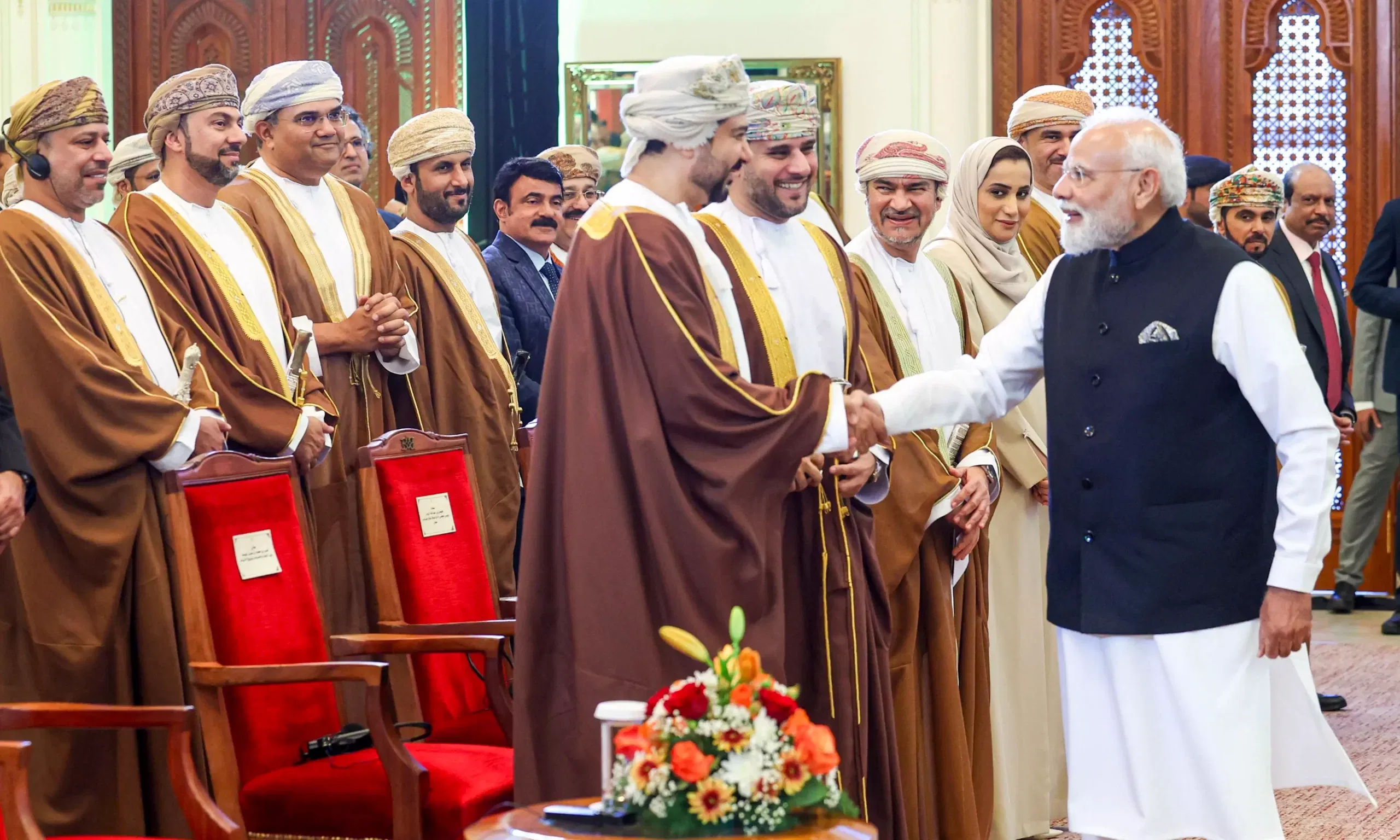
Muscat: India and Oman on Thursday signed a comprehensive free trade agreement that is expected to sharply expand bilateral commerce, with New Delhi securing duty-free access for almost all of its exports to the Gulf nation.
The agreement, formally called the Comprehensive Economic Partnership Agreement (CEPA), was signed in Muscat by Commerce and Industry Minister Piyush Goyal and Oman’s Minister of Commerce, Industry and Investment Promotion Qais bin Mohammed Al Yousef, in the presence of Prime Minister Narendra Modi.
Relief for labour-heavy industries
Once operational, likely in the first quarter of the next calendar year, the pact will allow 98 per cent of Indian exports to enter Oman without customs duties. The timing is significant. Indian exporters are currently grappling with steep tariffs of up to 50 per cent in the United States, which remains India’s single largest export destination.
For the Indian industry, particularly sectors that depend heavily on labour, the agreement offers immediate and tangible relief. Oman has committed to removing duties on more than 98 per cent of its tariff lines, covering over 99 per cent of Indian exports by value. This includes a wide range of products such as gems and jewellery, textiles, leather goods, footwear, sports equipment, plastics, furniture, agricultural produce, engineering goods, pharmaceuticals, medical devices and automobiles.
Officials said that for nearly 98 per cent of these product categories, tariffs will be eliminated as soon as the agreement comes into force. Currently, most labour-intensive Indian goods face import duties of about five per cent in Oman.
India keeps sensitive sectors guarded
India, however, has taken a more calibrated approach on its side. New Delhi has agreed to ease tariffs on around 78 per cent of its total tariff lines, which together account for nearly 95 per cent of imports from Oman by value. Products considered sensitive for domestic producers have been kept out of the deal altogether.
These exclusions include key agricultural items such as dairy products, tea, coffee, rubber and tobacco, along with gold and silver bullion, jewellery, footwear, sports goods and several categories of base metal scrap. For goods that are important to Omani exporters but politically or economically sensitive in India—such as dates, marble and petrochemical products—market access will be provided through tariff-rate quotas rather than full duty elimination.
Services and professional mobility
Beyond goods, the agreement places strong emphasis on services and professional mobility. Oman has offered fresh commitments in areas such as IT and computer-related services, professional and business services, audio-visual content, research and development, education and healthcare. Despite importing services worth over $12.5 billion globally, India currently accounts for just over five per cent of that market.
A key feature of the CEPA is the easing of entry norms for Indian professionals. For the first time, Oman has expanded quotas for intra-company transferees from 20 per cent to 50 per cent. The permitted stay for contract-based service providers has also been extended from 90 days to two years, with the option of renewal.
Indian firms will also be allowed 100 per cent foreign direct investment in major service sectors through commercial presence.
A strategic corridor
Oman remains a strategic partner for India and a critical entry point into West Asia and Africa. Nearly seven lakh Indians live and work in the country, sending home close to $2 billion in remittances annually. More than 6,000 Indian companies operate across sectors in Oman, while Omani investments in India have crossed $615 million since 2000.
Bilateral trade between the two countries stood at about $10.5 billion in 2024–25, a figure policymakers now expect to rise steadily under the new agreement.