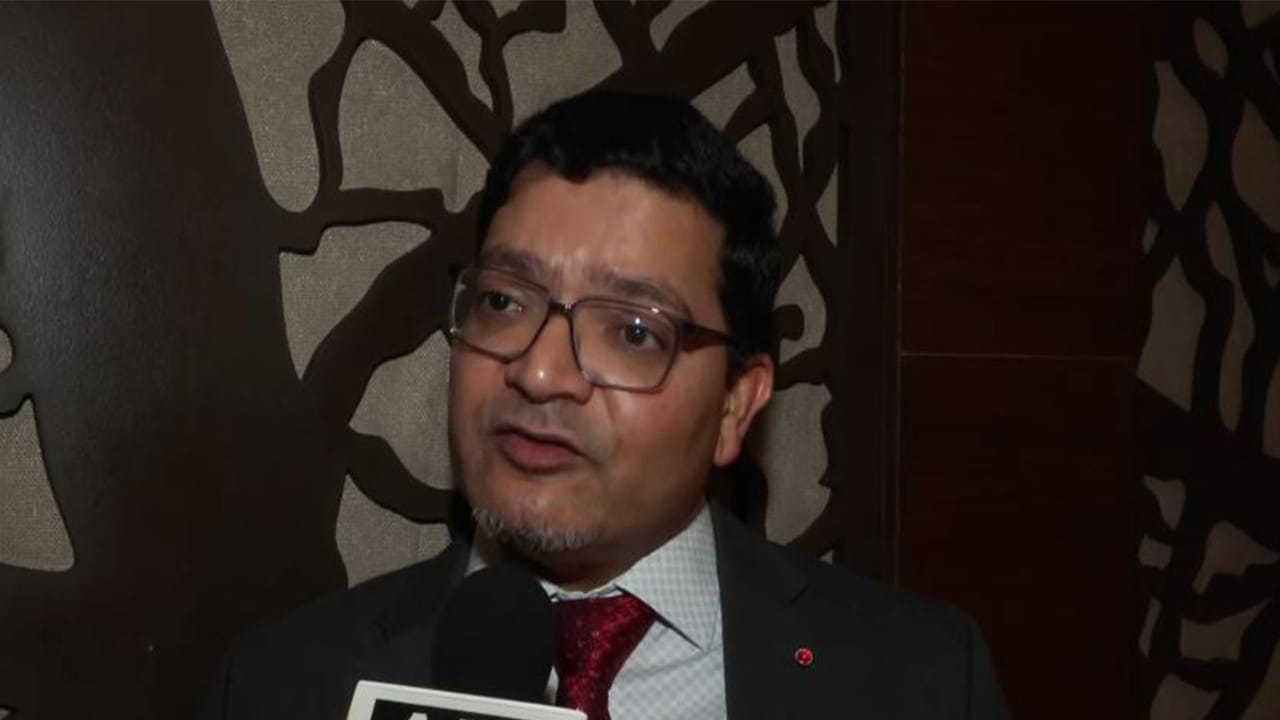
PwC expert Manas Majumdar recommends that India expand its strategic energy reserves beyond crude oil to include natural gas and LPG, aiming to protect domestic consumers from global price volatility and enhance national energy security.
New Delhi [India], November 26 (ANI): India needs to expand its strategic energy reserves beyond crude oil to include natural gas and Liquefied Petroleum Gas (LPG) to safeguard consumers against global energy price shocks and supply disruptions, said Manas Majumdar, Partner and Lead Energy and Resources, Oil and Gas Sector Leader, PwC India and South Asia.
Speaking to ANI on the sidelines of the ASSOCHAM’s India Energy Sovereignty Summit 2026, Majumdar said the disruptions around the Strait of Hormuz highlighted the need for India to diversify its energy sources and strengthen its storage infrastructure to ensure long-term energy security. “You have to go beyond crude. Crude is only one type of energy mix that we have. We don’t have our gas storage and the Hormuz crisis explained the whole LPG issue that we had,” he said.
Highlighting the economic benefits of maintaining strategic energy reserves, Majumdar said adequate storage could help reduce the impact of rising international energy prices on domestic consumers. “It is also an economic benefit. See, if prices go up, if you’ve stored molecule at a lower rate, it helps you in servicing and then you and me as end customers are less affected,” he said.
India has established strategic crude oil storage facilities with a combined capacity of 5.33 million metric tonnes at Visakhapatnam, Mangaluru and Padur. The government had also approved two additional commercial-cum-strategic petroleum reserve facilities with a combined capacity of 6.5 million metric tonnes at Chandikhol in Odisha and Padur in Karnataka.
Majumdar emphasised that India must look beyond expanding its crude oil reserves and diversify its energy mix through biofuels, compressed biogas and greater electrification, while strengthening pipeline connectivity and power grid infrastructure.
On India’s crude oil imports from Russia, he said the country’s dependence on Russian supplies is likely to remain significant as uncertainties surrounding the Strait of Hormuz persist. According to Majumdar, India’s crude oil imports from Russia have declined from a peak of around 2.5 million barrels per day to an estimated 1.4-1.5 million barrels per day, accounting for about 30 per cent of India’s crude oil imports.
“I think it will remain because, as I said, the Hormuz part hasn’t really been addressed entirely,” he said, emphasising that diversification of import sources would strengthen India’s energy security.
A report launched by PwC at the event identified five key elements of energy sovereignty – diversification of energy sources, strengthening storage capacity, electrification, infrastructure development and technological innovation.
Meanwhile, responding to a question on the reported US tariff proposals on Indian goods, Majumdar said India should continue negotiations with Washington to secure lower tariffs rather than resort to retaliatory measures. “Clearly 25 per cent makes Indian goods that much more expensive. 17 per cent is only marginally better,” he said, adding that India could look at negotiating a tariff rate of 10 per cent or lower, while qualifying the assessment as speculative.
He also cautioned against imposing retaliatory tariffs on American goods, arguing that such measures could trigger further retaliation. “I think it’s about highlighting being assertive without necessarily being retaliatory. I think there’s a difference between being assertive and retaliatory,” he said.
Majumdar further advocated diversification of India’s trading partners, stressing the need to pursue a multi-alignment approach to protect the country’s economic and strategic interests. (ANI)