India may reconsider some of the tariff concessions it has offered to the UK under the recently concluded Free Trade Agreement (FTA), particularly on products such as Scotch whisky, if Britain goes ahead with its tightened steel safeguard measures on Indian exports, a senior Commerce Ministry official said.
The issue is expected to figure prominently during the visit of British Trade Secretary Peter Kyle to New Delhi on June 2, when he is scheduled to hold discussions with Indian counterparts on the implementation of the FTA.
“We have to rebalance the FTA. We haven’t made up our mind, but we could consider changes on certain goods unless they roll back the steel duty,” the official said.
Under the FTA, 99% of Indian exports are set to receive duty-free access to the UK market. In return, India agreed to lower tariffs on a range of British products, including whisky, automobiles, medical devices and cosmetics. Tariffs on Scotch whisky, for instance, were to be reduced from 150% to 75% immediately and further to 40% over a 10-year period.
“The ball is now in their court,” the official said. “If they do not leverage their free trade agreement commitments, we can always reconsider the concessions we offered.”
India and the UK concluded FTA negotiations in May and formally signed the agreement in July last year. However, the British government’s recent decision to tighten steel safeguard measures has emerged as a fresh irritant.
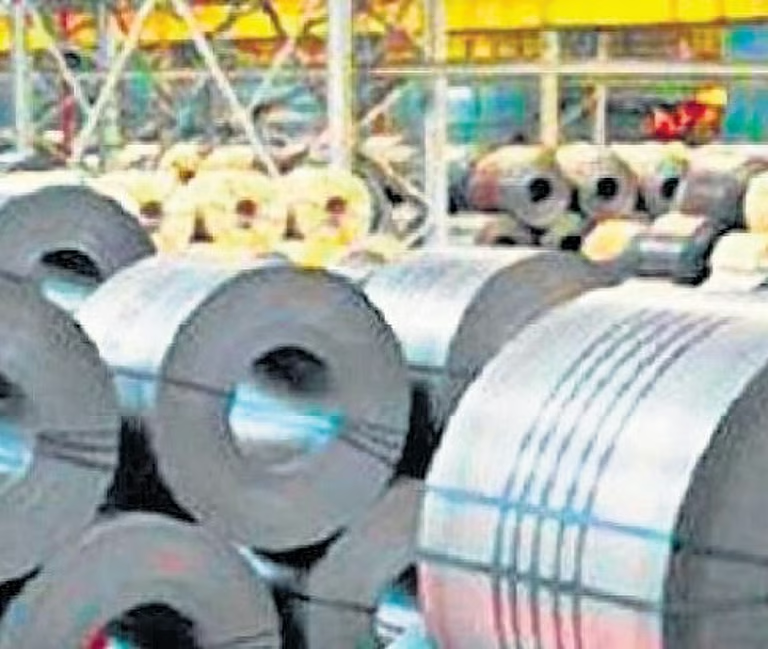
The UK has announced a 60% reduction in tariff-free steel import quotas from June 2026 and will impose a 50% duty on shipments exceeding those limits. The measures are aimed at protecting the domestic steel industry from a surge in low-cost imports, including those from India.
Commerce Secretary Rajesh Agarwal had earlier indicated that the UK’s new steel import restrictions could become a hurdle in the implementation of the trade pact.
Apart from seeking relief on steel exports, Indian negotiators are also looking for greater clarity on the UK’s proposed Carbon Border Adjustment Mechanism (CBAM).
“CBAM isn’t as urgent, but it will come into effect in January and we need clarity before that. Unless it is resolved, it won’t be operationalised,” the official said.
The UK plans to impose a carbon border tax on imports of emission-intensive products such as steel and aluminium from January 2027. India has raised concerns that the measure could act as a non-tariff barrier and undermine the benefits expected from the FTA.