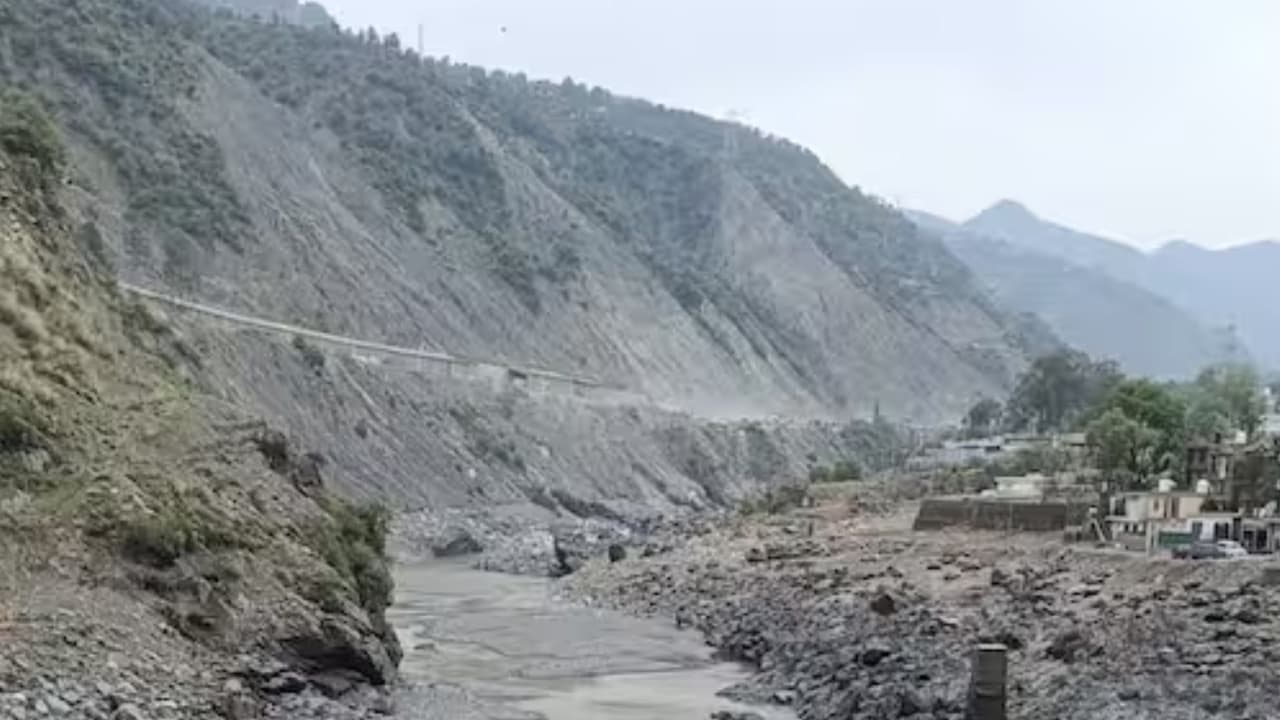
India is fast-tracking four hydropower projects on the Chenab River in Jammu and Kashmir after suspending the Indus Waters Treaty, aiming to boost energy capacity and meet climate goals.
India is aggressively advancing the construction of four major hydropower projects on the Chenab River in Jammu and Kashmir, a strategic move that is expected to have significant implications for downstream water flows into Pakistan. The push to fast-track hydropower development comes against the backdrop of heightened tensions after New Delhi placed the 1960 Indus Waters Treaty (IWT) with Islamabad in abeyance, officials and analysts said.
According to a News18 report, the Indian government has given renewed urgency and fixed deadlines to hydropower schemes that had faced delays, especially following the suspension of treaty obligations. These projects include major initiatives such as Sawalkote, Ratle, Pakal Dul and Dulhasti Stage-II, all designed to harness the hydropower potential of the Chenab and its tributaries – a river that eventually feeds into Pakistan’s irrigation and power systems.
Officials told News18 that in response to evolving geopolitical and security concerns, as well as India’s energy and climate goals, authorities are monitoring construction milestones closely to ensure rapid implementation. The Sawalkote project alone – now cleared by the government – is expected to generate 1,856 MW of power and features a substantial roller-compacted concrete dam and underground powerhouse. This project, originally delayed by environmental scrutiny and regulatory bottlenecks, has gained fresh momentum under the accelerated timeline.
The Ratle hydropower project, an 850 MW run-of-the-river scheme, has also been prioritized, with officials aiming for commissioning by late 2028. Meanwhile, the Dulhasti Stage-II project, a 260 MW extension of the existing Dulhasti plant, recently received environmental clearance from the Union Environment Ministry’s appraisal panel. These developments are part of a broader effort to unlock the Indus basin’s hydropower potential, projected to surpass 10,000 MW when other planned dams are factored in.
Diplomatic unease in Pakistan
India’s shift has stirred diplomatic unease in Pakistan. Islamabad relies heavily on the western rivers of the Indus Basin including the Chenab – for irrigation and power. Pakistani officials and river authorities have expressed concern that accelerated construction and altered water management practices could constrict downstream flows, particularly during critical agricultural seasons. The country’s Indus River System Authority has warned that recent variances in river inflows are already affecting canal supplies and crop schedules.
The change in approach follows New Delhi’s decision to put key elements of the Indus Waters Treaty on hold after a deadly terror attack in Kashmir in 2023 and subsequent cross-border tensions. Under the original treaty – one of the most durable water-sharing pacts in the world – India is permitted to build hydroelectric projects on the western rivers provided they are run-of-the-river and conform to design safeguards. With the treaty effectively suspended, India no longer needs to provide Pakistan with advance notices on project activities or water release data, easing one of the major constraints that had previously slowed hydropower development.
Critics in Pakistan have gone so far as to characterise parts of India’s water strategy as “weaponisation” of shared resources, warning that erratic releases and holding patterns could imperil food security and livelihoods. Islamabad’s deputy Prime Minister has called for international scrutiny, saying unilateral water management actions could threaten regional peace and stability.
In New Delhi, government officials frame the hydro push as part of a dual strategy -strengthening energy security while asserting sovereign control over domestic water resources. India’s drive to expand renewable energy capacity, including hydropower, is seen as essential to achieving its climate commitments and reducing reliance on fossil fuels. At the same time, fast-tracking the Chenab projects aligns with broader national development objectives in the Himalayan region, which has long grappled with slow project clearances due to environmental and regulatory hurdles.
As India accelerates these hydropower works, downstream water concerns are likely to remain a flashpoint in Indo-Pakistan relations, with implications for agriculture, geopolitics and the future of the Indus basin’s governance frameworks.