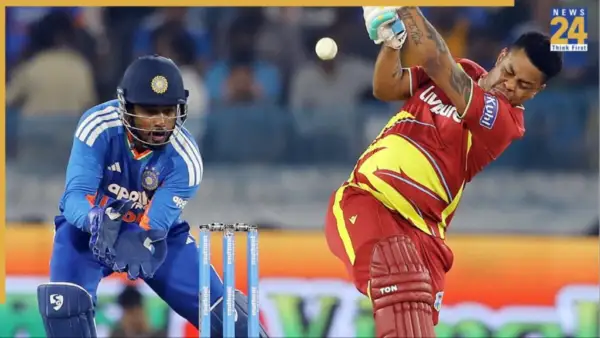
Cricket West Indies (CWI) CEO Chris Dehring has questioned the revenue model used for bilateral cricket series, saying his board will not earn any money from India’s ongoing home series against the West Indies.
According to Dehring, the current system allows the host board to keep the revenue generated from broadcast rights, ticket sales and other sources. This means the Board of Control for Cricket in India (BCCI) is expected to earn more than Rs 200 crore from the series, while Cricket West Indies will not receive a share of that income. Dehring believes this system has contributed to the financial problems faced by West Indies cricket.
Why Will West Indies Cricket Get No Share Of The Revenue?
The India-West Indies series is being played in India, which means the BCCI controls the revenue generated from hosting the matches. This includes money earned through broadcast rights, ticket sales and other commercial deals.
Cricket West Indies will not receive a share of this revenue under the current bilateral cricket model. However, the West Indies board will keep the income generated when India tours the Caribbean and the matches are hosted there.
Speaking to Wisden Cricket’s The Scoop, Dehring questioned this arrangement and said it puts smaller cricket boards at a disadvantage.
What Did Chris Dehring Say About The Revenue Model?
Dehring said Cricket West Indies would receive no revenue from the series being played in India, despite the large amount of money it is expected to generate.
‘In this case, West Indies cricket gets nothing because the series is being played in India. This series, which generates $20 million to $30 million in India, gives West Indies cricket no revenue,’ Dehring said.
He argued that the system makes it difficult for smaller cricket boards to earn enough money through bilateral cricket. According to him, the current model has played a role in the financial problems faced by West Indies cricket.
How Did The Current Cricket Revenue Model Begin In 1997?
Dehring traced the problem back to 1997, when the International Cricket Council’s member countries voted on changes to the financial model for international cricket.
He said that before the change, visiting teams could receive a fee for touring another country. At times, West Indies could earn more from touring other countries than from hosting matches in the Caribbean.
Dehring recalled that West Indies were once a highly sought-after team, and other countries were willing to pay to host them.
He said the change in the system reduced an important source of income for the West Indies board.
Why Does The Host Country Keep The Full Revenue?
Under the bilateral cricket model described by Dehring, the board hosting a series keeps the revenue generated from its broadcast rights and other commercial sources.
This creates a major difference between countries with large audiences and those with smaller markets. India has a huge cricket audience, which makes its home series commercially valuable. West Indies, meanwhile, consists of several Caribbean nations with much smaller populations.
Dehring used the difference between India’s population and the populations of Caribbean islands such as Antigua and St Kitts to explain why he believes the system is unfair.
He said India could keep the money generated by its large audience, while West Indies could retain revenue from its much smaller home market.
Why Does Chris Dehring Believe The System Is Unfair?
Dehring argued that the revenue model favours boards with larger audiences and stronger commercial markets. Smaller boards, including Cricket West Indies, have fewer opportunities to earn comparable amounts from hosting bilateral matches.
He recalled that the change was approved by a vote of nine against one among the ICC’s member countries involved in the decision.
Dehring said he had warned at the time that the decision could seriously damage West Indies cricket because it affected one of the board’s main sources of income.
His comments have once again raised questions about how revenue from international cricket should be shared and whether the existing model provides enough financial support to smaller cricket boards.