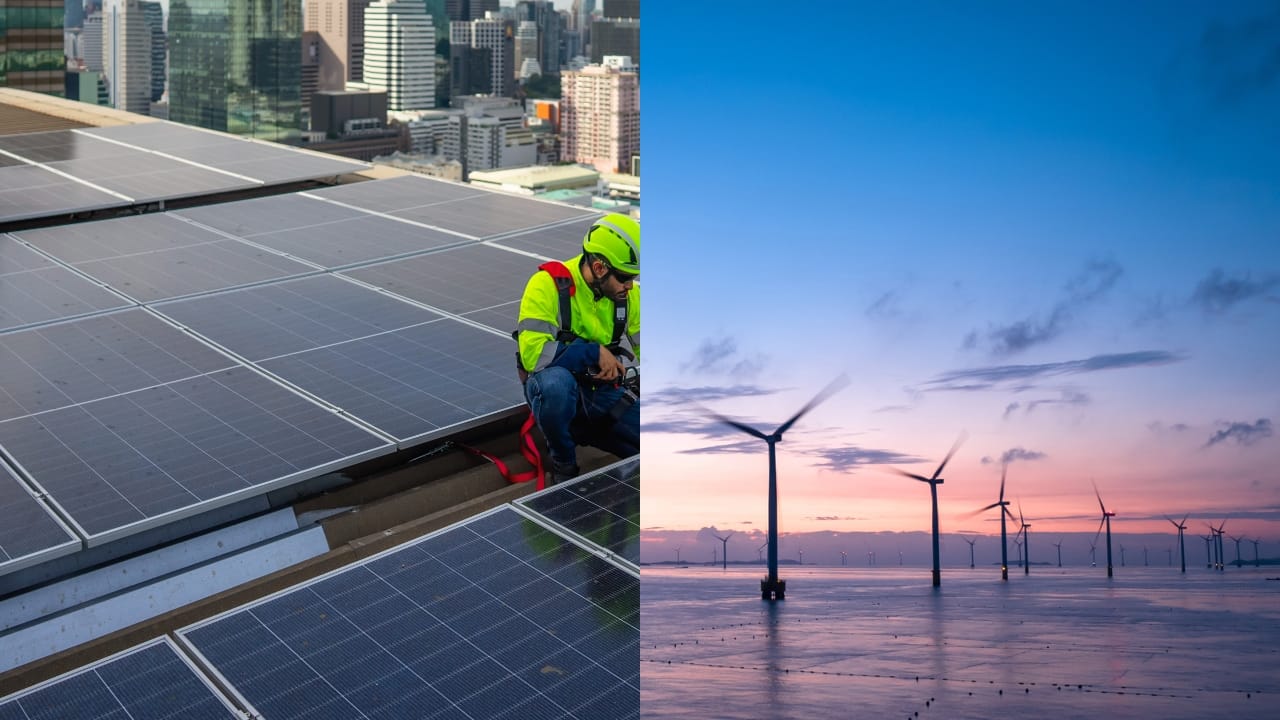
Kolkata: India is the fastest growing major economy in the world and like any modern economy the society is energy-hungry. However, the entire planning of the government is to shift from fossil fuels in the direction of renewable energy which has no greenhouse gas emissions. Accordingly, Indian policymakers are trying to catalyse investments in solar energy and wind energy, the safest of non-conventional energies with no possibility of any collateral negative impact.
A report published on March 19 Central Electricity Authority has stated that solar power generation capacity is going to rise by four times and wind energy by three times over the next 10 years. The upshot of all this: the country will reduce its dependence on thermal power which results in emission of greenhouse gases. The report is the National Generation Adequacy Plan. The Central Electricity Authority, or CEA, acts an adviser to the Central government on power policy matters and draws up blueprints for the development of such systems.
Non-fossil fuel capacity
The generation capacity of non-fossil fuels will jump to 786 GW by 2035-36, said the report. Of the non-conventional sources of power, solar power will constitute the biggest share. But how big is the jump really? To get a proper picture, let’s consider the following piece of data. Right now, thermal power constitutes more than 70% of the electricity generated in this country. By 2035-36, the share of thermal power is going to shrink to 49%.
Solar power dominates
The CEA has also stated that total non-fossil fuel generation could amount to 786 GW by 2035-36. Solar energy will form 65% of the clean power generated in the country. In order to push the use of solar energy even in homes, the government is incentivising installation of PM Surya Ghar Yojana to Indians and the target is to power 1 crore homes with such rooftop solar generation units. It an generate up to 300 units of free power for a household.
Nuclear and hydro
Two other sources of power are nuclear power and hydroelectric power. The CEA blueprint for the next 10 years says nuclear power generation capacity in the country is supposed to rise by three times to reach 22 GW. Large hydro electricity power generation could rise to 77 GW, marking a rise of 50%. The country’s pumped storage hydropower capacity is supposed to rise 13 times to reach 94 GW.
A pumped hydropower unit consists of two water reservoirs at different elevations. Water is pumped from the lower to the upper reservoir and. The water is released downhill and while running down, the water drives turbines to generate electricity. The water is pumped to the upper reservoir using surplus electricity during low demand. The water is released during peak demand to generate power.